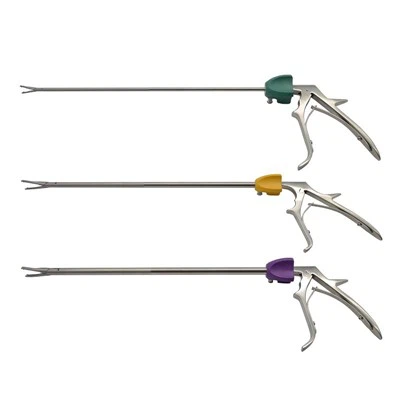
As a seasoned provider in the world of fibrescopes, I’ve had numerous inquiries about various aspects of these remarkable instruments. One question that often surfaces is: What is the noise level of a fibrescope? To fully understand this, it’s essential to break down the concept of noise in the context of fibrescopes, explore its implications, and discuss factors that influence it. Fibrescope
Understanding Noise in Fibrescopes
In the field of imaging and sensing devices like fibrescopes, "noise" doesn’t refer to the audible sound you might hear from a machine. Instead, it pertains to unwanted signals or interference that can degrade the quality of the image or data obtained by the fibrescope. This noise can manifest in different forms, such as random variations in pixel intensities, artifacts, or fluctuating signals in the sensor output.
Fibrescopes are commonly used in a wide range of applications, from industrial inspections of pipelines and machinery to medical examinations of internal organs. In each of these scenarios, the presence of noise can significantly impact the accuracy and reliability of the information gathered. For example, in a medical setting, noise in a fibrescope image could make it difficult for a doctor to detect small abnormalities or accurately diagnose a condition. Similarly, in industrial inspections, noisy data might lead to false positives or missed defects, potentially resulting in costly maintenance or safety hazards.
Types of Noise in Fibrescopes
Thermal Noise
Thermal noise, also known as Johnson – Nyquist noise, is a fundamental type of noise that occurs in all electronic devices. It is caused by the random motion of electrons due to thermal energy within the sensor and other electronic components of the fibrescope. The intensity of thermal noise is proportional to the temperature of the device and the bandwidth of the measurement system.
As the temperature of the fibrescope’s sensor increases, the movement of electrons becomes more chaotic, leading to an increase in thermal noise. To mitigate this, some high – end fibrescopes are equipped with cooling systems to maintain a lower operating temperature. Additionally, the design of the electronic circuitry can be optimized to reduce the effects of thermal noise over the desired bandwidth.
Shot Noise
Shot noise is another significant source of noise in fibrescopes. It arises from the discrete nature of photons, the fundamental particles of light. When light is detected by the sensor of a fibrescope, the arrival of photons at the sensor surface is a random process. This randomness causes fluctuations in the detected signal, resulting in shot noise.
The amount of shot noise is directly related to the intensity of the light being detected. In low – light conditions, the number of photons reaching the sensor is relatively small, and the shot noise becomes more prominent. To address this, fibrescopes often use high – sensitivity sensors and powerful light sources to increase the signal – to – noise ratio.
Readout Noise
Readout noise occurs during the process of converting the analog signal from the sensor into a digital signal for processing and display. This noise is introduced by the electronic components involved in the readout circuit, such as amplifiers and analog – to – digital converters (ADCs).
Readout noise can vary depending on the quality and design of the readout electronics. High – performance fibrescopes typically use low – noise amplifiers and ADCs to minimize readout noise. Additionally, advanced signal processing techniques can be employed to further reduce the impact of readout noise on the final image or data.
Measuring the Noise Level of a Fibrescope
Quantifying the noise level of a fibrescope is a complex task that typically involves several parameters and measurement techniques. One common metric used to assess the noise performance of a fibrescope is the signal – to – noise ratio (SNR). The SNR is defined as the ratio of the power of the signal (the useful information) to the power of the noise.
A higher SNR indicates a better – quality signal with less interference from noise. In the context of fibrescopes, the SNR can be measured in different ways, depending on the specific application and the type of data being collected. For example, in an imaging application, the SNR can be calculated based on the pixel intensities in a uniform area of the image. A region of the image that should be homogeneous in brightness is selected, and the standard deviation of the pixel intensities (representing the noise) is compared to the average pixel intensity (representing the signal).
Another approach to measuring noise is to use a test target with known characteristics. The fibrescope is used to image the test target, and the resulting image is analyzed to extract information about the noise. This method allows for more precise control over the experimental conditions and can provide a more accurate assessment of the fibrescope’s noise performance.
Factors Influencing the Noise Level
Sensor Quality
The quality of the sensor is one of the most critical factors influencing the noise level of a fibrescope. High – quality sensors are designed to have lower inherent noise and better signal – handling capabilities. They are often fabricated using advanced semiconductor technologies that minimize thermal and shot noise.
For example, some sensors use back – illuminated design, which allows for better light collection efficiency and reduced noise compared to traditional front – illuminated sensors. Additionally, the pixel size and pitch of the sensor can also affect the noise performance. Larger pixels generally have a higher signal – to – noise ratio because they can capture more photons.
Light Source
The type and intensity of the light source used in the fibrescope can have a significant impact on the noise level. A powerful and stable light source can increase the amount of light reaching the sensor, reducing the relative contribution of shot noise.
LEDs are commonly used as light sources in modern fibrescopes due to their high efficiency, low power consumption, and long lifespan. However, the quality of the LED driver and the stability of the power supply can also affect the noise level. A well – regulated LED driver can ensure a consistent light output, minimizing fluctuations that could introduce noise.
Environmental Conditions
The operating environment of the fibrescope can also influence its noise level. Temperature, humidity, and electromagnetic interference (EMI) are some of the environmental factors that can affect the performance of the fibrescope.
As mentioned earlier, high temperatures can increase thermal noise. Humidity can cause corrosion and degradation of the electronic components, which may also lead to increased noise. EMI can introduce unwanted signals into the fibrescope’s electronic system, mask the true signal, and increase the overall noise level. To mitigate these effects, fibrescopes are often designed to be rugged and resistant to environmental factors. Some fibrescopes are enclosed in protective housings that shield them from EMI and provide a stable operating environment.
Importance of Low Noise in Fibrescopes
Low noise levels are crucial for the effective use of fibrescopes in various applications. In medical diagnostics, a clear and noise – free image is essential for accurate diagnosis. Doctors rely on the details in the image to detect early signs of diseases, such as tumors or ulcers. Even a small amount of noise can make it difficult to distinguish between normal and abnormal tissues.
In industrial inspections, low noise is necessary for detecting small defects or anomalies in critical components. For example, in the inspection of aircraft engine parts, a noisy fibrescope image could lead to a misdiagnosis of a crack or other structural damage, which could have serious safety implications.
Our Commitment as a Fibrescope Supplier
As a leading fibrescope supplier, we are committed to providing our customers with high – quality products that offer low noise levels and excellent image quality. We invest heavily in research and development to continuously improve the performance of our fibrescopes.
Our engineering team carefully selects the best sensors and light sources for our products, ensuring optimal signal – to – noise ratio. We also implement advanced signal processing algorithms to further reduce noise and enhance the clarity of the images or data obtained by the fibrescope.
In addition to our product quality, we offer comprehensive technical support to our customers. Our experts are available to answer any questions regarding the noise level of our fibrescopes, provide guidance on proper use and maintenance, and help troubleshoot any issues that may arise.
Conclusion
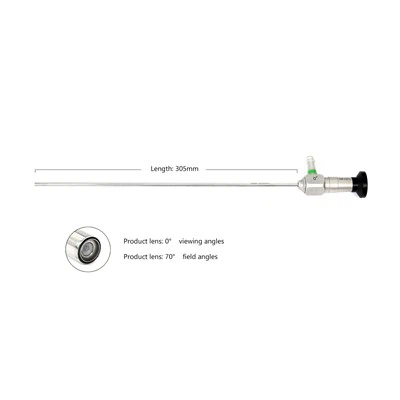
Understanding the noise level of a fibrescope is essential for anyone who uses or intends to purchase these instruments. By knowing the different types of noise, how they are measured, and the factors that influence them, users can make more informed decisions when selecting a fibrescope for their specific application.
Endoscope As a fibrescope supplier, we are dedicated to delivering products that meet the highest standards of performance and reliability. If you are in the market for a fibrescope and require a low – noise solution for your inspection or diagnostic needs, we invite you to reach out to us for a detailed discussion. Our team is eager to work with you to find the perfect fibrescope that suits your requirements.
References
- "Fundamentals of Photonics" by Bahaa E. A. Saleh and Malvin Carl Teich
- "Electronic Circuits: Fundamentals and Applications" by John Storey
- "Medical Imaging: Physics and Engineering" by Robert Chaplin
Zhejiang Jiacheng Medical Instrument Co., Ltd.
We’re well-known as one of the leading fibrescope manufacturers and suppliers in China, specialized in providing high quality customized service to global clients. Please feel free to buy discount fibrescope from our factory. Contact us for more details.
Address: Building 8, Shutai · Fuchun Innovation Park, No. 516, Majia Road, Fengchuan Subdistrict, Tonglu County, Hangzhou, Zhejiang Province, China
E-mail: Ken.huangfu@jiachengmedical.com
WebSite: https://www.jiachengmedical.com/
