Hey there, if you’re here, odds are you’re dealing with busbar joint accessories and that whole “will this play nice with everything else?” panic. Let me cut to the chase—when I’m on the busbar joint accessories team, this is the #1 question every electrician, panel builder, or project engineer hits: you can spend weeks picking the perfect busbar, but if your joint bits don’t mesh with breakers, switches, or those random old components you’ve got laying around, you’re staring at a fire hazard, downtime, or a whole rework bill that’ll make you groan. I’ve seen it, lived it, fixed it, and I’m here to break this down like we’re geeking out over tech at a shop floor, no stuffy jargon. Busbar Joint Accessories
First off, let’s get one thing straight: compatibility isn’t just a vibe check. It’s a mix of three big, boring-but-critical buckets: physical fit, electrical harmony, and thermal stability. Skip any one of these, and you’re asking for trouble. Let’s start with the most obvious (and most messed up when it’s wrong) part: physical fit. I once had a project where a customer grabbed our M8 torque busbar lugs to pair with a 100A MCCB they swore was “standard”… turns out the breaker’s terminal pitch was 5mm narrower than our lug’s hole spacing. They spent 12 hours drilling new holes in the busbar, and we ate half the labor because we should’ve walked them through verifying the specs first. Here’s the tea for physical fit: don’t rely on “that’s how it’s always been done.” Yes, most MCBs or MCCBs use common terminal sizes, but there’s always that one oddball unit from a 2019 project or a European import that doesn’t line up. What do we actually check? First, terminal dimensions: hole diameter, pitch (the distance between holes), thread type—metric vs. imperial, people! I can’t tell you how many times someone mixed up M10 (metric, 10mm) with 3/8” UNC (imperial) because they didn’t notice the markings. Then there’s busbar thickness. Our busbar joint accessories are made for 1.5mm, 2mm, or 3mm thick copper or aluminum busbars—if you’re slapping a 3mm accessory on a 1mm thin busbar? It’ll bend under torque, and that’s a loose connection waiting for disaster. Oh, and don’t forget terminal orientation! Some breakers have side-mount terminals, some top-mount, and if your lug is made for top-mount, it’ll stick out and hit adjacent components. We actually had a customer send us a photo last week where their busbar lug was touching a control wiring terminal—we corrected their orientation, and they avoided a short that would’ve taken down an entire warehouse’s lighting system.
Next up, electrical compatibility. This isn’t just about “does it conduct?”—it’s about not messing with current flow, voltage drops, or corrosion. Let’s start with material matching. I swear, 80% of the electrical issues we troubleshoot come from mixing copper and aluminum without a barrier. If your busbar is aluminum (super common in big commercial projects for weight and cost) and your joint accessory is copper, you need a bi-metal transition lug or a nickel-plated copper adapter. Why? Copper and aluminum form a galvanic cell when they touch in the presence of moisture, and that eats away at the connection over time. I’ve seen terminals corrode so bad they just crumbled when someone turned a wrench. Also, conductivity ratings: every one of our busbar joint accessories has a rated current and voltage on it. You can’t pair a 600V rated lug with a 1000V system—even if it fits, it’s not safe. And current: if your busbar carries 200A, don’t use a 150A rated joint piece. That’ll overheat, plain and simple. Wait, also—crimp vs. torque? Some accessories are crimp-type, some are bolted. Make sure the one you pick matches how the component you’re connecting works. We had a guy once use a crimp lug on a breaker that only accepts bolted terminals—took him 20 minutes to fix, but that’s 20 minutes he could’ve been finishing another job. Oh, and busbar type: solid vs. laminated? Laminated busbars are for high-frequency stuff (like data centers) and their joint accessories have to be sized for the laminations, not just the total cross-sectional area. If you use a standard solid-bus lug on a laminated bar, you’ll only connect to the outer layers, causing hot spots. I learned that the hard way on a small data center project a few years back—we fixed it, but it taught us to highlight laminated bus compatibility on every product page, not just small print.
Now, the part that surprises most people: thermal compatibility. Most guys check volts and amps, but ignore heat. Busbar joints get hot—all that current flowing through a tight space, friction from torque, material resistance. So your joint accessory has to be able to handle the same temperature as the rest of the system, and not create more heat than it fixes. First, temperature ratings: all our busbar joint accessories are rated for at least 105°C, which is standard for most low-voltage systems, but if you’re doing something industrial with high ambient temps (like a factory floor where it’s 40°C in the summer), you need a 150°C rated accessory. Also, thermal expansion: copper expands at a different rate than aluminum, right? If you pair a copper joint with an aluminum bus without a transition, the expansion difference will loosen the bolt over time, creating a loose connection that gets hot, which makes expansion worse, and so on until it fails. We test every one of our products for thermal cycling—heating them up and cooling them down hundreds of times—to make sure they don’t loosen. That’s non-negotiable. Also, contact pressure: when you torque a bolt, you get a specific amount of pressure between the joint and the component. Too little pressure = loose, too much = you strip the thread or crack the lug. We always include a torque spec with every product, and we tell customers to use a torque wrench—not just a regular wrench, because everyone over-tightens or under-tightens. A friend of mine who’s an electrician swears he’s seen guys use pipe wrenches on these, and that’s a disaster waiting to happen.
Wait, let’s talk about the stuff no one tells you: documentation and testing. I know, docs are boring, but when a project goes sideways, that’s the first thing you need. At our company, we don’t just sell busbar joint accessories—we provide CAD files, spec sheets, and even compatibility checklists for every major breaker brand (Schneider, ABB, Siemens, you name it). Why? Because 9 times out of 10, if a customer has a compatibility issue, it’s because they didn’t cross-reference the accessory’s specs with the component’s actual specs. Also, third-party certifications: UL, CE, IEC—those aren’t just stickers. If your joint accessory is UL-listed, that means it’s been tested to work with other UL-listed components, so you know the standards line up. We only sell accessories that are third-party tested, because we don’t want to be responsible for something going wrong. I once had a competitor reach out to us because a project they supplied failed, and their accessories weren’t certified to the local standard. We walked them through checking the component’s standard, and they ended up reworking the whole thing at their cost. That’s why docs and certifications are non-negotiable.
Oh, and let’s not forget that one-off thing: legacy components. Everyone has old breakers or busbars from a 10-year-old project. That’s the hardest part, because specs change. If you’re adding a new busbar joint to an old system, don’t guess—reach out to the component manufacturer, or send us the old component’s specs, and we’ll match the accessory to it. We had a customer last year with a 2012 Siemens panel—their old joint accessories were discontinued, so they were stuck. We pulled the original Siemens spec for that panel, found the exact busbar pitch and terminal size, and shipped them matching accessories in 3 days. They saved $10k in panel replacement costs because we didn’t just sell them a generic accessory—we matched the legacy specs. That’s the stuff that makes the difference between a good supplier and a great one.
Wait, let’s wrap this up with some quick, actionable steps so you don’t have to read another wall of text. First, before you buy any busbar joint accessories, jot down three things: 1) Exact terminal specs of the component you’re connecting (hole size, pitch, thread, top vs. side mount), 2) Your busbar’s material (copper/aluminum) and thickness, 3) System voltage, current, and ambient temp. Then, cross-check that with the accessory’s specs—don’t rely on product names like “universal” because there’s no such thing as universal for this. Also, use a torque wrench, get certified products, and don’t mix metals without a barrier. If you’re not sure, just ask—we’re here for this exact stuff.
Look, at the end of the day, busbar joint accessories are like the unsung heroes of electrical systems. They hold everything together, carry all the current, and if they’re not compatible, the whole system is a ticking time bomb. I’ve been in this game for 8 years, worked on projects from small retail stores to big data centers, and the one thing that never changes is that taking 10 extra minutes to check compatibility saves you 100 hours of rework later.
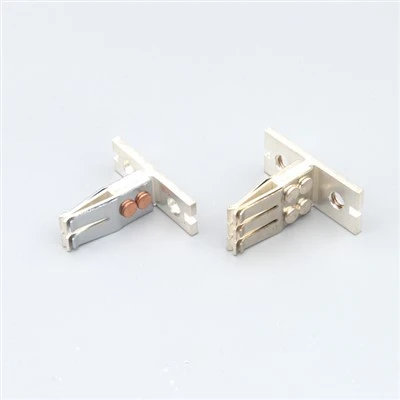
If you’re working on a project, have a weird component that you’re not sure will play nice, or just need help picking the right busbar joint accessories, hit us up. We don’t do pushy sales calls—we send you a quick compatibility check, CAD files, and all the specs you need to make sure everything lines up. No guesswork, no hidden fees, just solid advice from people who actually work with this stuff every day.
Busbar Trunking Accessories REFERENCES
- NFPA 70, National Electrical Code (NEC), Article 312 (Wiring Methods) and 320 (Busways)
- IEC 60439-1, Low-voltage switchgear and controlgear assemblies – Part 1: General rules
- Copper Development Association, “Galvanic Corrosion in Electrical Connections”
- American Bureau of Shipping (ABS), Guidelines for Electrical Systems in Marine and Offshore Applications
- Schneider Electric, Product Compatibility Guide for Low-Voltage MCCBs and Busbar Accessories
Suzhou Kiande Electric Co., Ltd.
Suzhou Kiande Electric Co., Ltd. is one of the most professional busbar joint accessories manufacturers and suppliers in China, also supports custom service and OEM&ODM service. Welcome to buy durable busbar joint accessories made in China here and get quotation from our factory. Quality products and reasonable price are available.
Address: No.123, Suzhou Avenue East, Suzhou Industrial Park Suzhou, Jiangsu 215000 China
E-mail: saleswmkc@kiande.cn
WebSite: https://www.busbarcncmachine.com/
