Hey there, if you’ve ever spent any time around farming, gardening, or even landscaping, you’ve probably heard someone ramble on about soil health. And the big one everyone’s fixated on these days? Soil organic matter (SOM). It’s like the Swiss Army knife of soil—feeds plants, holds water, keeps nutrients from washing away, even helps fight off pests. But here’s the thing: to actually fix or boost SOM, you gotta know what you’re working with. That’s where soil analysis instruments come in, and I get so many questions from growers, lab techs, and even random hobbyists asking: “Wait, can these machines actually measure soil organic matter properly?” Soil Analysis Instruments
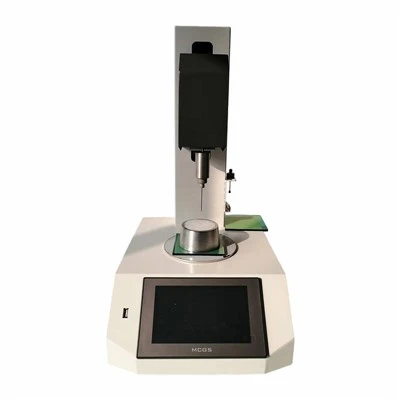
As a soil analysis instrument supplier, I don’t just sell gear—I’ve fielded this question, in one form or another, at trade shows, over Zoom calls, and even when I’m grabbing coffee at a local agri-shack. The short answer is yeah, but it’s not as simple as sticking a sensor in the dirt and getting a perfect number. There’s a lot going on under the hood (pun totally intended) that makes this both fascinating and a little confusing. Let’s break it down like I would with a new customer who’s just learning their way around a lab.
First, let’s level-set what soil organic matter actually is for anyone who’s been napping through high school bio. SOM isn’t just dead leaves or old roots—wait, it is, but also like 100 other things. Think decomposed plant material, tiny dead microbes, insect poop, even the sticky gunk that roots exude to hold onto soil particles. The ideal range? Depends on where you are, but most row crops do well with 2–5%, while pastures might hit 8% in really good spots. If it’s lower than 2%, you’re basically dealing with “dead” soil that can’t keep up with drought or heavy rains.
Now, how do soil analysis instruments measure this stuff? There are two main camps, and they’re not created equal. Let’s start with the old-school method that’s still the gold standard in labs: dry combustion. That’s where you take a dry, ground soil sample, burn off all the organic material at super high temps (around 500–550°C), and the weight loss is SOM. Wait, hold on—you might be thinking, “Aren’t there other things that burn off at that temp? Like carbonates?” Yeah, exactly. So you have to pre-treat the sample with acid to strip out carbonates first, otherwise you’re overcounting SOM. Modern combustion instruments do this automatically, which cuts out human error. I’ve seen a $50k combustion machine spit out results that are accurate to within 0.1%—insane, right? But they’re pricey, and not every small lab can swing that.
Then there’s the method that’s blowing up right now because it’s faster, cheaper, and works for on-site testing: near-infrared spectroscopy (NIR). NIR instruments shine different light wavelengths on a soil sample, and measure how much light gets absorbed or reflected. Every organic molecule has a unique “light fingerprint,” so the machine can guess how much SOM is there by matching the pattern to a pre-loaded database. No pre-treating samples, no burning anything—just grind a bit of dirt, pop it in, and 2 minutes later you have a number. That’s game-changing for farmers who don’t want to wait 3 days for lab results to adjust fertilizer. But here’s the catch: NIR only works if its database is trained on local soil. If you’re in Iowa using a machine calibrated for soils in France, your numbers will be garbage. I had a guy reach out last year from a small homestead in Ohio who bought a cheap NIR unit online, and his numbers were off by 2% because it was calibrated for tropical soils. Oops.
Wait, are there other ways? Yeah, like loss on ignition (LOI), which is basically the home version of combustion. You heat a sample in a muffle furnace, weigh it before and after, and call the difference SOM. It’s cheap, no fancy tech, but way less accurate—you still have to worry about carbonates, and some minerals (like clay) can lose water when heated, so that skews results. We don’t recommend this for anyone who needs reliable data, just quick ballparks.
So the big question: do these instruments actually measure SOM, or just estimate it? Let’s be real—no machine is perfect, and all methods have pros and cons. The combustion ones measure it directly, so that’s the “actual” number, but they’re not portable. NIR is an estimate, but a really good one if it’s calibrated right. The key here is matching the instrument to what you need it for. If you’re a university lab doing regulatory research, you need combustion. If you’re a consultant visiting 10 farms a week, NIR is way more practical.
Now, let’s talk about the messy parts that no one posts about in marketing brochures. First, sample prep is everything. If you bring a machine a sample full of rocks, roots, and grass clippings, it’s going to give you a bad number, no matter how fancy the tech is. I once had a client who brought me a sample of “soil” from their pasture that had a whole dead mouse in it—their SOM reading was like 15%, which was impossible, because the mouse added extra organic matter that wasn’t part of the native soil. That’s not the machine’s fault, that’s user error.
Another thing: moisture. Soil’s like a sponge—if it’s wet, it adds weight, and combustion machines account for that by drying samples first, but NIR can get thrown off by moisture too, unless it’s got a built-in drying function. Cheap NIR units don’t have that, so you have to air-dry samples for 24 hours before testing, which kills the “fast” advantage.
And let’s not forget about different soil types. Clay vs. sand vs. loam—they all behave differently. Combustion instruments don’t care as much, because they’re measuring carbon specifically (SOM is mostly carbon, right? Like 58% on average). Wait a second—hold on, I should mention that. A lot of people say “measure SOM,” but most instruments are actually measuring total organic carbon (TOC), then multiplying by 1.724 to get SOM. That conversion factor comes from old research where SOM is about 58% carbon. Is that exact? No. Some soils have more carbon, some less. So that’s another small source of error. Combustion machines actually measure TOC, so you have to do that math, and that conversion is a tiny step, but it adds up. NIR might skip that step if it’s calibrated to output SOM directly, but again, that goes back to the training data.
Okay, so now that we’ve got the hows and the whats, let’s get to the real world. I work with a lot of row-crop farmers in the Midwest, and they used to send all their samples to a big lab that used combustion, but now more and more are buying portable NIR units because they can test every field every month, adjust their cover crops or fertilizer rates right away. One farmer I worked with last year, John, had been trying to boost SOM on his corn-soy fields for 5 years, and he was guessing how much he was adding. Once he got his calibrated NIR unit, he found out his cover crop was dying too fast, so he switched to a mix of clover and rye, and his SOM went up 0.3% in a year—huge for a farm that size. That’s the power of these instruments, not just the number, but the action you take from it.
But I also work with small labs that can’t afford a combustion machine ($40k+ is not cheap). We helped them set up a partnership where they send samples to a central lab for combustion, but use their own NIR for routine testing. That way, they get the accurate “true” number once, then use that to calibrate their NIR, so their daily tests are reliable. It’s a middle ground that works for a lot of places.
Wait, what about hobbyists? I get it—you want to test your backyard garden or your small farm. Don’t drop $2k on a NIR unit. You can pick up a cheap test kit online, but those are usually just colorimetric tests, which are super inaccurate. Most of them just measure “total organic matter” in a solution, not actual soil, so they’re for fun, not for actual management. If you’re serious, either send a sample to a local lab, or go for a mid-range NIR unit that’s calibrated to your area—we have some that are $5k, which is doable for a small business or a dedicated homesteader.
Let’s bust some myths here, too. A lot of people think “smart” sensors that stick in the ground (like the ones you see on TikTok) can measure SOM in real time. Nope. Those are for things like moisture, pH, nitrogen—they don’t have the tech to measure organic matter, because it’s tied up in solids, not dissolved in water. Real-time soil sensors are great, but they can’t do SOM. That’s a common mistake, and I wish more people would clarify that.
Another myth: higher SOM is always better. Well, yeah, up to a point. If your SOM is over 10% in a corn field, that’s probably too much—you might get too much nitrogen release, which makes plants grow too fast and get more pests. So the instrument gives you the number, but you have to know what that number means for your specific soil and crop. That’s where we come in too—we don’t just sell instruments, we teach people how to read the numbers and use them.
So circling back to the original question: Can soil analysis instruments measure soil organic matter? The answer is: Yes, but it depends on the instrument, the sample, and what you need the data for. Direct measurement (combustion) gives you the most accurate, lab-grade number, but it’s for batch testing in a controlled setting. NIR gives you fast, on-site estimates, but only if it’s properly calibrated. The cheap, at-home kits? They’re not great, but they’re okay for a rough idea.
Here’s the thing I tell everyone who asks: The worst thing you can do is use an uncalibrated instrument and make big decisions based on bad data. SOM is a long game—you’re not going to see a 1% jump in a season, so if your instrument gives you a wacky number, don’t panic. Send a duplicate sample to a lab for combustion to check. That’s how you build trust in your gear.
If you’re a farmer, lab tech, or garden nerd who’s ready to stop guessing about your soil’s organic matter, and start testing with confidence, we can help. We don’t just sell instruments—we help you pick the right one for your budget and your needs, calibrate it for your local soil, and walk you through how to use the data to actually make changes that help your soil (and your bottom line). Whether you need a portable NIR unit for on-farm testing, a high-end combustion machine for a lab, or just help figuring out which route to take, we’re here to chat. Reach out, no pressure, just real talk about soil and tools that work.
Material Testing Machines References:
- Saviozzi, A., et al. (2001). Comparison of methods for soil organic matter determination. Communications in Soil Science and Plant Analysis, 32(15-16), 2505-2514.
- Viscarra Rossel, R. A., et al. (2016). Visible and near-infrared spectroscopy: An alternative to wet chemistry for soil analysis. Advances in Agronomy, 139, 139-198.
- Dick, R. P. (2011). Soil organic matter: Critical role in soil quality and sustainable agriculture. Soil Science Society of America Journal, 75(1), 1-12.
Hebei Wanluda Testing Instrument Equipment Co., Ltd.
As one of the most professional soil analysis instruments manufacturers and suppliers in China, we have world-leading production equipment and strong manufacturing capabilities. Please rest assured to buy advanced soil analysis instruments made in China here from our factory.
Address: Zhouguantun Village, Xian County, Cangzhou City, Hebei Province, P.R.China
E-mail: wldinstrument@163.com
WebSite: https://www.wldinstrument.com/
