If you’ve ever worked in electronics design—whether you’re a seasoned hardware engineer, a hobbyist wiring up a new IoT device, or a production manager troubleshooting batch failures—you’ve probably relied on TVS diodes without even realizing it. Those tiny, unassuming components are the unsung heroes protecting sensitive circuits from the surge of voltage spikes, static electricity, or transient voltage events that can turn a functional prototype into a paperweight in milliseconds. But if you’ve ever stared at a component list that reads “TVS diode, SOD-123FL, 0402, DO-214AA” and wondered what all those acronyms mean, you’re not alone. As a TVS supplier who’s spent the last 12 years talking to engineers every week about their design challenges, I’ve learned that package type isn’t just a technical detail—it’s one of the first decisions that can make or break a design’s performance, manufacturability, and cost. Today, I want to break down the most common TVS diode packages, how they’re used, and why picking the right one isn’t something you can afford to guess at. TVS
Let’s start with the basics: what a TVS diode package actually does, beyond housing the semiconductor die inside. The package is more than a protective shell—it’s the interface between the diode and your circuit board. It determines how much power the diode can dissipate, how easy it is to solder during mass production, how much space it takes up on your PCB, and even how well it handles heat in high-temperature environments. A package that works for a consumer wearables device might be completely unsuitable for a industrial sensor that needs to operate in a -40°C to 125°C range, and vice versa. I’ve seen this mistake happen dozens of times: a design team picks a tiny 0201 package to save space on a smartwatch, only to find that during prototype testing, heat buildup causes the diode to fail during a high-voltage surge. Or another team uses a through-hole package for a high-volume automotive line, driving up soldering costs when a surface-mount alternative would have worked just as well.
Let’s dive into the most prevalent packages, starting with the smallest ones that dominate portable electronics. First up: the 0201 and 0402 surface-mount packages. These are the tiny guys, measuring 0.02 x 0.01 inches and 0.04 x 0.02 inches respectively. If you’ve ever held a wireless earbud or a fitness tracker, that little rectangle on the main circuit board protecting the Bluetooth chip is almost certainly a 0201 or 0402 TVS. These packages are designed for ultra-compact designs, which is why they’re so popular with consumer electronics and IoT device makers. But their small size comes with tradeoffs. The maximum power dissipation for a 0402 TVS is usually around 0.5W, while a 0202 tops out at 0.2W. That means they’re only suitable for low-voltage, low-power circuits—think USB data lines, low-speed sensor inputs, or small signal lines. I once had a customer designing a compact hearing aid who came to me panicking because their prototype kept failing EMC testing. They’d used a 0201 TVS for the microphone input, which was meant to handle a 50V ESD spike, but the tiny package couldn’t dissipate that power, leading to the diode shorting out. We swapped in an SOD-523 package, which is only slightly larger but has twice the power handling, and the issue was fixed. The lesson here: size always has a tradeoff when it comes to TVS diodes.
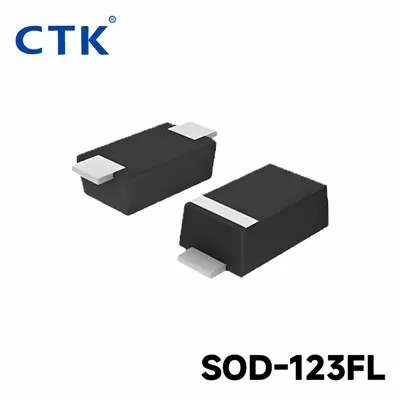
Next on the list: SOD packages, which stands for Silicon-On-Diode, though in practice, they’re surface-mount diodes with a variety of sub-types. The SOD-123 is one of the most versatile and widely used TVS packages, measuring 0.12 x 0.06 inches. It’s a step up from the 0402, with power ratings between 1W and 2.5W, making it suitable for a much wider range of applications. I see SOD-123 packages used all the time in automotive infotainment systems, industrial control boards, and even mid-range smart home devices. What makes SOD-123 so popular is its balance of size, power, and manufacturability. It’s compatible with standard pick-and-place equipment for high-volume production, and its form factor makes it easy to place close to the pins of sensitive ICs, which is critical for surge protection—you want the diode to catch the spike before it travels down the trace to the vulnerable component. A sub-type of SOD-123 is the SOD-123FL, which stands for “flat lead” and has thinner leads that reduce parasitic capacitance. That’s a big deal for high-speed data lines, like USB 3.0 or HDMI, where even a tiny amount of capacitance can distort signals. I worked with a team designing a gaming monitor last year that was getting signal integrity issues when they added TVS diodes to the HDMI ports. We switched from standard SOD-123 to SOD-123FL, and the signal distortion dropped below the acceptable threshold for HDMI 2.1. It was a small change, but it saved them from having to redesign the entire board layout.
Another common SOD variant is the SOD-523, which we touched on earlier, measuring just 0.05 x 0.03 inches. It’s smaller than SOD-123 but bigger than 0201, with power ratings around 0.5W. It’s the sweet spot for designs where you need a little more protection than a 0201 can provide, but still need to keep space to an absolute minimum. Think of it as the “just right” option for mid-sized portable devices like Bluetooth speakers or smart thermostats. I also frequently recommend SOD-523 for low-voltage industrial sensors, which often have limited PCB space but need to handle slightly higher surges than consumer electronics.
Moving up in power and size, we get to the DO series packages, which are larger surface-mount or through-hole packages designed for higher power applications. The DO-214AA, also known as SMB (Surface Mount Device), is a workhorse for mid-to-high power TVS applications. It measures 0.2 x 0.1 inches, with power ratings from 5W to 15W, making it ideal for higher-voltage circuits like power supplies, battery management systems, and automotive main power lines. DO-214AA is also very durable, with excellent thermal performance, which is critical in environments where the diode has to handle repeated surges or operate at high ambient temperatures. I had an automotive customer a few years back who was having issues with their electric vehicle’s on-board charger. The original TVS they’d used was an SOD-123, which kept failing during load dump events—high-voltage spikes that happen when alternators charge batteries. We swapped in a DO-214AA TVS, which can handle up to 15W of power, and the failure rate dropped from 8% in production to less than 0.1%. The change was a small one, but it prevented a lot of warranty claims and downtime for their assembly line.
For even higher power applications, there’s the DO-214AB package, also known as SMC, which is slightly larger than DO-214AA, with power ratings up to 40W. This is the go-to package for heavy-duty industrial equipment, solar inverters, and high-voltage battery systems. If you’re working on a solar panel array, for example, the power lines running from the panels to the inverter can have very high surge voltages, and you need a TVS that can dissipate a lot of power without failing. DO-214AB is also designed to handle higher peak currents, which is essential for these types of applications. I’ve been working with a solar inverter manufacturer for three years, and we’ve standardized on DO-214AB TVS diodes for their main power lines because they consistently perform well in the extreme temperature and voltage conditions of rooftop solar installations.
Now, if you’re working on applications that need to withstand extremely harsh environments, like heavy industrial machinery or outdoor power equipment, you might need to consider through-hole TVS packages. The DO-15 package is the most common through-hole TVS, measuring around 0.2 inches in diameter, with power ratings up to 15kW peak pulse power. Through-hole packages are more rugged than surface-mount, with thicker leads that can handle higher mechanical stress and heat, which is why they’re preferred for equipment that might be exposed to vibration, shock, or extreme temperatures. They’re also easier to hand-solder for small-volume prototypes, though they’re less cost-effective for high-volume production. I still see a lot of small-scale industrial equipment manufacturers using DO-15 TVS diodes because they’re simple, reliable, and easy to source. But I’ll note that in recent years, many of these applications have started switching to surface-mount alternatives with similar power ratings, thanks to advances in semiconductor technology that allow higher power density in smaller packages.
One package that’s been gaining a lot of traction lately, especially for high-speed data and communication applications, is the DFN package, or Die-First No-Lead. These packages are extremely compact, with very low parasitic capacitance and inductance, which is critical for 5G, PCIe, and Ethernet lines. DFN TVS diodes are often used in base stations, routers, and high-speed consumer devices where signal integrity is just as important as surge protection. For example, a 5G base station has hundreds of high-speed signal lines, and even a tiny amount of capacitance from a TVS diode can slow down data transfer or cause signal loss. DFN packages solve that problem, making them a popular choice for next-generation communication equipment. I’ve seen DFN TVS diodes being used in everything from 5G smartphones to industrial Ethernet switches, and their popularity is only going to grow as more high-speed applications hit the market.
Now, I want to address a common question I get from engineers: how do I pick the right package for my design? It’s not just about power rating or size—there are a few other factors to consider. First, look at your application’s requirements: what’s the maximum surge voltage you need to handle, what’s the ambient temperature range, and is this a high-volume production line or a small prototype? For high-volume consumer electronics, you’ll want a surface-mount package that works with standard pick-and-place equipment to keep costs low. For harsh industrial or automotive applications, you’ll want a package with high thermal performance and mechanical ruggedness, whether that’s a DO series surface-mount or a through-hole DO-15. Another factor is PCB layout: if you can place the TVS diode right next to the IC pin it’s protecting, a smaller package like SOD-523 or DFN might work, but if you need to route traces a longer distance, you might need a larger package with better power handling to compensate for any voltage drop along the trace.
I also want to talk about some common mistakes I’ve seen over the years. One big one is underrating the power rating. A lot of engineers will look at the peak voltage of a surge and pick a TVS diode based solely on that, but they forget to account for the power dissipation, which depends on the surge duration and the ambient temperature. For example, a surge that lasts 10 microseconds is much lower power than a surge that lasts 1 millisecond, even if the voltage is the same. Another mistake is ignoring parasitic capacitance for high-speed data lines. A TVS diode that works great for a power line might introduce enough capacitance to cause signal loss on a USB 3.0 or Ethernet line, so you need to make sure you’re choosing a package with low capacitance ratings for those applications.
As a TVS supplier, my job isn’t just to sell you diodes—it’s to help you solve your design problems. I’ve worked with hundreds of engineers across every industry, from startup teams building the next big IoT gadget to global automotive manufacturers, and I’ve learned that the right TVS package can make a huge difference in a product’s success. Too often, design teams cut corners on component selection, only to find themselves dealing with costly failures in testing or production. Taking the time to understand package types, their tradeoffs, and how they align with your application’s needs will save you time, money, and headaches down the line.
If you’re currently working on a design and unsure which TVS diode package is right for you, or if you’ve been dealing with surge-related failures in production, I’m here to help. I’ve got decades of experience working with engineers on everything from small wearables to large industrial systems, and I can help you pick the right component to meet your performance, cost, and production needs. Don’t leave your circuit’s protection to chance—reach out to our team to connect for sourcing and design consultation today. We look forward to partnering with you to build more reliable, high-performing electronics.
Fast Recovery Diode References
Surface Mount Device (SMD) Semiconductor Packages. JEDEC Solid State Technology Association.
Transient Voltage Suppressor (TVS) Diode Selection Guide. Bourns Inc.
Automotive Transient Protection for Electronic Systems. International Council on Clean Transportation.
High-Speed Signal Integrity Considerations for TVS Diodes. Texas Instruments.
Tongke Electronic Co., Ltd.
Tongke Electronic Co., Ltd. is one of the most experienced tvs manufacturers and suppliers in China, featured by quality products and low price. Please rest assured to wholesale advanced tvs made in China here from our factory. Contact us for pricelist.
Address: No.3,Chayuan Rd, Street 3, AilingKan, Dalingshan, Dongguan, Guangdong, China.
E-mail: tina@ctk-elec.com
WebSite: https://www.ctkchip.com/
