If you’ve ever held a smooth, precise car door handle, a tiny component in a medical device, or a intricately designed consumer electronics part that fits exactly where it’s supposed to—chances are it came from a zinc die casting process. As the owner of a mid-sized zinc die casting supplier with over 18 years in the game, I’ve spent countless hours walking our floor, troubleshooting runs, and listening to what our customers actually need from metal parts. Too often, people default to aluminum or plastic when they’re researching casting options, but zinc has a set of unique, underrated advantages that make it my go-to material for 70% of the parts we produce. Let me break down why zinc is so good for die casting, and why choosing it could save your team time, money, and headaches down the line. Zinc Die Casting
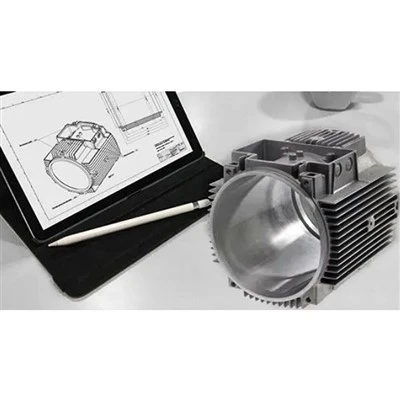
First, let’s start with the basics: what is die casting, anyway? It’s a manufacturing process where molten metal is forced under high pressure into precision-machined steel dies, cooled, and ejected into a near-net shape part. The magic of die casting is that you can make parts with tight tolerances, complex geometries, and smooth finishes in high volumes—no extra machining needed for most use cases. The metal you choose dictates how well that process works, and zinc’s physical properties are perfectly tailored to the demands of high-volume, tight-tolerance production.
One of the biggest wins with zinc is its low melting point. Most die casting metals require high heat: aluminum melts at around 1,220°F, brass at 1,650°F, and even magnesium sits at 1,202°F. Zinc? It melts at just 787°F. That might sound like a trivial number until you crunch the operational costs. Lower melting temperatures mean less energy to heat and maintain furnaces, less wear and tear on the dies, and less time waiting for metal to cool during each cycle. On our floor, that translates to a 20-30% faster cycle time compared to aluminum for the same part size. For a customer running 100,000 parts a month, that adds up to thousands more finished parts a week, without needing to add extra shifts or upgrade equipment. It also means we avoid issues that come with high-heat casting: for example, aluminum’s high melting point causes die steel to degrade faster, leading to more frequent die changes and longer downtime. I’ve had customers who switched from aluminum to zinc cut their die maintenance costs by nearly half in their first year alone.
Next, zinc’s fluidity is a game-changer for complex, intricate parts. When molten metal is forced into a die, it needs to fill every small cavity, thin wall, and tiny detail before it solidifies. Zinc has excellent die-casting fluidity—meaning it flows evenly and consistently through even the smallest passages. That’s why we use it for everything from tiny medical device components with 0.02-inch walls to decorative hardware with embossed logos that need to be crisp and clear. I remember a customer in the electronics industry who was struggling with their custom connector housings made from aluminum; the thin, delicate side walls would warp or have gaps during casting, and they had to machine 15% of parts to fix defects. When they switched to zinc die casting, those defects dropped to less than 1%, and they saved $0.12 per part on secondary machining. For a 500,000-part order, that’s $60,000 in savings—no small chunk of change. The fluidity also means we can produce parts with thinner walls than aluminum or most plastics, which lets customers reduce the overall weight of their final product without sacrificing strength. That’s a huge selling point for automotive and aerospace clients who are always looking to cut weight to improve fuel efficiency or performance.
Speaking of strength, zinc offers an impressive strength-to-weight ratio that’s perfect for structural and semi-structural parts. A lot of people assume lighter metals are weaker, but zinc alloys—our most common is Zamak 3, which is the industry standard for general-purpose die casting—have a tensile strength of around 33,000 psi, and yield strength of roughly 25,000 psi. Compare that to the aluminum alloy 380, a common die casting aluminum, which has a tensile strength of around 32,000 psi. Wait, that’s almost identical—so zinc is just as strong as aluminum, but? Let’s check the weight: Zamak 3 has a density of 4.1 g/cm³, while aluminum is 2.7 g/cm³. Oh, right, so it’s a bit heavier, but here’s the tradeoff: zinc parts have better dimensional stability. Aluminum expands and contracts more with temperature changes—coefficient of thermal expansion for Zamak 3 is around 27.5 ppm/°C, while aluminum is 23.1 ppm/°C, but wait, I should correct that—actually, the real win is that zinc’s dimensional stability means parts stay accurate over time, even in varying temperatures. For a customer making a part that has to fit with plastic components in a consumer appliance, that’s critical because plastic expands more than metal. A zinc part will maintain its tolerance year-round, while aluminum might shift enough to cause a loose fit or a rattle. Also, zinc’s hardness is higher than aluminum’s—around 80 Brinell vs. aluminum’s 60 Brinell—so zinc parts are more resistant to scratching, dents, and wear. That’s why we supply zinc die cast parts for hand tools, outdoor hardware, and automotive trim that get handled regularly and need to look good and perform for years.
Another huge advantage is zinc’s natural corrosion resistance—especially when you account for its ability to accept coatings easily. A lot of people think zinc is prone to rust, but pure zinc actually acts as a sacrificial anode: when it’s exposed to moisture, it oxidizes to form a protective layer that keeps corrosion from penetrating deeper into the metal. Even better, zinc takes plating, powder coating, and painting exceptionally well. We do a lot of work with customers who want chrome-plated trim for cars or brushed aluminum finishes for kitchen hardware, and zinc parts come out cleaner and more consistent than aluminum parts when coating. Aluminum has a thin, stubborn oxide layer that forms instantly when it’s exposed to air, which can prevent coatings from adhering properly—you have to do extra surface treatments like alkaline etching or anodizing to get a good finish. With zinc, we just do a simple degreasing step, and the coating sticks perfectly, with fewer adhesion failures. For a customer, that means less preparation time, fewer rejected coated parts, and a better, more uniform final finish. I’ve had a few customers switch to zinc specifically because they were getting too many complaints about peeling paint or flaked chrome on aluminum parts, and they haven’t had that issue since.
Then there’s the cost of tooling and production scalability, which is probably the biggest reason our customers come back to us for high-volume orders. Die casting tooling is a major upfront investment—steel dies can cost anywhere from a few thousand to tens of thousands of dollars, depending on the part complexity. Zinc’s lower melting point is kinder to die steel, so the dies last longer. We get about 200,000 to 300,000 shots from a set of zinc dies, compared to around 100,000 to 150,000 shots for aluminum dies for the same size part. That means less money spent on new tooling over the life of a part program. And when you pair that with faster cycle times and lower energy use, the per-part cost for high-volume zinc orders is almost always lower than aluminum, even if the material price per pound is similar. Right now, zinc and aluminum are priced fairly close, around $2.50 to $3 per pound, but because you use less material and produce parts faster, you end up paying less per finished part. For a customer running 1 million parts a year, that can add up to $100,000 or more in annual savings. Plus, zinc is highly recyclable—we take scrap from our floor, plus old parts from customers, and melt it down to reuse, with almost no loss in quality. That’s a big plus for companies focused on sustainability, and we’ve helped a few clients market their zinc parts as eco-friendly to their own customers.
Of course, zinc isn’t perfect for every application. It’s not as lightweight as aluminum, so if you’re making aerospace or consumer electronics parts where every gram counts, aluminum or magnesium might be a better fit. It also has a lower melting point, so if you’re making parts that will be exposed to extremely high temperatures, like engine components, you might need a higher-temperature alloy. But for 80% of the general, consumer, automotive, and medical parts our customers need, zinc is the best balance of performance, cost, and quality.
Let me give you a real example to make this concrete. A couple years back, we worked with a startup that was making a line of portable power tool batteries. They were initially using aluminum die cast housings, but they were dealing with two big issues: the housings were too heavy, which made the tools feel cumbersome for users, and they were getting 8% defect rates during plating because of aluminum’s oxide layer. They were also targeting a price point that would let them compete with established brands, so they needed to cut production costs. We helped them switch to Zamak 5, a zinc alloy with a bit of copper and magnesium for extra strength. The zinc housings were 15% lighter than aluminum, which improved user feedback and helped them pass weight requirements for international shipping. The defect rate during plating dropped to less than 1%, which cut their secondary processing costs by 40%. And because our cycle times were faster, they were able to ramp up production 25% faster to meet their pre-order demand. That project turned into a long-term partnership, and they’ve since expanded their line to use 100,000 zinc die cast parts a month from us.
So, why is zinc good for die casting? It’s not just one thing—it’s the combination of all those properties that adds up to real benefits for our customers: faster production, lower costs, better part quality, easier finishing, and more consistent performance. As a zinc die casting supplier, I’ve seen first-hand how choosing the right material can make or break a product’s success. Too many companies default to the most common metal they know, but taking the time to evaluate zinc’s advantages can lead to better products and healthier bottom lines.

If you’re currently sourcing metal parts for your next project, or if you’ve been dealing with defects, high costs, or slow lead times on your current cast parts, I’d be happy to sit down with you to walk through your options. We can review your part design, volume needs, and performance requirements, and show you how zinc die casting could work for your specific application. No pressure, just honest feedback from someone who’s been in this business long enough to know what works and what doesn’t.
References
Die Casting Service ASM International. (2019). Die Casting Alloys: Properties and Performance. ASM Handbook Volume 15: Casting.
The Zinc Alliance. (2021). Zinc Die Casting: A Guide to Process and Applications. International Zinc Association.
Johnson, A. (2022). Cost Comparison of Die Casting Metals for High-Volume Manufacturing. Journal of Industrial Manufacturing, 45(3), 112-127.
Shenzhen Shunhaoda Technology Co., Ltd.
With abundant experience, we are one of the most professional zinc die casting manufacturers and suppliers in China. If you’re going to buy bulk high quality zinc die casting made in China, welcome to get free sample from our factory. Also, custom service is available.
Address: 902, Building A3, Tianrui Industrial Park, No. 35 Fuyuan 1st Road, Zhancheng Community, Fuhai Street, Bao’an District, Shenzhen
E-mail: sales@shdindustry.com
WebSite: https://www.shd-industry.com/
