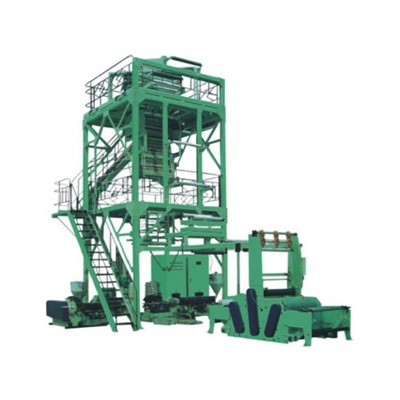
If you’ve ever stepped onto a production floor where bag making machines hum nonstop, you know the raw material you feed into them isn’t just a supply—it’s the backbone of every bag that rolls out. As a bag making machine supplier, I’ve seen too many operators rush this choice, only to end up with constant downtime, faulty seals, or bags that tear the second a customer picks them up. Choosing the right raw material isn’t just about checking a box on a spec sheet; it’s aligning that material with your machine’s capabilities, your product’s end use, and your bottom line. Let’s break this down step by step, from the basics I teach every new operator who walks through my showroom. Bag Making Machine
First, start with your core product’s purpose. This might sound obvious, but I’ve had customers walk in asking for a bag making machine setup for “general use” without ever clarifying if their bags are going to hold takeout food, 50-pound cement bags, or bulk laundry. Each use case demands a different material, and mismatching it will grind your production to a halt. For example, food packaging bags need materials that are FDA-approved for direct contact—no exceptions. If you feed a low-grade, untested film into your machine, you’ll risk fines for non-compliance, and worse, lost customer trust when their bags fail inspection. For heavy-duty industrial bags, on the other hand, tensile strength is non-negotiable. A cement bag needs to withstand the weight of 50 pounds of powder without splitting at the seams; if your material can’t pull that off, your machine won’t be able to seal it reliably, leading to millions in product waste over a month.
Next, factor in your bag making machine’s specific specifications. Not all bag machines are created equal, and the material that works for a mid-range machine won’t work for a high-speed industrial model, or vice versa. Let’s talk about film thickness, for example: a basic machine designed for small retail bags works with film between 10 and 30 microns thick, but a machine built for bulk grocery bags needs film up to 150 microns. If you try to feed 150-micron film into a machine calibrated for 20 microns, you’ll burn out the sealing elements, jam the rollers, and spend thousands on repairs. Another key point is the machine’s sealing system. Hot-cut machines, the most common for lightweight plastic bags, need materials that melt evenly at specific temperatures—low-density polyethylene (LDPE) is perfect here, because it has a consistent melting point and seals smoothly without leaving ragged edges. Heat-seal machines for heavier woven polypropylene (PP) bags, however, need materials that can withstand higher temperatures, and you’ll need to make sure your material’s heat resistance matches the machine’s preset sealing temperature. I always tell customers to bring a sample of their preferred raw material when they test a machine at my facility—this lets us run a trial right there, and we can adjust settings on the spot to avoid surprises once they get back to their factory.
Then, consider material properties beyond thickness and melting point. There are three non-negotiable properties that will make or break your machine’s performance: tensile strength, elongation, and puncture resistance. Tensile strength is how much force the material can take before breaking—critical for any bag that will be lifted or carried. Elongation is how much the material can stretch before breaking; a material with too little elongation (brittle, rigid plastic) will crack during folding or sealing, while too much will cause your machine to stretch the bag out of shape. Puncture resistance is key for bags that might be loaded with sharp items, like hardware tools or produce with stems. A common mistake here is choosing the cheapest material to save money, only to have every 10th bag get punctured on the production line, leading to 10% more waste and 10% slower output. I recently had a customer who switched to a lower-grade LDPE to cut costs, and within a week, their machine was rejecting 15% of bags due to punctures—they ended up spending three times the savings on extra labor and material waste.
Don’t forget about processing compatibility with your machine’s automation and output speed. If you’re running a high-speed machine that produces 500 bags per minute, your raw material can’t have too much static electricity, or it will stick to the rollers and cause jams. Static is a big issue with thin, lightweight films, and many factories forget to add anti-static additives to their material, leading to constant line stops. For machines with inline printing (the ones that add logos, barcodes, or product info directly to the bag), you need a material that accepts ink well. Some low-grade films have a smooth, non-porous surface that makes ink smudge, so you’ll need to choose a material with a treated surface (usually corona-treated) to ensure printing is crisp and permanent. Another automation-related point: if your machine is set up for bag handling, like auto-counting or palletizing, the material’s size consistency matters. If your film has uneven width or thickness, the machine will misalign the bags, leading to uneven seals and wasted product. I always recommend ordering your raw material from a supplier that provides certified width and thickness tolerances—even if it costs a little more, it will save you hours of downtime.
Now, let’s talk about cost and long-term value, because I know every customer is focused on keeping operational costs low. But here’s a truth I’ve learned over 12 years in this business: the cheapest raw material isn’t always the cheapest choice. Let’s do a quick math example: a low-grade LDPE costs $0.20 per kilogram, with a 10% reject rate. A higher-grade LDPE costs $0.25 per kilogram, with a 2% reject rate. If you produce 100,000 bags a month, each bag uses 0.1 kilograms of material. With the low-grade material, you’re buying 11,000 kilograms a month, costing $2,200. With the higher-grade, you’re buying 10,200 kilograms, costing $2,550. Wait, that’s more upfront—but the reject rate is 10% vs. 2%, so you only lose 2,000 bags vs. 10,000 bags. At $0.50 per bag in lost revenue, that’s a $5,000 loss vs. $1,000—so the higher-grade material saves you $2,250 a month, even though it’s more expensive per kilogram. That’s the kind of calculation I walk customers through when they’re torn between cheap and reliable materials. Also, don’t forget to account for machine maintenance. A material with too much filler (cheap materials often add extra fillers to cut costs) will wear out your machine’s rollers and seals faster, leading to more repair bills. I’ve had customers who skipped a $500 material upgrade, only to spend $5,000 on a new machine part three months later.
Another often-overlooked factor: regulatory and sustainability requirements. If your bags are going to be sold in Europe, for example, they need to meet the EU’s Single-Use Plastics Directive, which restricts certain additives and requires labeling for recyclability. In the U.S., FDA approval is non-negotiable for food-contact bags. Choosing a material that doesn’t meet these regulations will get your products pulled from shelves, so it’s worth factoring these rules into your raw material choice from the start. More and more customers are also asking for sustainable materials—biodegradable films, recycled LDPE, or compostable PLA blends. The good news is that modern bag making machines can handle these materials, but you need to make sure your machine is calibrated for them. Compostable materials often have different melting points and stretch properties than traditional plastic, so you’ll need to run test trials to adjust your machine’s settings. I’ve helped several customers switch to sustainable materials, but we always do a test run first to avoid production issues.
Let’s also address common misconceptions that I hear all the time. The first is: “My machine works with material A, so it will work with any material.” That’s rarely true. I had a customer last year who had been using LDPE for retail bags, so he thought he could use the same machine to make heavy-duty woven PP bags. It didn’t work—PP needs a much higher sealing temperature, and the machine’s hot-cut blades weren’t rated for PP, so they melted after two weeks. The second misconception is: “Thicker material is always stronger.” Not necessarily. A 100-micron LDPE bag might be stronger than a 120-micron film with lots of fillers, because the fillers make the material brittle. The only way to confirm strength is to do a tensile strength test on your material sample before committing to a large order. The third misconception is: “All anti-static additives are the same.” No—some additives work for low-speed machines, but not for high-speed models, where static builds up faster. I always recommend asking your raw material supplier about the additive’s compatibility with your machine’s speed.
Now, how do you test raw materials before making a big purchase? Here’s the process I walk every new customer through, step by step. First, order small samples from at least three different raw material suppliers. For each sample, note the material type (LDPE, PP, compostable), thickness, and any certifications (FDA, BPA-free, recyclable). Next, run a 1,000-bag trial on your machine, recording every issue: jams, rejected bags, seal quality, and output speed. If you don’t have your machine set up yet, bring the samples to my facility, and we’ll run the trial for you—this is a free service I offer because I want my customers to make the right choice, not just the quick one. After the trial, calculate the total cost per usable bag: (material cost per kg / kg per bag) plus the cost of labor for fixing rejects, repair costs from machine wear, and lost revenue from delayed output. That number will tell you which material is actually the best value, not just the cheapest.
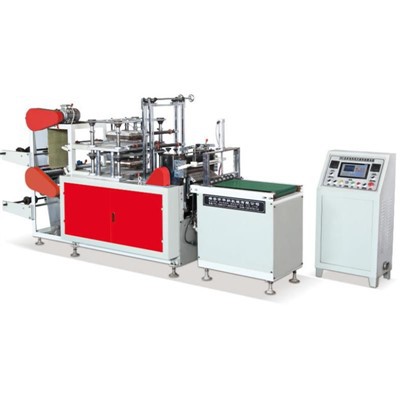
If you’re still unsure which raw material is right for your bag making setup, don’t guess—talk to someone who works with machines and materials every day. As a bag making machine supplier, I’ve partnered with dozens of raw material producers and run thousands of material trials, so I can help you match your product to your machine and budget. I don’t just sell machines; I help customers avoid the mistakes that cost them thousands in downtime. Reach out to start a conversation, bring your product specs or material samples, and we can walk through the process together to find the perfect raw material for your needs.
Mechanical Parts References
- American Society for Testing and Materials (ASTM). Standard Test Methods for Tensile Properties of Plastics, ASTM D638-14.
- European Commission. Single-Use Plastics Directive (2019/904/EU).
- International Organization for Standardization (ISO). Packaging Plastics: Terminology and Specifications, ISO 4589-2.
- Food and Drug Administration (FDA). Guidelines for Indirect Food Additives: Polymers and Resins, 21 CFR Part 177.
- Bag Making Machinery Association (BMMA). Best Practices for Raw Material Compatibility in Bag Production, 2022.
Ruian Huawei Machinery Co., Ltd.
As one of the most professional bag making machine manufacturers and suppliers in China, we’re featured by quality products and low price. Please rest assured to buy discount bag making machine made in China here from our factory. Also, quotation is available.
Address: No. 1, Building 2, Jingye Road, Dongshan Street, Rui’an City, Zhejiang Province
E-mail: 13695753569@163.com
WebSite: https://www.hw-machines.com/
