If you’ve ever walked a construction jobsite or watched a road widening project wrap up, you’ve probably seen two heavy machines doing the work most people can’t tell apart: excavators and backhoe loaders. When I first started in the excavator supply business a decade ago, I used to mix these two up too. I’d show up to a demo for a backhoe, thinking it was a compact excavator, and waste half an hour asking the wrong questions. Now, after selling hundreds of excavators to small contractors, highway crews, and utility companies, I know exactly where the lines are drawn—and why mixing them up can cost a project time, money, and even safety. Let’s break this down the way I explain it to every new customer who walks through my lot, no fancy jargon, just what matters for real jobs. Excavator

First, let’s start with the basics of build and design, because that’s where the biggest differences show up. A backhoe loader is, in literal terms, two machines in one: it has a small front loader bucket on the front end, and a digging arm (called a backhoe) on the back end. Most of the ones we sell as part of our accessory packages have two steer modes: front-wheel steer for moving around a driveway, and four-wheel steer for tight spaces like residential yards. They’re built to be nimble, light enough to drive on a standard contractor’s pickup tow truck, so a small crew can haul one to a job without renting a heavy transport. That’s a huge win for small jobs, but it means they have limits on digging depth and lifting power. A typical backhoe can dig 14 to 18 feet deep, max, and lift maybe 3,000 pounds with the backhoe arm.
Now our excavators—specifically the tracked excavators we stock most often, because they’re the workhorses for 90% of construction work—are single-arm machines, no front loader. Their whole frame is built around that long, articulating boom and arm that you see on excavators. The size range here is way wider: we have mini excavators that are 1 ton, perfect for digging footings in a backyard, all the way up to 50-ton models that can move 10,000 pounds of rock in a single lift and dig 30 feet deep. The tracks, whether steel or rubber, are a big part of that too. Excavators have tracks for stability and flotation, especially on soft mud or uneven ground, while backhoes have rubber tires that are fast on pavement but can sink in loose soil or get stuck on steep slopes. That design difference isn’t just preference—it’s purpose-built.
Next, let’s talk about the core use cases, because that’s where most customers ask “which one do I need?” At the end of the day, a backhoe loader’s sweet spot is small, multi-task jobs where you need to dig and haul dirt without switching machines. If you’re a plumber repairing a water line under a city sidewalk, or a landscaper digging a small garden bed and loading mulch, a backhoe can do both jobs in a single trip. It’s also the go-to for utility work in tight urban areas, where a big excavator would block a whole street and attract permits. But here’s the catch: if you’re working on a commercial foundation, a road excavation, or a large site grading project, a backhoe will slow you down so much you’ll miss deadlines. I’ve seen a small contractor try to dig a 10-foot-deep footing for a 4,000-square-foot house with a backhoe, and it took him two days—when our mini excavator could have done it in four hours. The backhoe’s digging power just isn’t there for that kind of volume.
Excavators, on the other hand, are built for heavy, specialized digging. They’re the machine you call when you’re clearing a construction site, digging basements, demolishing old buildings (with a demolition attachment), or mining small rock formations. The bigger the excavator, the more work it can do faster. For example, a 20-ton excavator can move twice as much dirt in an hour as a comparably sized backhoe, and dig much deeper without needing to reposition as often. That’s why our biggest excavators go to highway departments and large site contractors—they need that power to keep projects on schedule. Excavators also accept way more attachments: you can put a breaker on for concrete demolition, a auger for fence posts, a grapple for moving logs, even a suction bucket for cleaning out culverts. Backhoes can use some attachments too, but they’re limited by their smaller hydraulic power, so they can’t handle the heavy-duty tools that excavators run.
Hydraulics and power are another technical point that matters for anyone buying, not just specs sheets. Excavators have high-flow hydraulic systems, which means they can run those heavy attachments without slowing down. The hydraulic pressure on a 20-ton excavator is around 3,000 PSI, while a backhoe is usually half that, around 1,500 PSI. That difference is huge: if you’re trying to break up 6-inch concrete, a backhoe’s breaker will take twice as long, and you’ll wear out the tool and the machine faster. For us as an excavator supplier, that’s a big reason we focus on excavators for most jobs—our customers tell us the hydraulic power is the reason they finish jobs on time, without extra repair costs. Backhoes are cheaper to buy upfront, but over time, if you’re doing heavy work, the higher maintenance and slower speed make excavators the better investment.
Stability and safety are also big, especially for new operators. Excavators are built with a lower center of gravity, all that heavy weight in the base, so they’re less likely to tip on uneven ground or slopes. Most modern excavators have stabilizers that lower when digging, adding even more stability. Backhoes, because they’re designed to move fast, have a higher center of gravity—they’re more prone to tipping if you dig too deep on a slope, or if you lift a load that’s too heavy. I’ve seen a backhoe tip over in a residential yard when an operator tried to dig a 12-foot hole with the back arm extended too far, and the operator got hurt. That’s why we always tell our new excavator customers, especially first-time operators, about the safety features—excavators are just safer for heavy digging work, no matter the experience level.
Wait, let’s not forget compact models, because that’s where a lot of confusion happens. Mini excavators are often mistaken for backhoes, but even the smallest excavator—our 1-ton mini that fits through a 36-inch gate—has that dedicated boom and track design. It can dig 8 feet deep, same as a small backhoe, but it’s more stable, can get into tight spaces, and doesn’t have that front loader that limits its digging range. A lot of homeowners or small landscapers come to us thinking a backhoe will work for a backyard project, but once they test a mini excavator, they see it’s better for their needs—no need to switch between digging and loading, more power, safer to operate. That’s a big part of our business, helping customers realize they don’t have to pay for a multi-task machine when they only need digging power.
Now, let’s talk about total cost of ownership, which is probably the question I get asked most. Upfront, a backhoe loader is usually 20 to 30% cheaper than a comparable-sized excavator. A 15-ton excavator might cost $150,000, while a 15-horsepower backhoe is around $100,000. But let’s look at operating costs: excavators have longer lifespans, usually 10,000 to 15,000 hours before major overhaul, while backhoes are around 8,000 to 10,000 hours, because they’re used for multi-task work that puts more wear on the engine and hydraulics. Fuel costs: excavators, even big ones, are more fuel-efficient for heavy work, because they can move more dirt per gallon of fuel. I keep track of this with our regular customers—one highway contractor told me his excavators use 2 gallons less fuel per hour than the backhoes he used a few years ago, and he’s saved $120,000 a year in fuel costs alone. That’s a big number that most first-time buyers miss, because they only look at the sticker price.
Another common mix-up: when do you use a backhoe, and when do you use an excavator? Let’s make a quick list of real jobs, so you can see the difference clearly. If you’re: digging a small trench for a fence post, repairing a residential water line, loading mulch or gravel for a backyard, clearing a small driveway—backhoe is fine. If you’re: digging a basement for a new home, excavating a commercial lot, demolishing a garage, breaking up concrete for a road project, moving large amounts of rock or dirt—excavator is the only way to go. That’s the simple rule I teach, and it’s saved a lot of customers from making the wrong choice. I had a customer last year who bought a backhoe for a commercial site job, and after two weeks of falling behind, he traded it in for one of our 15-ton excavators, and finished the job 3 days early. He told me he’d never buy a backhoe for any heavy work again.
Now, let’s address a myth a lot of people have: “excavators are too big for small jobs.” That’s why we have the whole mini excavator line, from 1 ton to 6 tons, that fits through a standard gate and works in yards as small as a quarter-acre. A lot of landscapers come to us worried that a big excavator will damage a lawn, but our mini excavators have rubber tracks that don’t leave ruts, and a narrow frame that can fit between a house and a fence without scraping. For a small job, a mini excavator is often cheaper and more efficient than a backhoe, even though it’s an excavator. That’s a big point to clarify—excavators aren’t just for large jobs, they’re for any digging job where power, speed, and safety matter.
As an excavator supplier, I see the day-to-day problems both machines cause. Backhoes are great, but they’re limited. Excavators are versatile, powerful, and built for the work that keeps our industry moving. If you’re in the market for a new machine, or you’re trying to figure out which one to rent for your next project, don’t just go by what you’ve seen on a jobsite. Think about the size of your project, how deep you need to dig, how much material you need to move, and how tight the space is. If you’re still not sure, feel free to reach out to our team to talk through your needs. We work with contractors of all sizes, from small one-person crews to large highway departments, and we can help you find the right excavator to fit your budget and your project.
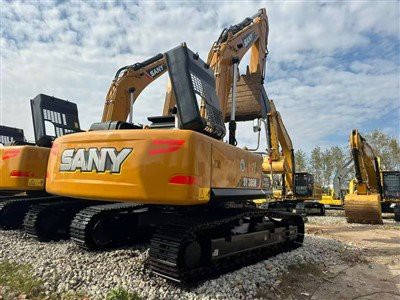
When you’re choosing a machine, it’s not just about the initial cost—it’s about how it performs over the life of the project, how much maintenance it needs, and how safe it is for your operators. That’s what sets excavators apart from backhoes, and that’s why we focus on providing high-quality excavators that stand up to the tough work our customers do every day. I’ve spent years learning the difference, and now I use that knowledge to help every customer make the best choice for their work.
Used Truck References:
- Construction Equipment Association. 2023. “Excavator vs. Backhoe Loader: Design and Use Case Analysis.”
- Caterpillar Inc. 2022. Heavy Equipment Hydraulic System Performance Specifications.
- National Association of Heavy Equipment Owners. 2023. “Total Cost of Ownership: Excavator vs. Backhoe Loader.”
- Occupational Safety and Health Administration (OSHA). 2022. “Heavy Equipment Safety Standards for Excavators and Backhoes.”
- Kubota Corporation. 2021. Compact Excavator and Backhoe Loader User Guide.
Shandong Huaqi Automotive Technology Co., Ltd.
Shandong Huaqi Automotive Technology Co., Ltd. is one of the most experienced excavator manufacturers and suppliers in China, also supports customized service with low price. Please feel free to wholesale cheap excavator in stock here from our factory. Contact us for free sample.
Address: Quanpu Town Industrial Park, Liangshan County, Shandong Province, China
E-mail: admin@huaqitruck.com
WebSite: https://www.huaqitruck.com/
