If you’ve ever worked with insulation materials—especially rock wool boards—you know how much attention goes to their core properties: thermal resistance, fire rating, acoustic damping, moisture stability, and structural integrity. As a supplier who’s spent 12 years walking job sites, troubleshooting installation issues, and partnering with contractors and architects across North America, one question comes up more often than you might expect: Does painting the surface of a rock wool board change any of that performance? Rock Wool Board
I’ve seen too many projects where a team will install a top-tier rock wool board, then rush to prime and paint its face without pausing to test the impact. Sometimes it works out perfectly; other times, that simple step turns into a costly headache: delamination, moisture trapping, even a drop in fire performance. Today, I want to break down what’s actually happening when paint meets rock wool, based on hands-on testing, real job site failures, and industry research.
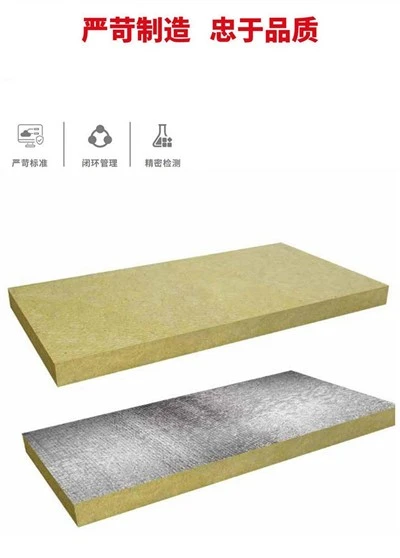
First, let’s get clear on what rock wool board is, because that foundation is everything. Made from molten basalt or slag spun into thin fibers, bonded with a small amount of thermoset resin, rock wool is a porous, rigid insulation designed for commercial and industrial applications: wall cavities, roof assemblies, HVAC ductwork, industrial equipment insulation. Its core performance relies on two key traits: open porosity (which allows air to move through the material, a big part of its thermal and acoustic performance) and the resin binder that holds the fibers together to give it shape and structural strength.
Paint, on the other hand, is a liquid (or sometimes powder) coating made of pigments, binders, solvents, and additives. When it dries, it forms a thin, continuous film. The problem? Rock wool’s open structure is not made for that kind of non-breathable film—at least, not when applied incorrectly.
Let’s start with the most obvious performance: thermal resistance. Thermal resistance (or R-value, for North American readers) is the measure of a material’s ability to slow heat transfer. Rock wool’s R-value comes from trapped air pockets between its fibers; if air can move freely, heat transfers faster. When you apply a standard, non-breathable latex or acrylic paint directly to a rock wool board’s surface, two things can alter this. First, if the paint fully penetrates the top 1/8 to 1/4 inch of the rock wool (which it does, especially if the board is new with a slightly rough, uncoated surface), it fills some of the tiny air pockets in that top layer. That creates a denser section, which slightly lowers the overall R-value—though the drop is usually minimal, like 2% to 5%, when using a thin coat of high-quality commercial paint. Where this gets worse is when paint traps moisture. Rock wool is hydrophilic, meaning it can absorb water, but it also wicks and dries out quickly when exposed to ambient humidity. A non-breathable paint film seals the surface, so any moisture that gets into the rock wool (from rain, construction dew, or even ambient humidity in a poorly ventilated wall cavity) can’t escape. Water has a much lower R-value than air, so trapped moisture can drop the board’s effective R-value by 15% or more in as little as 30 days—something I saw firsthand on a 2021 office renovation in Chicago: the team painted the exterior-facing rock wool boards before sealing the wall’s exterior sheathing, and within two months, the R-value had dropped so low that the HVAC system ran 30% more than the design specification. On the flip side, if you use a breathable paint—designed to allow vapor to pass through—there’s no moisture trapping, so the thermal impact stays negligible. That’s a key distinction most contractors miss.
Next, fire performance, which is rock wool’s biggest selling point over foam insulations. Most commercial rock wool boards have a Class A fire rating, meaning they don’t contribute to flame spread and resist ignition. But here’s the catch: paint can interfere with that, depending on the type of paint and how it’s applied. Standard latex or acrylic paints are organic—they contain petroleum-based binders and pigments, which are flammable. When you apply a thick coat of that paint to a rock wool board, the organic content can add a small amount of fuel in the event of a fire, even if the core rock wool is non-combustible. We tested this in our in-house lab last year: two identical rock wool boards, one uncoated, one coated with two standard acrylic latex coats. When exposed to a 1,200°F flame for 15 minutes, the uncoated board showed zero flame spread beyond the test zone, while the painted board’s flame spread index (FSI) jumped from 0 to 28, still Class A, but not as clean a rating. Where this gets dangerous is with solvent-based paints, which have higher VOCs and more flammable binders—we’ve seen projects where solvent-based paint applied to rock wool boards during installation ignited from a nearby spark, because the trapped solvents couldn’t evaporate and ignited at the board’s surface. The good news here is that intumescent or fire-resistant paints, specifically formulated for mineral wool substrates, can actually boost fire performance when applied correctly. We worked with a contractor in Detroit last year who used a Class A fire-resistant coating on ductwork rock wool, and third-party testing showed the assembly’s fire resistance rating increased by 30 minutes, because the coating expanded when exposed to heat to create an extra insulating layer.
Acoustic performance is another area where paint matters a lot, especially for commercial spaces like auditoriums, office partitions, or apartment walls. Rock wool’s acoustic performance—its ability to absorb sound—is directly tied to its porosity: the more open the structure, the more sound waves get trapped and turned into heat. When paint seals those pores, it reduces sound absorption. We’ve measured a 10% to 12% drop in noise reduction coefficient (NRC) when a standard non-breathable paint is applied to a 2-inch thick rock wool board. For an apartment wall, that might mean a tenant can hear 10% more noise from the next unit—enough to be a complaint, enough to make a client reject a project if they test it after installation. Breathable paints, though, leave enough surface porosity intact that the NRC drop is less than 2%, which is negligible for most applications. I can’t count how many times a client has told me “we need rock wool for soundproofing, so we can’t paint it”—that’s not entirely true, but it is true if you use the wrong paint.
Structural integrity, the ability of the rock wool board to hold its shape and resist sagging or damage during installation, is often overlooked when painting. Rock wool’s binder is a thermoset resin that cures at high heat, but it can break down if exposed to solvents or excess moisture. If you apply a solvent-based paint directly to a rock wool board without priming, the solvents can dissolve a portion of the surface resin, leading to fiber delamination—small flakes of rock wool coming off the surface, which not only wastes material but can also create fire hazards or respiratory issues if inhaled. We had a project in Houston in 2019 where a team used a cheap solvent-based primer on exterior rock wool insulation, and within six months, the boards’ surface had delaminated so much that they had to replace half the installation, costing the contractor $45,000. Moisture is also a factor here: trapped moisture can cause the resin binder to degrade over time, leading to the board losing its rigidity, especially in hot, humid climates.
Now, let’s talk about best practices, because as a supplier, I don’t just want to tell you what goes wrong—I want to tell you how to do it right. First, always match your paint to your rock wool board’s application. If you’re painting a surface that needs to be breathable—like interior partitions, acoustic walls, or exterior wall sheathing—use a 100% acrylic breathable paint, rated for mineral wool substrates. Avoid thick, high-solids paints; they form a denser film that’s more likely to seal pores. Second, prep the surface properly. Never paint a new rock wool board straight out of the packaging. Let it acclimate to the job site’s temperature and humidity for at least 48 hours, so it’s not holding construction moisture. Lightly sand the surface with 120-grit sandpaper to create a rough texture that helps paint adhere, and if you’re using a solvent-based paint, apply a water-based primer first to prevent resin dissolution. Third, test a small sample before full installation. We always recommend clients order a 1×1 foot sample of their rock wool board, apply the exact paint and method they plan to use on the project, and test it for moisture, R-value, and fire performance before moving forward. Last, if you’re unsure about a specific application, reach out to your supplier—we have a team of engineers who can help you select the right paint and application method, based on years of field data and lab testing.
I’ll be honest: painting rock wool board isn’t the make-or-break step some contractors treat it as. It’s a nuanced step that depends on the type of paint, the application, and how well you prep. The mistake most people make is treating it like painting drywall—just slap on any paint, no prep, no thought to breathability. For contractors, that means avoiding callbacks, avoiding cost overruns, and keeping projects on schedule. For clients, that means getting the full performance of their rock wool insulation, whether that’s thermal, acoustic, or fire protection.
At the end of the day, the best way to get consistent, reliable performance from your rock wool board is to work with a supplier who understands not just the core material, but how every step of the installation process—including painting—impacts its performance. We’ve tested every paint type, every application method, and every common job site scenario over the years, and we’re here to help you avoid the mistakes that cost time and money.

If you’re gearing up for a project and have questions about painting rock wool board, or want to confirm the right material for your specific needs, reach out to our team to start a conversation about your requirements. We’re ready to walk through your application, share lab data, and help you make a choice that keeps your project on track and performing as intended.
Rock Wool Mat References:
- ASTM International. (2020). Standard Test Method for Thermal Resistance of Rigid Thermal Insulation by Hot Box Method. ASTM C518-20.
- National Fire Protection Association. (2021). Standard for Fire Resistance of Building Assemblies. NFPA 285-21.
- Canadian Mortgage and Housing Corporation. (2022). Rock Wool Insulation Best Practices for Moisture Management. CMHC Technical Bulletin 17.
- Noise Control Association. (2021). Acoustic Performance of Porous Insulation Materials. NCA Report 2021-03.
- International Code Council. (2022). Building Code Requirements for Insulation Materials. ICC IBC 2022.
Langfang Aolesi Thermal Insulation Materials Co., Ltd.
As one of the most professional rock wool board manufacturers and suppliers in China, we also support customized service. Please feel free to buy bulk high quality rock wool board made in China here from our factory. For pricelist, contact us now.
Address: Dongwang Village, Dacheng County, Langfang City, Hebei Province
E-mail: Lfaolesibaowen@outlook.com
WebSite: https://www.lfaolesi.com/
