Hey there! If you’ve ever fired up a portable diesel generator for a job site, a camping trip, or a power outage at your place, you’ve probably wondered how it manages to spin at the exact right speed—no matter if you’re running a single phone charger or a whole house’s worth of tools. As someone who’s been selling portable diesel gensets for years, I get that a lot of folks gloss over the “behind-the-scenes” stuff, but that speed control is what keeps your gear from frying, your fuel bill from skyrocketing, and your generator from conking out when you need it most. Let’s break this down like we chat with customers at trade shows—no fancy jargon, just real stuff that works. Portable Diesel Generator
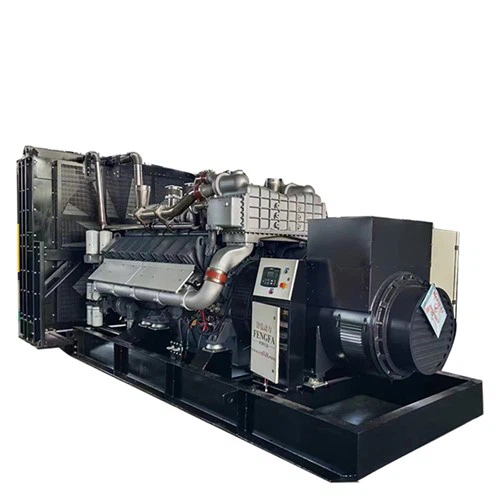
First off, let’s keep it simple: diesel generators don’t run at a fixed speed 24/7, right? Wait, actually, some do for the grid, but portable ones? They’re designed to adjust fast because your power demand is all over the place. Think of it like driving a car: if you’re going downhill, you ease off the gas; uphill, you press a little more. A generator’s speed control is basically its “gas pedal” that auto-adjusts, but way more precise than anything in a consumer car.
Let’s start with the main parts—no weird acronyms I’ll make up, promise. The core here is what we call an “engine governor.” That’s the brain of the speed control system. But not all governors are the same, especially for portable units. You’ve got two main types that you’ll see on our products: mechanical governors (old-school, reliable) and electronic governors (the newer, smoother ones). Let’s talk both, because we sell both depending on what a customer needs.
Mechanical governors are the workhorses. You’ll find these on budget-friendly portable gensets for things like job sites where you don’t want to drop a ton of cash, and reliability is king. How do they work? Picture a little flyweight setup sitting right on the engine’s crankshaft. When the crank spins, the flyweights fling outward as speed goes up—like the spinning ride at a fair, right? If the engine starts to speed too much (say, you unplug a big power tool suddenly), those flyweights fling out, pull a lever, and squeeze the fuel injector’s supply. Less fuel = slower speed. If the engine drags (like when you plug in a circular saw that draws a lot of power), the flyweights pull back, letting more fuel in, so the engine picks up speed. It’s 100% mechanical, no wires, no sensors, just parts moving against each other. That’s why they’re tough—they don’t care if it’s dusty, wet, or you bump the genset on a rough job site. But they’re not perfect: they’re a little slower to adjust, so if you jump from 100W to 3000W in two seconds, you might see a tiny dip in power before the governor catches up. That’s normal for mechanical ones, and most users never even notice, but it’s a trade-off for reliability.
Then there’s electronic governors, which we use on our higher-end portable gensets for camping, backup home power, or professional contractors who run sensitive gear like CPAP machines, laptops, or small power tools that don’t like speed dips. These are way more precise. Instead of flyweights, you’ve got a speed sensor (usually a magnetic one on the crankshaft) that spits out tiny electrical signals 100 times a second, basically counting how fast the engine’s spinning. That signal goes to a little control box (we call it an ECU, short for Engine Control Unit—don’t worry, it’s just a small computer) that compares the actual speed to the speed you set (most portable gensets are set to 3600 RPM for 120V AC, which is standard in North America, or 3000 RPM for 240V in other places). If the sensor says the engine’s running 50 RPM too slow, the ECU sends a signal to a fuel actuator—like a small electric motor that adjusts the fuel injector immediately—to add more fuel. If it’s too fast, it cuts fuel right away. The adjustment is almost instant, so no more annoying power dips when you plug in a big tool. We love these for customers who run sensitive gear because they keep the voltage super stable, which is a big deal for things that can’t handle a bumpy power supply.
Wait, but there’s more to it than just the governor, right? Let’s not forget the other parts that tie into speed control, because if one of these is off, the whole system breaks. First, the fuel system: you can’t have a good governor if the fuel can’t get to the engine fast enough. We use high-pressure fuel injectors on all our portable diesel gensets, not the old carburetors you see on small gas engines. Diesel doesn’t need a carb, and injectors are way more precise for adjusting fuel amounts on the fly. If the fuel filter is clogged, for example, the governor can’t add enough fuel when the engine needs it, so the speed drops—we always tell customers to check the fuel filter every 50 hours, that’s a quick fix that keeps speed control working right.
Then there’s the load, which is what’s tripping the governor. A lot of first-time genset users think “the more load, the more the generator slows down,” but that’s exactly what the governor is fighting against. If you plug something in that draws more power, the engine has to work harder to spin the alternator, so it tries to slow down. The governor senses that slowdown and adds fuel to keep it at the set speed. If the load is way too big—like plugging a 15,000W air compressor into a 5000W genset—the governor can’t add enough fuel fast enough, and the engine will stall. That’s a safety feature, not a bug—we always make sure customers know to match the genset’s rated wattage to their tools, so the governor can do its job.
Also, let’s talk about idle speed—something most people don’t think about when they’re buying a portable genset. A lot of our units have an auto-idle feature now, which ties right into speed control. If you’re running just a small charger or a few lights, the engine doesn’t need to spin at full speed all the time. The governor will drop the speed to like 1800 RPM when there’s low load, which cuts fuel use by 30-40%—that’s a big win for camping where fuel is hard to carry, or job sites where fuel costs add up fast. When you plug in more power, the governor immediately jumps the speed back up to the set RPM. It’s all the same system, just programmed to adjust for low load to save fuel.
Wait, should I mention common issues that mess with speed control? Yeah, because customers call us all the time saying their genset is “running too fast” or “sputtering.” Most of the time it’s not a broken governor—it’s something simple. For mechanical governors, if the linkage between the flyweights and the fuel lever gets gunked up with dust or dirt, it can’t move smoothly, so the governor can’t adjust fuel right. We tell customers to lubricate that linkage every 100 hours—spray a little light oil, don’t overdo it, because too much oil will attract more gunk. For electronic governors, the most common issue is a dirty speed sensor, or loose wiring. If the sensor can’t read the crank’s speed right, the ECU can’t adjust fuel. We always include a little cleaning brush in our genset kits for that, so customers can wipe the sensor clean without taking it apart.
Let me also clear up a myth I hear all the time: “diesel generators have fixed speed, so they’re bad for sensitive gear.” No, not anymore. Our electronic governor models keep speed within 1% of the set RPM, which is way tighter than what a lot of home appliances need. We’ve had customers run CPAP machines, laptops, and even small commercial tools on our electronic governor gensets without any issues—no random restarts, no fried screens. That’s the difference between old, low-end portable units and the ones we build now.
As a supplier, we test every single genset before it leaves our shop to make sure the speed control is working right. We hook it up to a load bank (a device that simulates power tools) and adjust the load up and down a bunch of times to make sure the governor reacts fast. We’ve had mechanics break down governor systems on our units at trade shows to show customers how simple they are, which is why so many job site managers come back to us—they know if something goes wrong, it’s easy to fix, not a $500 part that takes a week to ship.
Wait, let’s wrap this up for someone who’s actually looking to buy a portable diesel generator, because that’s who I’m talking to. If you’re a contractor who needs a workhorse for rough sites, go with our mechanical governor models—they’re tough, cheap, and work even when you’re running a saw and a air compressor at the same time. If you’re a camper who needs to power a fridge and a TV off-grid, or a homeowner needing backup power for sensitive stuff like a sump pump, go with our electronic governor units—you’ll save fuel and protect your gear.
But no matter which one you pick, remember: the speed control is the unsung hero of your generator. It’s the reason it doesn’t stall when you plug in that extra tool, it’s why your fuel doesn’t go to waste, and it’s why your power is consistent enough to keep your laptop from crashing when you’re working remotely.
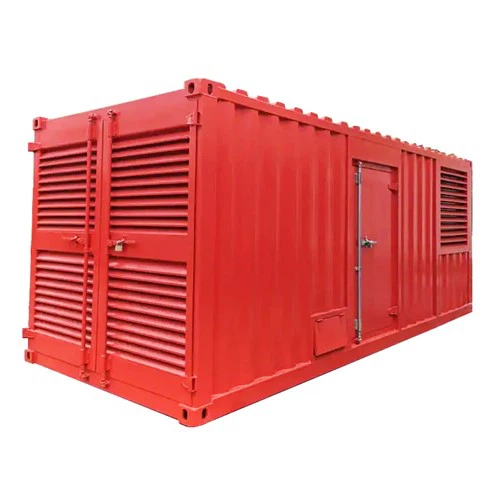
If you’re in the market for a portable diesel generator, whether it’s for work, camping, or backup, we’ve got options for every need. Shoot us a message, we can walk you through which governor setup makes sense for your use case, and answer any questions you have about how the speed control works for any of our models. We’re here to make sure you pick the right unit, not just the cheapest one.
Silent Diesel Generator Set References:
- Internal Combustion Engine Fundamentals, J.B. Heywood, McGraw-Hill Education, 1988.
- “Diesel Engine Governor Systems,” Cummins Power Generation Technical Manual, 2021.
- Portable Generator Safety and Operation Guidelines, Occupational Safety and Health Administration (OSHA), 2022.
- “Electronic Governor Control for Small Diesel Engines,” Journal of Engineering for Gas Turbines and Power, ASME, Vol. 140, No. 10, 2018.
Dianbida Power Equipment (Jiangsu) Co., Ltd.
We’re well-known as one of the leading portable diesel generator manufacturers and suppliers in China. We warmly welcome you to buy advanced portable diesel generator at competitive price from our factory. If you have any enquiry about pricelist and quotation, please feel free to email us.
Address: No. 23, Nanhuan Road, Jiangdu District, Yangzhou City, Jiangsu Province
E-mail: 19962469616@163.com
WebSite: https://www.js-dbdpower.com/
