If you’ve ever walked a pipe yard or stood next to a commercial plumbers during a coastal project, you’ve probably heard this question: Can an Elbow Repair Clamp be used on a salt-water pipe? As a supplier that’s focused exclusively on pipe repair clamps for over 12 years, I get this call at least twice a week—from property managers fixing a corroded coastal irrigation line, from shipyard maintenance teams patching a leaking supply pipe, and even from plumbers working on high-rise condos in salt-air cities like Miami or San Diego. The short answer isn’t just “yes” or “no”—it’s a nuanced one that depends on four big factors: the clamp’s material build, the type of salt water exposure, the condition of the pipe itself, and how the clamp is installed. Let me break this down like I would with a customer on our tech support line, no jargon, just real-world experience. Elbow Repair Clamp
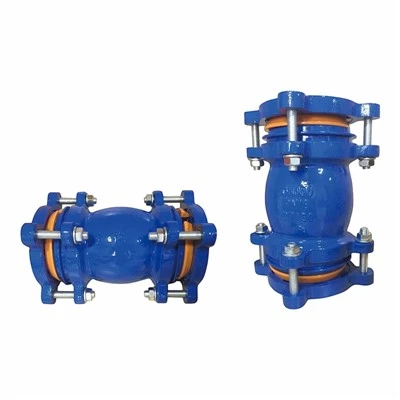
First, let’s get clear on what an elbow repair clamp is for, because that’s the foundation of this conversation. Unlike a standard straight-coupling clamp that seals a crack in a straight run of pipe, an elbow repair clamp is pre-molded to fit the 90-degree curve (or sometimes 45-degree) of pipe elbows—the parts that turn, where stress is highest and leaks almost always start. Most of the clamps we supply are split into two main types for industrial and commercial use: ductile iron clamps with a EPDM (ethylene propylene diene monomer) rubber gasket, and stainless steel clamps with a nitrile (Buna-N) gasket. For years, I thought salt water was a non-starter for any repair clamp, until a shipyard customer in Mobile, Alabama called me out of the blue. They’d just had a galvanized steel salt-water cooling line on a tugboat split at the elbow, and a standard ductile iron clamp kept corroding and failing within six months. They tried a stainless steel clamp, and it’s still holding after three years, even through winter salt de-icing treatments they use on their port’s access roads. That’s when I realized: the material choice isn’t random for salt-water applications.
Now, let’s talk about salt water itself—this isn’t just the ocean water crashing against a pier. Salt water exposure varies a lot, and that’s what makes the difference between a successful clamp and a failed one. There’s full submersion, like a pipe that sits at the bottom of a boat’s hull or a submerged municipal water line for a coastal town. Then there’s atmospheric salt exposure, like a pipe running along a beachfront condo, where salt air hits it every day but it’s not in standing water. And there’s mild salt exposure, like a golf course’s irrigation line that’s fed by a brackish well (salt content way lower than ocean water) near the coast. For full submersion in full-strength ocean water, ductile iron clamps with EPDM gaskets? They won’t last. The iron will react with the salt water, forming rust that eats through the clamp’s outer coating within a year. But stainless steel (316 grade, not the cheaper 304, which is only good for mild salt exposure) paired with a nitrile or EPDM gasket designed for high-salt environments? That works. Our 316 stainless steel elbow clamps are tested by third-party labs to resist crevice corrosion in 3.5% sodium chloride solution—exactly the salt concentration of ocean water—so that’s the baseline for salt submersion.
For atmospheric salt exposure, like that beachfront condo, a lot of customers ask if their standard ductile iron clamp will work. The answer is usually yes, as long as it’s coated with a powder coating that’s rated for salt air. We supply a polyester powder coat for ductile iron clamps that’s tested to 500 hours of salt spray (per ASTM B117) without rusting through the coating. But I’ll be honest with you—even a coated ductile iron clamp will show minor surface rust after a few years in salt air, because the coating can chip if a worker bumps it during installation. If that surface rust gets into the seal between the clamp and the pipe, it can cause a leak down the line. So for full-time salt air exposure, stepping up to a 304 stainless steel clamp is worth the extra $50 or $100, because it won’t rust at all, even if the coating is damaged. Our 304 steel clamps have been installed on a 10-year-old resort in Daytona Beach, and the maintenance team hasn’t had to replace a single one in that time.
Next, the condition of the pipe you’re repairing is non-negotiable. I’ve seen too many customers call me upset because their clamp leaked within a month, only to find out the pipe elbow they patched was already 80% corroded through. An elbow repair clamp isn’t a band-aid for a pipe that’s about to fail entirely—it’s a temporary or permanent seal for a small crack or pinhole leak in an otherwise sound elbow. For salt-water pipes, that’s even more important. Salt water accelerates corrosion, so if the pipe itself has large pits or is thinning at the elbow, even the best clamp won’t hold. We always tell customers to do a quick check before buying: rub your finger along the inside of the elbow (if it’s accessible) and see if it’s smooth or pitted. If it’s pitted enough that your finger catches, you’ll need to replace the elbow instead of patching it, no matter what clamp you use. Another pipe condition thing for salt water: make sure the pipe is cleaned where the clamp will seal. Salt residue on the pipe surface will prevent the gasket from making a tight seal, so pressure wash the area around the leak with fresh water before installation. That’s a step a lot of customers skip, and it’s the number one reason clamps fail on salt-water pipes—bad seal, not bad clamp.
Then there’s installation, which is make-or-break, especially on elbow clamps. Unlike straight clamps, elbow clamps have a slight curve to match the pipe’s angle, so you can’t just stretch them over the leak like a straight clamp. I’ve had a customer in San Juan, Puerto Rico, call me last year saying their new clamp leaked, and when I went to site (I travel a lot for client troubleshooting), I found they’d installed a 90-degree clamp on a 88-degree elbow—off by two degrees, so the gasket didn’t sit flush all the way around. Elbow clamps have specific angle tolerances, so you have to measure the elbow’s exact angle before ordering. Also, when tightening the bolts on the clamp, you have to do it in a crisscross pattern, not just tighten one bolt all the way first. That pulls the clamp lopsided, creating gaps in the seal. For salt-water applications, we also recommend adding a thin layer of pipe joint compound that’s rated for salt water, not regular Teflon tape. Regular Teflon tape breaks down in salt water, and the compound helps the gasket stick to the pipe, preventing leaks even if the surface has minor salt residue.
Now, let’s talk about real-world examples, because numbers don’t lie. Last year, we worked with a municipal water department in Charleston, South Carolina, that had 12 salt-water pipe elbows leaking in their downtown water distribution system. They first tried 6 ductile iron EPDM clamps, which failed in 8 months due to corrosion. We swapped them for 6 316 stainless steel EPDM clamps, and 18 months later, they called saying not a single one had leaked. Another example: a yacht repair shop in Fort Lauderdale needed to fix a 2-inch salt-water feed elbow on a 50-foot sailboat. They used a standard 304 stainless steel elbow clamp, and after two years of being submerged in ocean water, there’s no rust, no leak. The only time we’ve seen clamps fail on salt-water pipes is when the wrong material was used, or the installation was done wrong. A few years ago, a customer in Corpus Christi tried a galvanized steel elbow clamp on a pipe that was fully submerged in the Gulf of Mexico. The galvanization wore off in 6 months, and the clamp started rusting so bad it fell off. That’s a mistake a lot of new plumbers make—using cheap metal clamps because they’re cheaper up front, but they end up paying more to replace the clamp and the damaged pipe a year later.
I also want to address a common myth: that any clamp labeled “stainless steel” is good for salt water. That’s not true. 304 stainless steel has chromium, but not enough molybdenum to resist the chloride in salt water, so it can get pitted if it’s fully submerged in ocean water long-term. 316 stainless steel has molybdenum, which is the key element that makes it salt-water resistant. We always specify 316 for full submersion, and 304 only for atmospheric salt exposure, like beachfront pipes that never get submerged. It’s a small difference, but it’s the difference between a clamp that lasts 5 years and one that lasts 20. Gaskets matter too, by the way. EPDM gaskets are great for temperature resistance, but nitrile gaskets hold up better in salt water, especially at higher pressures. If your salt-water pipe runs at over 100 PSI, pair a 316 stainless steel clamp with a nitrile gasket, and you’ll have a repair that will last as long as the pipe elbow is sound.
So putting it all together: yes, an elbow repair clamp can be used on a salt-water pipe, but only if you get the right clamp for the exposure level, check the pipe’s condition first, and install it correctly. I’ll never tell a customer a clamp is universal—every project has different needs, especially when salt is involved. That’s why our sales team and tech support team always ask a few questions before we quote a clamp: How is the pipe exposed to salt water (full submersion, air, mild brackish)? What’s the pipe’s material and condition? What’s the pressure of the pipe? Those answers help us pick the right clamp, not just push the cheapest one.
If you’re working on a salt-water pipe project and aren’t sure which clamp to use, or you’ve had a clamp that failed on a salt-water pipe, don’t guess. Our team has decades of experience with pipe repair in coastal and high-salt environments, and we can help you pick the right clamp that will hold up for years. We don’t do one-size-fits-all repairs, especially not when salt is involved, because we know how costly a repeat leak can be—for your budget, your project timeline, and your peace of mind.
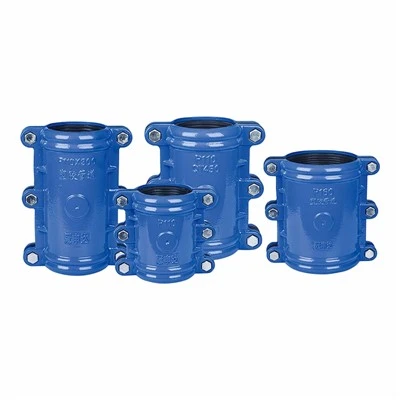
If you’re ready to order, or just have a question about which elbow repair clamp is right for your salt-water pipe, reach out to our team today to talk through your project details. We’ll help you make a choice that works for your specific needs, no sales pressure, just straight answers from people who actually work with these clamps every day.
Pipe Connector References
ASTM B117, Standard Practice for Operating Salt Spray (Fog) Apparatus
American Water Works Association (AWWA) C217, Standard for Fabricated Ductile-Iron Plain-End Pipe
National Association of Corrosion Engineers (NACE) Standard RP0176, Corrosion Control of Offshore Pipe Systems
Fujian Fufa Valve Manufacturing Co., Ltd.
As one of the most professional elbow repair clamp manufacturers and suppliers in China, we’re featured by quality products and good price. Please rest assured to buy durable elbow repair clamp made in China here from our factory. Welcome to view our website for more information.
Address: Meilin Xikou Industrial Zone, Nan’an City, Quanzhou City, Fujian Province
E-mail: hongwenjin@fufafamen.cn
WebSite: https://www.fufavalve.com/
