If you’ve ever worked in flexible packaging, you’ve probably come across CPP films—cast polypropylene, the workhorse material for everything from food bags to label stock. But if you’ve dug a little deeper, you might have heard the term “vacuum-metalized CPP film” and wondered how it differs from standard CPP. As a supplier that’s specialized in vacuum-metalized CPP for over a decade, I get this question all the time, and it’s one that matters a lot for anyone choosing packaging materials for durability, barrier performance, and shelf appeal. Let’s break down the key differences, why they matter, and how to pick the right option for your needs. Vacuum-Metalized CPP Film
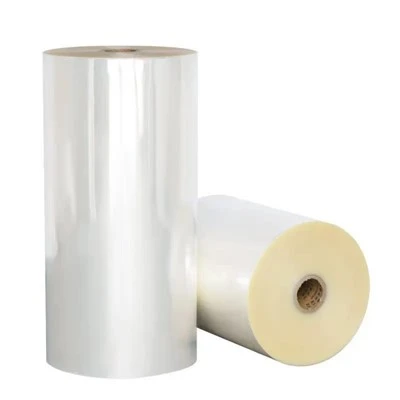
First, let’s start with the basics of standard CPP film, to set a foundation. CPP is made by melting polypropylene resin and casting it onto a chilled roller to solidify, rather than blowing it like BOPP (biaxially oriented polypropylene). That casting process gives it a smooth, uniform surface, good heat sealability, and decent mechanical strength—all at a lower cost than many other packaging films. Standard CPP is a go-to for food packaging, lidding, and general wrapping because it’s flexible, puncture-resistant enough for most light to medium products, and heat-sealable, so you can seal bags without extra adhesives. But here’s the catch: uncoated, unmetalized CPP has pretty poor barrier properties. It lets oxygen, moisture, and light pass through, which is a problem for products that need to stay fresh—think dried snacks, coffee, or pharmaceuticals. Even for items that aren’t perishable, standard CPP lacks the shiny, high-end appearance that many brands want to stand out on store shelves.
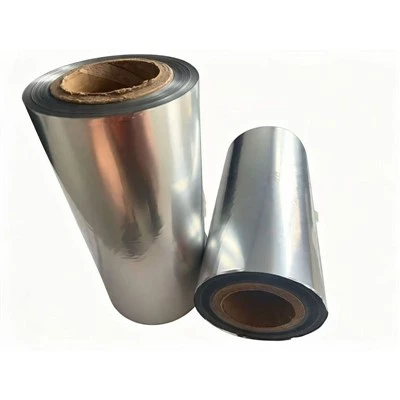
Now, vacuum-metalized CPP is a modified version of that same base CPP, with a thin layer of metal (almost always aluminum) applied to one side using a vacuum deposition process. It’s not a coating in the traditional paint-like sense—instead, aluminum pellets are heated in a vacuum chamber until they vaporize, and those tiny metal atoms condense onto the CPP film’s surface, creating a layer just 20 to 50 nanometers thick. That’s thinner than a human hair, but it’s a game-changer. Let’s get into the specific differences that matter for real-world use.
Barrier performance is the biggest one. Unmetalized CPP has a typical oxygen transmission rate (OTR) of around 500-1000 cm³/m²/day, and a moisture vapor transmission rate (MVTR) of about 5-10 g/m²/day. Those numbers are high enough that oxygen can get through in a week or two, which will make your potato chips go stale, your dried fruit absorb moisture, or your vitamins lose potency. The vacuum-metalized aluminum layer cuts OTR down to just 1-5 cm³/m²/day and MVTR to 0.5-2 g/m²/day. That’s a 100x improvement in oxygen barrier and 10x better for moisture. For brands that need their products to have a 6-month or 12-month shelf life, that barrier difference isn’t a nice-to-have—it’s a requirement. I can’t tell you how many times a customer has come to us after trying standard CPP and watched their product go bad on the shelf, just because they didn’t factor in barrier needs.
Next, aesthetics and printability. Standard CPP is matte or semi-gloss, and it prints okay, but the colors are dull because the surface isn’t reflective. Vacuum-metalized CPP has a bright, metallic sheen that makes designs pop—think the shiny bags for premium candy, craft beer labels, or luxury beauty product packaging. Brands use that metallic finish to signal quality and stand out against plain plastic packaging on crowded store shelves. That said, there’s a catch with printability on vacuum-metalized CPP: the aluminum layer is non-porous, so it doesn’t hold ink as well as standard CPP. We usually recommend using a specialized primer on the metal side, or printing on the non-metal side of the film, to get sharp, long-lasting graphics. For standard CPP, printing is straightforward—you can use standard flexo or gravure inks without extra prep, which keeps setup costs low for small runs.
Durability and mechanical properties are another area where the two differ. The base CPP film is flexible and puncture-resistant, which makes it good for heavy-duty bags, but adding the metal layer adds a small amount of rigidity. It’s still flexible enough for most uses, but it can be more prone to cracking if you fold it too sharply or stretch it beyond its limits. That’s not a problem for most packaging applications—like bagging snacks or wrapping labels—but it’s something to note if you’re using it for something like stretch wrap that will be pulled tight. Standard CPP, on the other hand, is more flexible and can withstand more stretching without damage, making it better for applications where conformability is key.
Heat sealability is a critical function for packaging, and this is where standard CPP has a clear edge. Unmetalized CPP has excellent heat sealability—its low melting point means you can get a strong, hermetic seal at relatively low temperatures, which is great for fast filling lines. Vacuum-metalized CPP: the aluminum layer raises the melting point slightly, so you often need a slightly higher seal temperature, or a sealant layer on top of the metal, to get a good seal. That can add a small cost for processors, and it’s something that packaging lines need to be adjusted for. For brands that run high-speed lines, that adjustment might be a minor hassle, but for smaller operations, it’s a factor to consider.
Cost is another obvious difference. Standard CPP is cheap—one of the lowest-cost flexible packaging films on the market. Vacuum-metalized CPP is more expensive, because of the extra manufacturing step: the vacuum deposition process adds labor, energy, and material costs. The metal itself is a small part of the cost, but the equipment and process to apply it efficiently make the whole film 20-50% more expensive than standard CPP, depending on the thickness and quality of the metal layer. So you only want to pay that premium if you actually need the benefits of the metal layer—barrier, aesthetics, or light protection. If you’re packaging something that doesn’t need extra barrier, like a plain paper towel wrapper, standard CPP is more than enough and will save you money.
Light barrier is a bonus that vacuum-metalized CPP provides, which standard CPP doesn’t. Standard CPP lets most visible and UV light pass through, so products that are sensitive to light—like pharmaceuticals, coffee, or chocolate—can degrade faster when exposed to sunlight. The aluminum layer blocks almost 100% of UV light and 99% of visible light, so it protects light-sensitive products from fading, rancidity, or nutrient loss. That’s a big reason coffee roasters use vacuum-metalized CPP for their bags—light is one of the main enemies of fresh coffee flavor, so blocking it keeps the taste consistent for months.
Let me give a real example of a customer I worked with last year to make this concrete. A craft bakery was packaging their sourdough bread in standard CPP bags, and within a month, the bread was going stale and the plastic had a dull, cloudy look from moisture absorption. They switched to vacuum-metalized CPP, and their shelf life went from 2 weeks to 8 weeks, while the shiny metal finish made their bakery’s bags stand out on grocery store shelves next to plain white plastic. The extra cost per bag was just a few cents, but the bakery was able to reduce food waste from expired products and increase sales because their packaging looked more premium. That’s the kind of ROI that makes the premium worth it.
Now, it’s important to clear up a common misconception: vacuum-metalized CPP isn’t the same as metalized BOPP. BOPP is biaxially oriented, so it’s stiffer than CPP, but it also has lower heat sealability, which makes it less good for bagging applications. We focus on CPP because its inherent heat sealability and flexibility make it better for many food and packaging uses, even after metalization.
So when should you choose which one? If your priority is low cost, good conformability, and basic heat sealability for non-perishable products that don’t need extra barrier, standard CPP is the way to go. Think: cereal box liners, paper overwrap, or plain bread bags. If you need longer shelf life, better barrier, or a premium aesthetic for your brand, vacuum-metalized CPP is the right choice. Think: snack bags, coffee packaging, pharmaceutical blister packs, or luxury product labels.
I’ve been in this industry long enough to know that there’s no one “best” film—it all depends on your specific needs. That’s why my team and I work with customers to walk through their product, shelf life goals, packaging lines, and budget to find the right solution. A lot of suppliers will just push the higher-margin vacuum-metalized film, but we take the time to explain when it’s worth the extra cost and when standard CPP will do the job just as well.
Colored CPP Film If you’re currently evaluating packaging films, or you’re dealing with issues like product spoilage, dull graphics, or seal failures, I’d be happy to chat through your specific application. We can test samples of both standard and vacuum-metalized CPP for your product, so you can see the difference in performance firsthand. The right packaging can make a huge difference for your product’s success—you don’t have to guess which one is right. Reach out to our team to start a conversation, and we’ll help you find the perfect film for your needs.
References
- Han, J. H. (2014). Food Packaging Technology (2nd ed.). John Wiley & Sons.
- Sorenson, W. P., & Campbell, T. W. (1968). Plastics in Packaging. Van Nostrand Reinhold Company.
- Flexible Packaging Association. (2022). Barrier Properties of Flexible Packaging Films. Industry Technical Report.
- ASTM International. (2019). Standard Test Method for Oxygen Gas Transmission Rate Through Plastic Film and Sheeting Using a Modulator Sensor (ASTM D3985).
- ASTM International. (2020). Standard Test Method for Water Vapor Transmission Rate Through Plastic Film and Sheeting Using a Desiccant Method (ASTM E96).
Qingzhou Huiyuan Packaging Materials Co., Ltd.
As one of the most professional vacuum-metalized cpp film suppliers in China since 1997, we’re featured by quality products and good service. Please feel free to buy cheap vacuum-metalized cpp film made in China here from our factory. For price consultation, contact us.
Address: Naoshan Industrial Park, Shaozhuang Town, Qingzhou City, Weifang, Shandong Province, China.
E-mail: 15864598133@163.com
WebSite: https://www.huiyuanfilms.com/
