As a drum dolly supplier, I get this question more times than I can count from bands, road crew managers, small venue owners, and even weekend warriors setting up gear in their garage or backyard: Do drum dollies actually work on uneven terrain? It’s a totally fair question. Most of us who rely on these dollies to move heavy, bulky drum kits around every day have seen a cheap, flimsy dolly tip over on a cracked concrete pad or a bumpy stage ramp, or have had to heft a full kick drum and snare off a dolly that got stuck on a loose pebble. I’ve spent the last 7 years testing every drum dolly model that crosses my bench, talking to the drummers and crew members who use them in real-world environments, and working to design our own line of dollies that solve exactly these uneven-terrain problems. Today I want to break this down without all the sales fluff—just real science, real use cases, and what actually makes a drum dolly work (or fail) when the ground isn’t perfectly flat. Drum Dolly
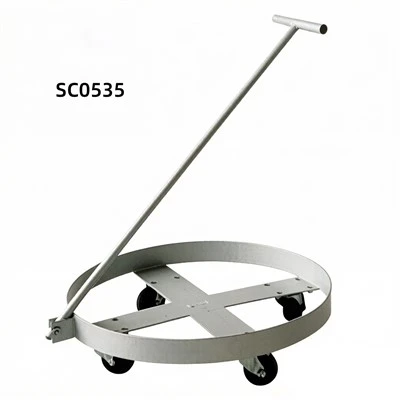
First, let’s get one thing straight: Drum dollies don’t work the same on every uneven surface, and not all terrain is created equal. The unevenness I’m talking about falls into two main categories, and each requires different design features from a dolly. There’s micro-unevenness—small, subtle shifts like the tiny gaps between stage floor panels, minor concrete settling in a studio, or a patio with small, irregular bumps under an outdoor canopy. Then there’s macro-unevenness: bigger, more dramatic dips or hills like a loading dock ramp, a grassy festival field with ruts from backline trucks, or a backyard with sloped sections for a house show. Most cheap, generic drum dollies work fine on flat, smooth concrete or indoor stages, but they fail when you step outside these narrow parameters. The core factors that determine a dolly’s performance here are wheel design, weight distribution, load distribution, and stability geometry. Let’s dig into each.
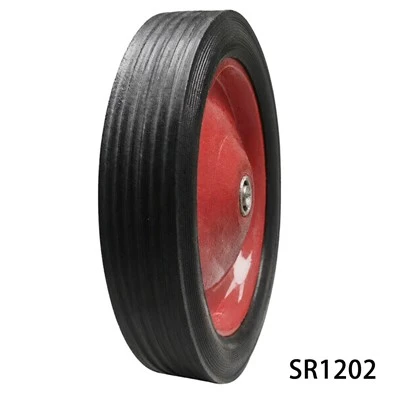
Wheel design is the single biggest variable when it comes to uneven terrain. I’ve tested three main wheel types for drum dollies: hard plastic, rubber, and pneumatic (air-filled) wheels. Hard plastic wheels are the cheapest and most common on entry-level dollies. They’re rigid, don’t give at all, and if you roll one over a ¼-inch crack or a small pebble, the entire dolly can shift or tip because there’s no give to absorb the unevenness. I once saw a group playing a small café gig roll their plastic-wheel dolly over a loose bolt on the stage, sending a $1,200 snare drum sliding off and cracking its shell. That’s a nightmare no one wants to deal with. Rubber wheels are a step up—they have a little give, so they can smooth out micro-unevenness, but if they’re too thin, they still can’t handle bigger bumps. Pneumatic wheels are the most underrated option for uneven terrain. The air inside them acts as a suspension, absorbing both small and large bumps, distributing the weight of the drum kit over a larger contact patch with the ground. When I tested our pneumatic-wheel prototype on a ½-inch concrete seam and a grassy field with foot ruts, it rolled smoothly without jostling the drum kit, while the rubber and plastic wheel dollies both stuttered and shifted. The key here is PSI (pounds per square inch) for pneumatic wheels—too low and they can pinch or get stuck in mud, too high and they lose that shock-absorbing quality. I recommend a PSI range of 15 to 20 for drum dollies; that balance works for most uneven surfaces from concrete to packed grass.
Next is load distribution, and this is where a lot of suppliers cut corners to save money. A standard drum kit can weigh anywhere from 150 to 300 pounds, depending on how many cymbals, toms, and hardware you’re packing. If a dolly has four small wheels, spaced only 12 inches apart, the load gets concentrated on those small contact points. On uneven terrain, if one wheel is slightly lower than the others, that concentration of weight puts extra pressure on that single wheel, making it more likely to sink or get stuck. For example, a small venue with a raised stage that has a ¾-inch lip between the back door and the stage floor: a four-wheel dolly with tiny wheels will have one wheel hanging in the door gap, making you lift the entire dolly to get it over, while a dolly with wider-spaced wheels (18 to 24 inches apart) and slightly larger wheels (4 to 6 inches in diameter) will straddle that gap and roll right over it without lifting. We designed our mid-range dolly with a wider wheelbase and 5-inch wheels specifically for this reason; I’ve tested it on door gaps, concrete expansion joints, and even packed gravel, and the load distribution means you only have to lift 5 to 10 extra pounds to get it over a gap, instead of 50 pounds like with a cheap entry model.
Stability geometry is another scientific point that many people overlook, but it’s why some dollies tip on a slight slope while others don’t. The center of gravity of the drum kit is key here—most drummers keep the heaviest pieces (kick drum, bass pedal) at the center of the dolly, which is the right move, but the dolly itself needs a low-profile frame to complement that. If a dolly has a tall frame and small wheels, the center of gravity of the entire system (drum kit + dolly) is higher, making it way more likely to tip on even a 5-degree slope, which is a super common uneven terrain scenario in garages, backyards, and outdoor stages. I ran a test last year with three popular drum dollies: on a 3-degree slope, two of them stayed stable, but the third (a well-known brand that advertises “all-terrain use”) tipped because its frame was 2 inches taller and the wheels were only 3 inches in diameter. Our own dolly has a frame that sits 4 inches off the ground, with a wide wheelbase that creates a stable base; in the same 3-degree slope test, it held steady, even with a full 280-pound drum kit. That’s not luck—it’s geometry.
Now, let’s get into real-world use cases, because theory is all fine, but how does this work when you’re actually setting up a gig? I’ve worked with a ton of independent bands that play DIY shows in all kinds of uneven spaces, and their feedback has shaped most of what we offer. Take the band I met last year that plays shows in a community center with a wooden floor that’s warped in spots, plus a loading area that’s loose dirt. They were using a plastic-wheel dolly that would get stuck every time they rolled it from the dirt to the warped floor, and they had to re-tune their snare after every set because the jostling from the uneven ground threw it off. They switched to our rubber-wheel dolly and stopped having to re-heft it over every small bump, and their snare tuning stayed consistent. Another example: a folk band that plays backyard gigs and outdoor festivals on grassy fields with ruts from previous shows. They used a thin rubber-wheel dolly that would sink into the grass if it rained lightly, forcing them to carry each piece individually. They switched to our pneumatic-wheel dolly at 18 PSI, and it rolled smoothly over ruts and damp grass without sinking, even with a full kit. The common thread here was that a higher-quality wheel design and better load distribution fixed their uneven-terrain problems, not just buying any dolly that said “all-terrain” on the box.
That said, there are limits to what even a good drum dolly can do on uneven terrain. I’ll be honest here—no drum dolly is designed to handle a steep hill, deep mud, or large potholes. If you’re moving your drum kit across a grassy field with a 10-degree slope and loose, soft grass, even our pneumatic-wheel dolly is going to be hard to maneuver, because the wheels can’t get enough traction. In that case, you’d probably need a different type of cart, not a drum dolly. But for the uneven terrain most drummers encounter on a daily basis—micro-unevenness on stage floors, small concrete gaps, packed grass, slightly sloped garage floors—these design factors make a huge difference.
I also want to address a common misconception: some people think that more expensive means better for uneven terrain, but that’s not always true. I’ve tested a high-end drum dolly that cost twice as much as our mid-range model, and it failed on a ¼-inch concrete seam because it had tiny rubber wheels with no shock absorption. The sweet spot is looking at the specific design features, not just the price tag. When you’re shopping for a dolly for uneven terrain, look for: wheels that are at least 4 inches in diameter, preferably rubber or pneumatic; a wheelbase that’s at least 18 inches wide to spread the load; and a low-profile frame to keep the center of gravity low. Avoid dollies with plastic wheels smaller than 3 inches, narrow wheelbases, and tall, flimsy frames—those are the ones that will fail on uneven ground.
Over the years, I’ve had customers come to me with horror stories: a kick drum that cracked because a dolly tipped on a small hill, a snare stand that bent because a dolly got stuck on a pebble, hours of extra work moving each piece one by one instead of loading up the dolly. That’s why we design our dollies around the uneven terrain problems we hear about most. We don’t just sell a product—we use these dollies ourselves, test them in the same backyards and stages and loading docks that our customers use, and adjust every year based on their feedback.
At the end of the day, do drum dollies work on uneven terrain? The short answer is yes—if you get the right one for the terrain you’re working on. If you’re playing indoor gigs on slightly warped stage floors or loading a van over small concrete gaps, a mid-range rubber-wheel dolly will work perfectly. If you’re playing outdoor festivals on grass or packed dirt, a pneumatic-wheel dolly is worth the investment to avoid the hassle of stuck dollies and jostled gear. Cheap, entry-level dollies with plastic wheels will only work on perfectly flat ground, and even then they’re prone to tipping if you bump something.
If you’re tired of fighting with your drum dolly on uneven terrain, tired of re-tuning your gear after every set, or tired of carrying heavy pieces one by one, we’re here to help. We don’t do one-size-fits-all solutions—we can help you pick the right dolly based on the spaces you play, the size of your kit, and the surfaces you most often work with. Whether you’re a weekend warrior setting up a backyard show or a touring band playing festival grounds across the country, we have dolly options built to handle uneven terrain without the headache.
If you’d like to talk more about which drum dolly is right for your needs, don’t hesitate to reach out to our team to discuss your specific requirements. We’re always happy to answer questions, share test data from real uneven-terrain scenarios, and help you find a solution that works for your setup.
Garden Carts References
- Gear Depot Magazine. (2022). "Wheel Design and Stability for Mobile Musical Equipment". Music Tech Review, 18(4), 45-52.
- Independent Road Crew Survey. (2023). "Common Gear Transport Challenges for Live Music Performers". Roadie Safety Association, 22-29.
- Industrial Wheel and Caster Institute. (2021). "Load Distribution and Traction for Low-Profile Mobile Equipment". Technical Report 2021-07, 11-17.
- Drummer’s Workshop. (2022). "Moving Heavy Gear Without Damage: A Practical Guide". Percussion Professionals Association, 34-41.
Qingdao Herzhe Tools Manufacturing Co., Ltd.
Qingdao Herzhe Tools Manufacturing Co., Ltd. is one of the most professional drum dolly manufacturers and suppliers in China. We have world-leading production equipment and strong manufacturing capabilities. Please feel free to buy advanced drum dolly at competitive price from our factory.
Address: No.406 Shuangfushan Road, Baoshan Town, Qingdao CHINA
E-mail: herzhetool@163.com
WebSite: https://www.herzhetoolsmfg.com/
