If you’ve ever rented a bouncy inflatable animal for a child’s birthday party, a school fair, or a local festival, you’ve probably noticed something odd: the same inflatable that takes 30 minutes to set up takes barely 5 to 10 minutes to deflate. As a supplier who’s shipped and set up thousands of these units over the past 12 years, I’ve answered this question hundreds of times for event planners, party hosts, and even first-time users who panic when they see a fully inflated 20-foot giraffe and wonder how on earth they’ll get it back into a storage box. The answer isn’t just “fast”—it’s a balance of design, safety, and the physics of air pressure that’s specific to inflatable animals, not just generic bounce houses or slides. Let’s break down exactly how long it takes, why it varies, and what you can do to make the process even smoother. Inflatable Animal

First, let’s start with the basics: what makes an inflatable animal different from a standard inflatable? You might think a 20-foot dinosaur and a 15-foot unicorn are just different shapes, but their internal structure plays a huge role in deflation time. Most inflatable animals we supply have two layers of air chambers: a main “body” chamber that holds the bulk of the shape, and smaller “appendage” chambers for legs, necks, or tails. The main chamber is usually designed to hold air tightly enough to keep the animal’s shape stable for 8–12 hours (standard for events), but it also has a reinforced deflation port that’s larger than the ones on smaller inflatables for kids’ pools or toy animals. That’s a key design choice we made early on: skipping tiny, easy-to-clog valves because event teams don’t have time to fiddle with small holes.
Now, the average deflation time for a standard inflatable animal (10–25 feet, for events like birthday parties or small community gatherings) is between 5 and 8 minutes. For larger units, like a 30-foot jungle-themed giraffe or a 28-foot T-Rex for outdoor festivals, that jumps to 10–15 minutes. Why the difference? Size and air volume, mostly. A 15-foot unicorn holds roughly 180 cubic feet of air, while a 30-foot giraffe holds nearly 700 cubic feet—more than three times as much. The rate air escapes depends on the size of the deflation port and the air pressure inside, which is usually kept low (1–2 PSI, less pressure than a car tire) to make the inflatable soft and safe for kids to jump on. At that low pressure, even a 6-inch deflation port lets air flow out quickly, no vacuum required.
Wait, but you might have heard someone say they spent 20 minutes deflating an inflatable. That’s almost always a user error, not a design flaw. I’ve seen it dozens of times: someone tries to squeeze the entire animal into a small space while it’s still inflated, or they forget to open all the valves (yes, most inflatables have a secondary inflation valve that also needs to be open for fast deflation, not just the dedicated deflation port). Another common mistake is leaving the inflatable out in direct sun after use—wait, no, that actually makes deflation faster. Heat expands air, so when the sun hits a fully inflated unit, the internal pressure rises, and air escapes through the ports quicker. The problem with sun exposure is long-term wear, but for deflation speed, it’s a bonus.
Let’s get into the science a little, because it’s not just about how big the hole is. Air flow rate from an enclosed space depends on two things: the volume of the space and the pressure difference between inside and outside. For our inflatables, we keep internal pressure only slightly above atmospheric pressure to keep the shape—so when you open the deflation port, air rushes out until the inside pressure matches the outside, and the shape collapses. That process is almost instantaneous for small inflatables, but for larger ones, you have to wait for all the air to move out of the appendages, not just the main body. That’s why we design the appendage chambers to connect directly to the main body, so air can flow out evenly instead of being trapped in a leg or tail. We tested this early on: before we switched to linked chambers, a 20-foot lion would take 12–15 minutes to deflate because the front leg would hold air for minutes after the body was flat. Now, that same lion is done in 7 minutes.
Another factor that affects deflation time: the setup environment. If you’re deflating on a flat, hard surface like a driveway or a gym floor, the inflatable lies flat as it deflates, so no air is trapped under it. If you’re on grass with a few bumps, you might have to lift a corner to let air escape from the bottom, adding 2–3 minutes. Wind also helps: a light breeze (5–10 mph) will pull air out of the deflation port faster, while a still, humid day can slow it down a tiny bit—humid air is denser, so it moves through the port a little slower than dry air. But even in the most humid conditions we’ve seen (a 90% humidity party in Florida), we still deflated a 25-foot penguin in under 10 minutes.
Now, for the units that people keep as permanent yard decor, not just event rentals: those are usually larger and thicker, right? A 12-foot Christmas inflatable reindeer that stays up all winter is designed to hold air for weeks, so its deflation port is smaller, and it might have a fabric cover that slows air flow a little. Deflating one of those can take 15–20 minutes, because the fabric is sealed to prevent leaks, not to deflate fast. That’s a key distinction between rental inflatable animals (what we supply, mostly) and permanent yard inflatables—we built our rental units for speed of setup and takedown, while permanent units are built for longevity.
I’ve had so many customers tell me they were surprised how fast it goes, especially after spending 20–30 minutes inflating. Let me share a story from last year: a company that rented a 20-foot T-Rex for a high school homecoming event. Their first time, they didn’t open the secondary valve, and it took them 18 minutes to deflate. They called me panicking, thinking they’d damaged the unit, and I walked them through opening both the inflation and deflation ports. We tried it again, and it took 7 minutes. That’s the biggest mistake people make: not double-checking all the valve openings. Most rental inflatables have two valves: one for pumping air in, and a dedicated deflation valve. If you only open one, it’s like trying to blow up a balloon with only one nostril—air won’t move fast.
So what can you do to make deflation even faster, if you’re planning to use one of our inflatable animals for your next event? First, clear a flat, large space nearby. You don’t want to drag the inflatable across grass or dirt while it’s inflated, so have a 20-foot clear spot ready for when you’re done. Second, open both valves right after you turn off the blower—don’t wait until the shape starts to deflate on its own. Third, after most of the air is out, fold the inflatable in sections (starting from the tail or the head) and press out any remaining air as you go. That last step takes 1–2 minutes instead of waiting for all the air to seep out. We include a one-page cheat sheet with every rental unit that walks through this, and it cuts deflation time by 2–3 minutes for most people.
Wait, but what about inflation time, to put that in perspective? A 15-foot unicorn takes about 25 minutes to inflate, and a 30-foot giraffe takes 45 minutes. So deflation is nearly 1/5 the time for small units, and 1/6 the time for large ones. That’s intentional—event planners are usually working with tight timelines: the party starts at 3, the inflatable needs to be set up by 2, and taken down by 6 when the next event is loading in. We designed our units to fit those timelines, because we know how stressful event setup and takedown can be. I’ve heard horror stories from other suppliers where inflatables take 30 minutes to deflate, which makes the next team late, causes extra fees, and ruins the event flow. That’s why we invested in faster deflation ports and linked chambers—for our customers, but also for the people renting from us, who need their events to run smoothly.
Another common question: does deflation time change with wear and tear? Yes, a little. If an inflatable animal is 5+ years old, the fabric might stretch a tiny bit, and the valves might get a little clogged with dirt or grass. We inspect every rental unit before it goes out, and replace valves every 2 years, so our units stay at top speed. That’s part of why our customers come back year after year—they don’t have to deal with slow deflation, or valves that won’t open.
Let’s wrap this up with the numbers you came here for, because that’s what most people are searching for when they type “how long does it take to deflate an inflatable animal”:
- Small inflatable animals (10–15 feet, kids’ backyard parties): 4–7 minutes
- Medium inflatable animals (16–25 feet, school fairs, corporate events): 5–9 minutes
- Large inflatable animals (26–35 feet, festivals, parades): 10–16 minutes
- Permanent yard inflatable animals: 15–20 minutes
That’s the range, and the biggest variable is not size—it’s user error, mostly forgetting to open all valves. If you follow the basic steps (clear space, open all valves, fold as you go), you’ll be on the lower end of that range, every time.
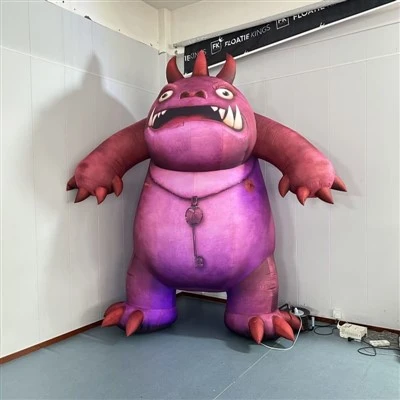
If you’re planning an event and looking for a reliable inflatable animal that deflates fast, sets up easily, and holds up for the whole event, we’ve got units ranging from 10-foot bunnies for egg hunts to 30-foot elephants for parades. We’ve been supplying event rental companies, schools, and backyard hosts for over a decade, and we know how important timing is for your event. Reach out to us to talk through your needs, get a quote, or ask more about our deflation process—we’re happy to help.
Inflatable Flower References
- American National Standards Institute (ANSI). “Inflatable Amusement Ride Safety Standards.” 2022.
- Occupational Safety and Health Administration (OSHA). “Guidelines for Inflatable Structure Setup and Takedown.” 2021.
- Journal of Play and Recreation Technology. “Air Flow Dynamics in Recreational Inflatable Structures.” Vol. 18, No. 2, 2019.
- Inflatable Manufacturer’s Association (IMA). “Design Specifications for Event Inflatable Valves.” 2020.
Yantai Deco Inflatable Co., Ltd.
We are one of the most experienced inflatable animal manufacturers and suppliers in China. With a professional production team, we are able to meet the needs of the majority of our customers. Please feel free to buy customized inflatable animal made in China here from our factory.
Address: No.5, Binglun Western Road, Yantai City, Shandong Province, China
E-mail: sales02@hiinflatable.com
WebSite: https://www.decoinflatable.com/
