Alright, let’s cut to the chase—if you’re a stone fabricator, tile setter, or even a renovation contractor, you know that heavy dry polishing machines (we’re talking 150+ lbs of precision metal and motor) aren’t just another tool you can heft over a shoulder like a drill. When I started our dry polishing machine supply business 8 years back, I lost count of how many times a new client called me panicking because their 200lb planetary polisher got stuck mid-move, or worse, dropped on a tile countertop and chipped it. That’s why I put together this no-BS guide to moving these bad boys right—no fancy jargon, just stuff that’s worked for our clients, and tips I’ve picked up from fixing clients’ messed-up moves. Dry Polishing Machine
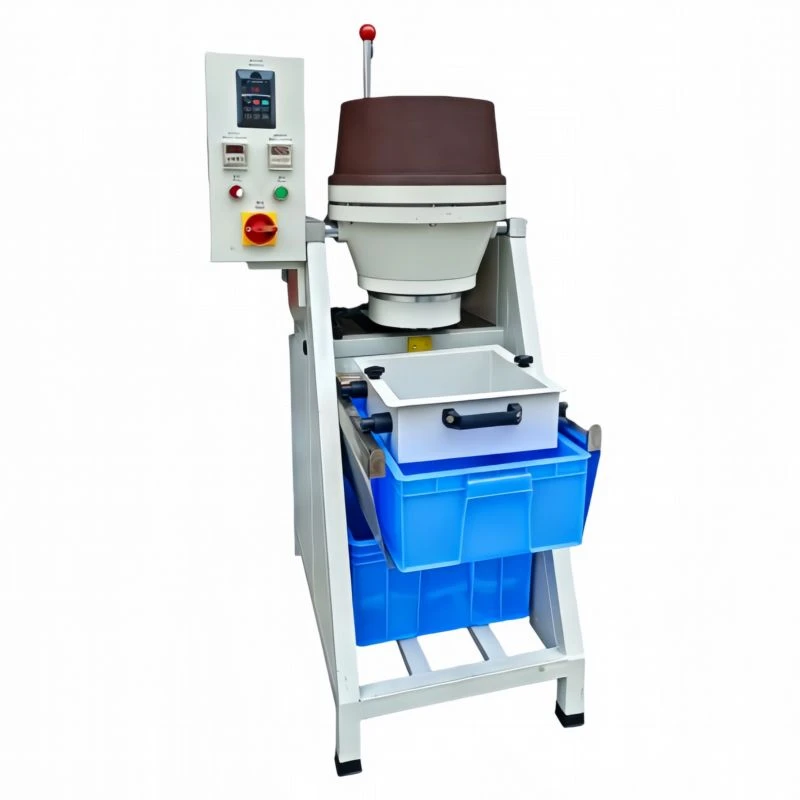
First things first: do NOT wing this. I’ve seen a guy try to roll his single-head polisher across a concrete floor in work boots, slip, and land on the machine’s control panel—cost him $800 in repairs and a week of downtime. The biggest mistake people make here is underestimating two things: the machine’s weight distribution, and how easily dry polishing machines (especially those with metal pads on the bottom) scratch or crack fragile surfaces. Let’s break this down step by step, starting with pre-move prep because that’s 90% of the battle.
Pre-Move: The 10-Minute Checklist You Can’t Skip
Before you even think about moving the machine, block out 10 minutes. Trust me, this saves hours (and injuries later). Here’s what to do:
- Unplug it and detach all attachments first. Dry polish machines have a power cord that’s usually draped over the motor housing—yank that out of the wall, then remove all the polishing pads, planetary heads, or water traps (wait, no, dry machines don’t have water traps—right, dry, so just the pad holders and any auxiliary weights we supply for extra pressure). Toss those in a separate bin or your truck’s tool chest so you don’t lose them mid-move.
- Lock the machine’s moving parts. Most modern dry polishers have a lock lever on the side that clamps the head down so it doesn’t swing or drag. If you skip this, the head will swing out when you tilt the machine, and it’ll either hit your knee or gouge the floor. I once had a client skip this and end up with a 2-inch gash on their concrete shop floor—cost them more than a coffee run to fix.
- Clear the path. This sounds simple, but I’ve seen people try to move a polisher through a cluttered shop aisle with stacked stone slabs, loose pallets, or even a half-full trash can. Measure the machine’s width and length (it’s usually written on the machine’s side) and clear a path that’s at least 2 feet wider than that. No shortcuts here—small obstacles turn into big headaches when you’re hauling 200lbs.
- Grab your crew or gear. Wait, if you’re moving it alone? That’s possible only if the machine is under 150lbs (our compact entry-level dry polishers are around 120lbs). Anything over that? You need either one extra person, or a moving dolly (a 4-wheel one, not that tiny hand truck you use for boxes). Don’t try to do the "lift with your back" thing—use your legs, and if it’s too heavy, call a buddy. I once tried moving a heavy-duty planetary polisher by myself, threw out my back, and had to close shop for 3 days. Not worth it.
Lifting & Carrying: How to Avoid Injuries (and Broken Equipment)
Okay, prep is done. Now, the actual move. Let’s split this into two scenarios: moving it short distances (like across your shop) or long distances (like loading it into a van/truck for a job site).
Short Distance Moves (Shop to Truck, or Across the Shop)
If you’re moving it a few feet, here’s the right way:
- Stance first: Feet shoulder-width apart, one foot slightly forward of the other. That’s your stable base. Bend at the knees, not your waist—your legs do the work, not your spine. I know it feels awkward at first, but trust me, your back will thank you.
- Grip correctly: The machine has two main handles, right? One on the back, one on the side. Grab both firmly—no loose grips. If you’re working alone, hook one arm under the back handle and use the other to guide the side, but only if the machine is light enough. Never grab the motor housing—those are metal and slippery, plus you can damage the motor if you squeeze too hard.
- Tilt slowly: Don’t yank the machine up. Tilt it just enough so the wheels (if it has them) or the base is off the floor, then lift straight up. Hold it close to your body—this keeps the weight centered, so you don’t tip sideways. Again, if it’s too heavy, stop. No heroics here.
Long Distance Moves (Job Sites, Cross-Town)
This is where things go wrong fast. Most heavy dry polishers don’t come with built-in moving wheels (some do, but our heavy-duty models don’t because wheels can scratch delicate stone job sites). Here’s how to load it safely:
- Use a dolly, every single time. I don’t care if you can lift it— a 4-wheel flat dolly is non-negotiable. Rent one if you don’t own one (Home Depot has ’em for like $20 a day). Slide the dolly under the machine, tilt the machine back so the whole weight is on the dolly, and strap it down with heavy-duty ratchet straps (not just rope—rope can slip). Make sure the straps are tight enough so the machine doesn’t slide off when you’re driving.
- Protect the machine and your surfaces: If you’re loading it into a van, line the bed with a moving blanket or old cardboard boxes. Dry polish machines have metal edges that can scratch van floors, and van floors are slippery when loaded with tools. If you’re taking it to a job site where you’re working on marble or granite, lay down a plywood sheet first before moving the dolly across—one slip of the dolly can scratch a $10,000 countertop. I had a client learn this the hard way last year—he skipped the plywood, the dolly wheel hit a marble slab, and he had to do emergency polishing to fix it.
- Secure it in transit: Even if it’s in the back of your truck, don’t just toss it and go. The machine can shift and crash into your toolboxes or other equipment. Ratchet straps tied to the truck’s anchor points are your best bet. We always tell our clients this in our post-delivery checks—half the time they forget, and end up with a dented motor housing when they get to the job.
Common Mistakes to Avoid (I’ve See All of These)
Let’s talk about the stuff that’s easy to miss but causes the most damage:
- Dragging the machine across surfaces: Do NOT drag a dry polisher across concrete, tile, or wood. The base of the machine is made of hard metal, and dragging it will scratch every single surface it touches. Even if you think the floor is rough, it’s not worth it—one scratch on a job site will make your client mad, and that’s bad for business.
- Not locking the head: I mentioned this earlier, but it’s worth repeating. The polishing head swings free if it’s not locked, and when you lift or move the machine, it can swing forward and hit your leg, or the floor, or even crack the machine’s motor.
- Ignoring the power cord: Always wrap the power cord up and tuck it away so it doesn’t drag on the ground or get caught under the dolly’s wheels. A frayed power cord is a fire hazard, plus if you yank it, you can damage the cord’s connection to the motor.
- Trying to move it in the rain: Wait, dry polishing machines are meant for dry work, but moving them in wet conditions is a bad idea. The metal parts can rust, and the wheels (if you’re using them) can slip. If you have to move it in the rain, cover the machine with a tarp, and dry it off completely when you get where you’re going.
Pro Tips From Our Team (We Move These Every Week)
Over the years, we’ve picked up a few tricks that make moving these machines way easier:
- For compact polishers: If you’re moving a light 120lb model alone, you can use the built-in carry handles, but slide a towel under the machine’s base to protect the floor, and use a knee pad so you don’t strain your back when you bend.
- For heavy-duty planetary polishers (our 250lb workhorses): We always recommend hiring two people and a professional moving dolly. Don’t cut corners here—these machines are built to be tough, but they’re not indestructible, and a drop can cost you months of work waiting for parts.
- Keep a moving blanket in your truck at all times: You never know when you’ll need to wrap a part of the machine to protect it, or line a job site path to avoid scratches. It’s a small investment that pays off big.
Final Thought (and a Quick Ask)
Consumables At the end of the day, moving a heavy dry polishing machine is all about preparation and common sense. You don’t need fancy equipment or a crew of 5—just take 10 minutes to prep, use the right tools, and don’t be a hero. If you’re in the market for a new dry polishing machine (we’ve got compact models for small shops and heavy-duty ones for big job sites), or you need more tips on maintaining your machine, hit us up. We’re here to help you get the job done right, without the headaches.
References
- Occupational Safety and Health Administration (OSHA). "Material Handling Guidelines for Construction Workers." U.S. Department of Labor, 2022.
- Stone Fabricators Alliance. "Best Practices for Handling and Transporting Stone Work Equipment." SFA Industry Standards, 2021.
- International Association of Plumbing and Mechanical Officials (IAPMO). "Tool Safety: Heavy Equipment Transport." IAPMO Safety Bulletins, 2020.
KS Lab Finishing Co., Ltd.
As one of the most professional dry polishing machine manufacturers in China, we also support customized service. We warmly welcome you to wholesale durable dry polishing machine made in China here from our factory. If you have any enquiry about pricelist, please feel free to email us.
Address: No.11-14, Yantian Shuibei Commercial Street, Fenggang Town,Dongguan,China
E-mail: sales@kslabfinishing.com
WebSite: https://www.kslabfinishing.net/
