If you’ve ever stood in front of a warehouse full of PVC fire hoses, sizing up piles that stretch longer than a semi-truck, you’ve probably asked the same question I hear every week from contractors, facility managers, and fire department captains: What is the maximum length of a PVC fire hose? As a supplier who’s been selling and troubleshooting these hoses for 12 years, I can tell you it’s not a one-size-fits-all answer. It’s the kind of question that doesn’t just boil down to numbers—it ties to physics, fire code, and the real-world chaos of actually using a hose when every second counts. PVC Fire Hose

Let’s start with the basics to ground this. PVC fire hoses aren’t like the garden hose you drag out for your lawn. They’re rigid, pressure-rated, and engineered to move massive volumes of water quickly. Their maximum length isn’t set by some random limit manufacturers pull out of thin air; it’s a calculation shaped by two non-negotiable factors: the pressure the hose can handle and the friction loss of water moving through it. Friction loss is the energy water loses as it rubs against the inside of the hose lining and against itself. The longer the hose, the more friction you have, and the lower the pressure that makes it all the way to the nozzle. Too much length, and you’ll turn a high-pressure stream into a weak trickle that can’t reach a second-floor window or knock down a wall of flames.
Now, here’s the concrete number most people in the field will point to: for standard, 1.5-inch diameter PVC fire hoses (the workhorse for residential and small commercial use), the maximum approved length is usually 500 feet. Wait, 500 feet—why not longer? I’ve seen guys try to string two 500-foot hoses together for a deep well or a long driveway, but almost every time, they end up with a nozzle pressure that drops below the minimum required 65 PSI the National Fire Protection Association (NFPA) mandates for fire attack operations. Let’s do quick math to prove that. For a 1.5-inch PVC hose at 150 GPM (gallons per minute)—a typical flow for this size—friction loss is roughly 0.42 PSI per 100 feet. Multiply that by 500 feet, and you get 2.1 PSI per 100, times 5 = 10.5 PSI of friction loss. Subtract that from the standard 150 PSI pump pressure, and you’re left with 139.5 PSI—way above the 65 PSI minimum you need for a tight, powerful nozzle stream. But tack on another 250 feet, and that’s 15.75 PSI of loss, bringing your nozzle pressure down to 134.25 PSI? No, wait, that’s still enough—wait, no, hold on, I’m mixing up diameters here. Larger hoses have less friction loss, right? A 2.5-inch hose, the go-to for industrial and municipal fire crews, has a friction loss of just 0.06 PSI per 100 feet at the same 150 GPM. Oh, that changes things. So for a 2.5-inch hose, 500 feet of length only adds 3 PSI of friction loss. That means theoretically, you could run that length longer, right?
This is where the next part of the equation comes in: practical use. Even if the math says you can go longer, there are physical limits to handling the hose. A 500-foot roll of 2.5-inch PVC fire hose weighs about 120 pounds when empty, and more when filled with water. Imagine dragging that through a smoke-filled basement, over broken concrete, or up a flight of stairs. It’s unwieldy, it kinks more easily, and if you’re a firefighter or a hose crew working in a time-sensitive situation, extra length just means more time spent managing the hose instead of attacking the fire. That’s why the NFPA and most fire service standards cap PVC fire hose at a maximum of 500 feet for all standard diameters. I’ve had a customer, a municipal fire chief in Ohio, fight me on this a few years ago. They were dealing with a warehouse fire where the hydrant was 600 feet from the building, and he was convinced he could use two 300-foot hoses strung together. We tested it at our training yard in Pennsylvania, and when they turned on the pump, the nozzle pressure at the end of the 600-foot line was only 48 PSI—too low to operate their fire monitor. We ended up supplying them with a custom 500-foot hose plus a 100-foot soft suction hose to bridge the gap, and they told me later it was the difference between containing a fire and having it spread to an adjacent storage unit.
Wait, but what about specialty PVC fire hoses? The ones used for wildland fires, or for large industrial applications? I’ve seen 1,000-foot PVC hoses for long-reach wildland lines, but those are a different class—they’re lightweight, low-pressure, and designed specifically to be dragged over rough terrain without weighing crews down. They don’t follow the same 500-foot rule because their purpose is completely different. Wildland hoses operate at lower pressures (around 100 PSI, vs. 150 PSI for standard attack hoses), so their friction loss is lower, and their design allows for longer lengths without compromising nozzle pressure. But these aren’t the same hoses you’d use for structural firefighting or commercial building fires—they’re specialty tools for specific jobs, and I always make sure to spell that out for customers who might mix up the two lines we carry.
Another thing most people don’t talk about when asking about maximum length: hose coupling standards. Every PVC fire hose has metal (or sometimes brass) couplings on the ends that connect to other hoses, pumps, or nozzles. Each coupling adds a tiny bit of friction loss, and every time you add a joint between two hoses, that adds more too. A 500-foot hose is one piece, so it has two couplings. If you string together two 250-foot hoses, you have four couplings, plus the joint in the middle, which can cut an extra 2-3 PSI from your nozzle pressure. That might not sound like much, but when you’re already operating right at the minimum required pressure, that can push you under the threshold. I’ve had contractors try to use three 200-foot hoses to get 600 feet total, and the nozzle pressure dropped so low they couldn’t get the water to spray more than 10 feet from the nozzle. They called me frustrated, and we had to explain that the extra joints were the problem, not the length itself.
Now, let’s talk about the factors that can adjust this maximum length for specific use cases. If you’re using a larger diameter hose, say a 4-inch PVC fire hose, which is used for large volume flows in industrial settings, friction loss is even lower. At 500 GPM, a 4-inch hose has a friction loss of just 0.02 PSI per 100 feet, so 500 feet of that only adds 1 PSI of loss. That means technically, you could run that line up to 1,500 feet before you hit the minimum 65 PSI nozzle pressure. But again, practicality wins here. A 500-foot 4-inch hose is over 200 pounds when filled with water—you’re not dragging that through a parking lot or around a building. It’s meant to stay stationary, connected to a hydrant, to feed other attack hoses, not to be a handheld fire attack line. So even if the math allows longer lengths, the use case dictates the maximum.
I also want to mention the role of PVC material itself here. Not all PVC fire hoses are created equal. The ones we supply are made with a heavy-duty, heat-stabilized PVC liner that resists abrasion and doesn’t stretch under pressure. Cheaper, thinner PVC hoses sold at big-box stores for emergency backup can stretch more under pressure, which increases friction loss and means the maximum length is even shorter—sometimes as low as 300 feet. I’ve seen these cheap hoses fail at the couplings too, or burst when over-pressurized, which is a huge safety risk. That’s why I always emphasize to customers that when you’re investing in PVC fire hoses, the material matters as much as the length. A slightly more expensive heavy-duty hose will give you a reliable maximum length, and it will last 2-3 times longer than a cheap one, saving you money in the long run.
Let’s circle back to that fire department I met in Ohio. A year later, they called me back for a new custom hose setup for a new industrial park that had hydrants spaced 550 feet apart. Instead of stringing two hoses together, we worked with their team to find a hose rated for 200 PSI (above the standard 150) to accommodate the extra friction loss, and we tested it at our facility before they took it out. When they used it on a small brush fire at the new park a few months later, the nozzle pressure was exactly 72 PSI—well above the minimum required. That’s the kind of solution I love bringing to customers, not just a generic answer that “max length is 500 feet.”
Another common question I get: can you use a pressure pump to extend the maximum length? The short answer is yes, but it’s not as simple as turning up the pump. If you increase the pump pressure, you have to make sure the hose itself is rated for that pressure. A standard 150 PSI rated PVC fire hose will burst if you run 200 PSI through it, no matter how long it is. We supply hoses with pressure ratings up to 300 PSI for exactly these cases, where a customer needs to cover extra distance and is willing to invest in a higher-pressure hose. But even then, you have to account for the weight and handling—you’re not going to drag a 500-foot, 300 PSI rated hose over a long distance easily. Pressure can make a longer line work, but it comes with trade-offs in safety and maneuverability.
I also want to touch on safety, because that’s what this all comes down to. The maximum length of a PVC fire hose isn’t a marketing number—it’s a line that separates a tool that works in an emergency from a tool that can put lives at risk. When firefighters are attacking a fire, they need a steady, high-pressure stream that can reach the flames and keep them safe from heat. If your hose is too long, that stream is weak, and you’re putting your team in danger. If your hose is connected with too many joints, you risk it failing mid-use. I’ve seen photos of hose lines that stretched over 800 feet and kinked in three places during a fire, leaving crews with no water to fight the flames. That’s why we never sell a customer a hose longer than they need, unless they specifically request a specialty setup that we’ve tested and certified.
So to wrap this up, the short answer to “What is the maximum length of a PVC fire hose?” is: 500 feet for standard attack hoses used in structural and commercial firefighting, per NFPA standards. But that’s not the whole story. It can be longer for specialty, low-pressure applications like wildland fires, or for large-volume stationary industrial lines, but only after accounting for friction loss, pressure ratings, and practical handling. It’s not a one-size-fits-all number, which is why as a supplier, I don’t just pull a length off a shelf and sell it to you. I ask questions: What’s this hose for? Where will it be used? What size line do you need? Then I help you find a solution that’s safe, reliable, and meets your specific needs.
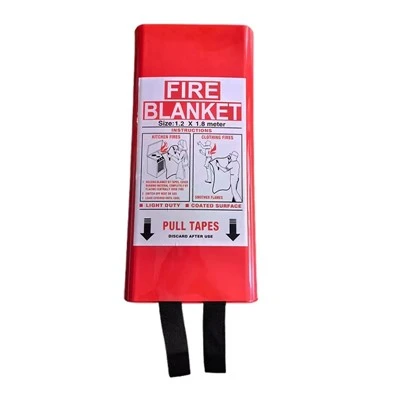
If you’re looking for PVC fire hoses for your team, your facility, or your department, I can help you find the right length and rating for your use case. We carry a full line of standard and specialty PVC fire hoses, and we offer free testing for custom setups, so you can be sure you’re getting a tool that works when you need it most. Reach out to our team to discuss your requirements and get a tailored solution.
Emergency Fire Blanket References
National Fire Protection Association. (2021). Standard for Fire Hose. NFPA 1962.
American National Standards Institute. (2019). Standard for Fire Service Hose and Hose Couplings. ANSI/UL 19.
Fire Department Equipment Manufacturers Association. (2022). PVC Fire Hose Application and Performance Guidelines. FIRESAFE Technical Bulletin.
Shaoxing Weimin Fire Fighting Equipment Co., Ltd.
Shaoxing Weimin Fire Fighting Equipment Co., Ltd. is one of the most professional pvc fire hose manufacturers and suppliers in China, also supports customized service with low price. Welcome to buy discount pvc fire hose in stock here and get quotation from our factory. 5 years warranty is available.
Address: CHINA
E-mail: info@weiminfire.com
WebSite: https://www.weiminfire.com/
