Hey there, fellow polymer folks and industrial partners! If you’ve ever worked with NVP homopolymers, you know there’s a whole lot more to these versatile materials than meets the eye. As someone who’s been supplying NVP homopolymers for over 12 years now, I’ve fielded my fair share of questions from clients—stuff like “What happens if my process temp spikes?” or “Will this solution get too thick when it cools?” Today, I’m breaking down exactly how temperature shakes up NVP homopolymer solutions, no stuffy jargon, just real-world lessons I’ve learned helping guys in adhesives, cosmetics, water treatment, and more nail their formulations. NVP Homopolymer
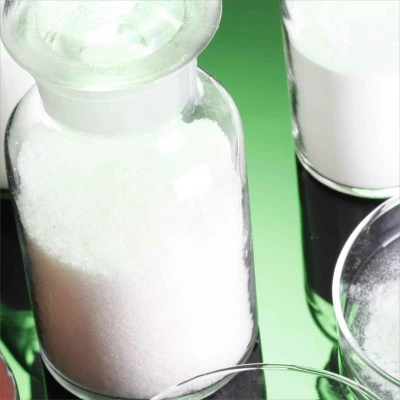
First off, let’s keep it simple: NVP stands for N-Vinylpyrrolidone, and a homopolymer here means it’s made up entirely of NVP units strung together, no extra monomers mixed in. These polymers are super hygroscopic, so they love interacting with water—most of our clients use aqueous solutions for their products, which is why temperature is such a make-or-break factor. I’ve seen a formulation work like a charm in a lab at 25°C that turned into a sticky mess at 50°C, and vice versa. Let’s dive into the key ways temp impacts these solutions, starting with the big one: solubility.
Solubility is the foundation of how these solutions behave, right? NVP homopolymers are water-soluble over a wide range, but temperature shifts change that solubility curve in ways you’ve gotta plan for. From what I’ve tested and seen client-side, when temp goes up, aqueous NVP homopolymer solutions actually dissolve faster, but wait—they have a lower critical solution temperature (LCST). That’s a fancy way of saying above a certain temp, they stop dissolving well and start separating or turning cloudy. For most standard NVP homopolymers we supply, that LCST is around 60°C to 80°C, but it varies a bit depending on molecular weight (MW)—higher MW grades have lower LCSTs, so they start misbehaving at lower temps than low MW. I had a client last year making a hot-melt adhesive that ran at 75°C and used a high MW NVP homopolymer—his solution went from clear to frothy in the mixing tank, and he couldn’t figure out why. Turns out he didn’t account for the LCST of that grade; switching to a lower MW version fixed the whole issue without changing his process by much.
On the flip side, when temp drops below room temp, solubility actually stays pretty good until you get near freezing. But I’ve noticed that very cold solutions (like below 10°C) can get a little thicker, not because they’re precipitating, but because the polymer chains are moving slower in colder water, so they’re more tangled together. That’s not a big deal for most clients, but if you’re pumping a cold solution through a small nozzle, you might have to adjust flow rates or slightly warm the line to keep things moving smoothly. We had a cosmetics client a while back making a facial serum that mixed at 5°C in winter; their pump kept clogging because the thickened solution wasn’t flowing right, so we suggested keeping the mixing area just 3 degrees warmer and it was smooth sailing.
Next up, viscosity—this is probably the thing I get asked about most, because viscosity is make-or-break for so many industries. Adhesives need a specific viscosity to spread evenly, personal care products need to feel right on skin, water treatment flocculants need to flow well through pipes. So how does temp affect that? Straightforward rule: as temp goes up, aqueous NVP homopolymer solutions get less viscous. Why? Because heat makes the water molecules move faster, and the polymer chains have more energy to untangle, so they slide past each other easier. The reverse is true too—cooler temps make them thicker, as I mentioned earlier. But here’s the catch: the size of that viscosity shift depends on molecular weight, solids content, and pH, not just temperature. For example, a 10% solution of high MW NVP homopolymer will drop viscosity by like 30% when you go from 20°C to 50°C, while a low MW 10% solution might only drop by 15%. That matters if your process is temperature-controlled—if you’re mixing at 25°C and then heating to 45°C to fill containers, you better account for that viscosity drop, or you’ll end up with adhesives that run too thin or serums that feel watery. I once worked with a packaging firm that was filling glue cartridges; they mixed at 22°C and everything was fine, but in the summer, their warehouse hit 35°C, and the glue was so thin it leaked out of the cartridges before they even got to the store. We told them to add a tiny bit of extra polymer to their formulation to compensate for the summer temp, and that fixed the leak issue.
Another big area is stability—how long does that NVP homopolymer solution stay consistent, right? Temperature can wreck stability if you’re not careful. If you store solutions at really high temps (above the LCST, obviously, but even a little below that), you’ll start to see polymer degradation over time. Heat breaks the bonds in the polymer chains, so MW drops, and that means viscosity goes down, solubility changes, and the solution might turn yellow. We had a chemical plant that stored bulk NVP homopolymer solutions in an uninsulated warehouse in Texas; by the end of summer, their solution had lost 20% of its viscosity because of heat degradation, and their flocculation performance for water treatment was garbage. We suggested insulating the tanks and adding a small amount of antioxidant to the solution, and that kept it stable for months. On the cold side, freezing is a whole other story—if an aqueous NVP homopolymer solution freezes, the water expands and can shear the polymer chains, breaking them down. When it thaws, you’ll get a lumpy, inconsistent solution that’s not usable. We always warn clients to store our solutions above 0°C, and if they ever do freeze it, let it thaw slowly at room temp and mix it really well before using—though we still advise avoiding freezing whenever possible, it’s just not worth the risk of ruined material.
Wait, let’s not forget about applications specific stuff, because that’s where this stuff actually matters. Take personal care: NVP homopolymers are in hair gels, skin creams, toothpaste—they give hold, moisturization, and texture. If a hair gel is mixed at 25°C and applied at 35°C (like if you’re using it on a hot day), the viscosity will drop a little, so it might not hold your hair as well. Conversely, in winter, if the gel is cold out of the bottle, it’s thicker, so you have to spread it faster. For cosmetics, that temperature-dependent viscosity is actually a feature if you design it right—you can make a serum that’s thin when it’s warm (like on your skin) and thickens a little when it cools, so it stays on better. But if you don’t plan for that, it can lead to complaints about products being too runny or too thick.
Then there’s adhesives, which is a huge market for NVP homopolymers. Hot-melt adhesors that use NVP homopolymers are heated to 60-100°C, so you have to pick a grade that doesn’t hit its LCST at your processing temp. I had a client making bookbinding adhesive a few years back; he was using a high MW grade that started to cloud up at 70°C, so his adhesive was uneven and left blobs on the spines. We switched him to a medium MW grade with a higher LCST, and his bookbinding went perfectly. Also, when the adhesive cools after binding, the polymer chains solidify and hold the pages together—cooling rate affects how strong that bond is, right? Too fast, and the chains don’t align right, so the bond is weaker. Too slow, and it might shift before setting. Temperature control during cooling is just as important as during processing.
Water treatment is another key one—NVP homopolymers are used as flocculants to pull dirt and contaminants out of water. The solution’s viscosity and molecular weight stay consistent only if temp is controlled, because if it degrades from heat, the flocculation ability drops. We work with municipal water plants that have to treat water in both winter (5°C) and summer (30°C), so we advise them to adjust the dosing rate based on temp: in colder water, the solution is thicker, so you might need a little less, and in warmer water, it’s thinner, so a tiny bit more. That’s a simple tweak that saves them money and keeps their water clean.
Now, I know what some of you are thinking: “This all sounds good, but what if I have a specific process temp that’s not covered here?” That’s why we’re here. Over the years, I’ve tested NVP homopolymer solutions at temps ranging from -5°C (just barely above freezing, so not frozen) up to 90°C, logging viscosity shifts, solubility changes, stability timelines, and degradation rates for every grade we supply. We don’t just sell a product and forget about you—we work with each client to figure out what temp their process runs at, what their end product needs, and recommend the right grade, storage conditions, and even process adjustments to make sure it works.
I’ll be straight with you, too—temperature effects on NVP homopolymer solutions aren’t one-size-fits-all. There’s no magic number that works for every grade, every application, every storage condition. That’s why generic advice online is half-baked, and working with a supplier that knows these polymers inside and out is way better than guessing. I’ve seen too many clients waste time and money switching grades or adjusting processes because they didn’t account for temp effects, when a quick chat with someone who’s dealt with this a thousand times would have solved their problem in 10 minutes.

If you’re dealing with NVP homopolymer solutions right now—whether you’re noticing unexpected viscosity shifts, cloudiness in your tank, degraded product over time, or just want to optimize your process for temperature changes—reach out to talk. No pressure, no hard sell, just 15 minutes to walk through your needs and see how we can help you avoid headaches and get the performance you need. We’ve got data on every grade, real-world examples from dozens of industries, and we’re happy to run quick tests if you need. Don’t let temperature derail your formulation—let’s work together to get it right.
NVP Copolymer References
- Salamone, J. C. (Ed.). Polymeric Materials Encyclopedia. CRC Press.
- Odian, G. (2004). Principles of Polymerization (4th ed.). Wiley-Interscience.
- Harper, C. A. (2002). Handbook of Plastics, Elastomers, and Composites (4th ed.). McGraw-Hill.
- “N-Vinylpyrrolidone Polymers: Properties and Applications.” BASF Technical Bulletin.
- Billmeyer, F. W. (1984). Textbook of Polymer Science (3rd ed.). Wiley.
Hangzhou Rainbow Import & Export Co., Ltd.
Hangzhou Rainbow Import & Export Co., Ltd. is one of the leading nvp homopolymer manufacturers and suppliers in China. We warmly welcome you to buy high-grade nvp homopolymer from our factory. All customized products are with high quality and competitive price. For free sample, contact us now.
Address: 3-405 B, Xi Gang Xing Jie No.206 Zhenhua Road,San Dun, Xihu District, Hangzhou, Zhejiang, China
E-mail: lisa@cpvp.com.cn
WebSite: https://www.sunvidone.com/
