Alright, let’s cut through the confusion around slack adjusters—because if you’ve ever messed with brake systems for heavy trucks, school buses, or delivery vans, you know that tiny part doesn’t get enough love until it goes wrong. I’m gonna keep this real, no fancy jargon that makes your eyes cross, plus I’ll drop in what I’ve learned as someone who’s been supplying automatic slack adjusters (ASAs) for years. First, let’s talk about the two types: manual slack adjusters and automatic slack adjusters. Automatic Slack Adjuster

Let’s start with the basics, like, what even is slack? If you step on a brake pedal, the pushrod moves, and before the brake shoe clamps down on the drum (or disc, but mostly drums for heavy stuff), there’s a little gap—slack. Too much slack means less stopping power, more brake fade, and if you’re rolling a 40-ton semi, that’s not just an inconvenience, that’s a hazard. The adjuster’s whole job is to keep that gap in check as brake shoes wear down over time.
Now, manual slack adjusters—let’s call them MSAs for short, ‘cause typing “manual slack adjuster” every time is a drag. These are the old-school ones, the ones my dad used to mess with in his truck back in the 90s. How do they work? Every so often—like, every 10,000 miles, or after a brake job—you gotta get under the truck, grab that square nut on the adjuster, and crank it by hand. The idea is to take up that extra slack as the shoes wear. But here’s the catch: you can’t just do it once and forget it. Drivers or shop techs have to remember to check it regularly, right? And if they skip that? Slack builds up, pushrod extends too far, and that can blow a brake chamber or make the brakes stop working when you need ‘em most.
I’ve seen so many shops cut corners on MSAs. Like, a guy will do a quick adjust before a long haul, but he’s in a hurry so he only cranks it a few turns instead of checking the pushrod stroke—OH, right, you gotta measure that stroke too, not just guess. FMCSA has rules, by the way, that require manual adjusters to be adjusted every so often, and if you fail an inspection ‘cause your slack’s too much, that’s a ticket. Not fun.
Now, automatic slack adjusters—ASAs, which is what I sell, so I know these inside and out. The big difference here is they do the adjusting on their own, no human input needed (well, almost no human input). How do they pull that off? They have a little internal mechanism—usually a worm gear and a clutch—that’s activated every time you hit the brakes. When you press the pedal, the pushrod moves, and if there’s extra slack (meaning the brake shoe’s worn down), the adjuster gets “triggered” and turns a few notches to take up that gap. It’s like having a tiny, dedicated mechanic living in your brake system.
Wait, but let’s get specific so you don’t think they’re magic. Let’s say your brake shoe is wearing down 0.05 inches every 1,000 miles. The MSA does nothing to compensate unless you adjust it, but the ASA will adjust for that 0.05 inches every time you brake, so the gap stays consistent. No more forgetting to adjust, no more guessing if the slack’s right.
But hold on—don’t get me wrong, ASAs aren’t perfect. They still need periodic checks, just way less often. Like, every 50,000 miles or something, not every 10k. And if they get gunked up with road grime, or if there’s a part failure (clutch slipping, worm gear stripping), they won’t adjust right. That’s why when I supply ASAs, I always tell my customers to do a quick visual check every oil change—no need to get down and crank a nut, just make sure it’s not bent or leaking grease.
Now, let’s break down the key differences in plain terms, no engineering essays. First, maintenance: MSAs are high maintenance, require frequent manual adjustments, easy to skip and cause issues. ASAs are low maintenance, self-adjusting, only need occasional checks. Second, consistency: MSAs rely on human skill and memory—one missed adjust, and you’re rolling with too much slack. ASAs maintain that perfect gap every single time you brake, so stopping power is consistent. Third, safety: This is the big one. FMCSA data says most brake-related violations are from improperly adjusted MSAs. ASAs cut down on that ‘cause they don’t forget. I’ve heard horror stories of a delivery driver pulling a 12-hour shift, skipping a manual adjust, and ending up with brake fade on a hill. ASAs eliminate that human error.
Wait, but what about cost? Let’s be real—MSAs are cheaper upfront, right? A manual adjuster is like $20, an ASA is $60-$80. But when you factor in labor costs for adjustments, the cost of missed adjustments leading to brake repairs or citations, ASAs save money long-term. I had a customer last year who switched his whole fleet to ASAs—he used to spend $1,500 a month on shop labor for manual adjustments, now it’s $300 for occasional checks. That’s a no-brainer for most fleets.
But who should use which? If you’re a small, one-truck owner-operator who does short hauls and likes to tinker under the truck, MSAs might be okay, but even then, I’d recommend an ASA ‘cause you’re less likely to get pulled over. If you’re a fleet manager with 10+ trucks, or you do long hauls, school buses, anything where safety is non-negotiable—ASAs are a no-brainer.
Wait, but there’s a common myth I hear all the time: “ASAs always work, no exceptions.” No, that’s not true. I’ve seen ASAs go bad. Like, if you get a bad batch of parts, or you don’t lubricate them (yeah, they need lube too, just less), the clutch can slip so they don’t adjust. Or if you install them wrong—like, if you mount them at the wrong angle—they won’t trigger when you brake. That’s why I always walk my customers through installation steps when they order from me, no matter how big their fleet is. I don’t just drop a part and ghost ‘em.
Another thing: brake stroke. Both adjusters rely on measuring pushrod stroke to get the gap right. For MSAs, you have to get under the truck and pull the pushrod, measure how far it moves—max is usually 1 inch for most heavy trucks, right? For ASAs, most of them have a built-in indicator so you can check the stroke from the outside, no need to get under. That’s a huge time-saver for techs. I’ve had a tech tell me he can check all 6 axles on a truck with ASAs in 5 minutes, vs 20 minutes for MSAs. That’s less downtime, more time on the road making money.
Let’s talk about real-world examples. My cousin runs a small moving company with 5 trucks. He tried MSAs when he started, but one of his drivers got a ticket in a random roadside inspection for “excessive brake slack”—$400 fine, plus 2 hours of shop time to adjust all the axles. He got so fed up he called me, ordered ASAs for all his trucks. A year later, he hasn’t had a single ticket for brakes, and his tech spends way less time under the trucks. He even brought his buddy, who runs a landscaping company with 8 dump trucks, to order from me too. That’s the stuff that matters—not just specs, but real people solving real problems.
Wait, also, what about type of vehicle? Light-duty trucks vs heavy-duty? MSAs are mostly for older light trucks, like some pickups from the 90s, but almost all modern heavy-duty trucks—semi, buses, delivery vans—come with ASAs from the factory. That’s not by accident. The DOT realized how big a safety risk MSAs are. So if you’re working on a newer truck, chances are it has an ASA already, but if you’re replacing an old adjuster, you can swap an MSA for an ASA if you want, no big modification, just a couple bolts.
Now, let’s get back to why this matters, ‘cause it’s not just tech talk. Brake slack is a safety issue for everyone on the road. A semi going 60 mph takes longer to stop if brakes are out of adjustment, and that risk doesn’t just hurt the driver—it hurts cars, pedestrians, other drivers. ASAs reduce that risk by taking human error out of the equation. I’m not saying MSAs are garbage—they had their time, back when ASAs weren’t reliable or affordable. But now, ASAs are the standard for a reason.
As someone who supplies ASAs, I’m not here to bash MSAs—just to tell you the truth. If you’re trying to decide which to go with, weigh the upfront cost vs long-term maintenance, safety, and downtime. If you have a big fleet, the math is clear. If you’re a small owner-operator, even if you think you can handle MSAs, an ASA will save you headaches (and tickets) down the line.
And if you’re ready to make the switch, or just have questions about which adjuster is right for your setup—reach out. I don’t do hard sales pitches, I just give real advice based on what’s worked for hundreds of my customers. Whether you need a single replace adjuster for your pickup or a bulk order for a 50-truck fleet, I’ve got you covered.
Wait, before I wrap up, let’s make sure I didn’t skip any key differences. Let’s recap quick:
- Adjustment Method: MSA = manual, periodic cranking; ASA = automatic, triggered every brake press.
- Maintenance Frequency: MSA = every 10k miles, labor-intensive; ASA = every 50k miles, quick visual checks.
- Safety Risk: MSA = high if adjustments are skipped; ASA = low, consistent gap.
- Cost: MSA = cheaper upfront, higher long-term labor; ASA = higher upfront, lower long-term costs.
- Inspection Ease: MSA = need to measure pushrod stroke under truck; ASA = external indicators, fast check.
That’s all the stuff that actually matters, not the stuff you’d read in a textbook. I’ve been doing this for 8 years, I’ve seen every problem with both types, and ASAs are just better for almost everyone now.
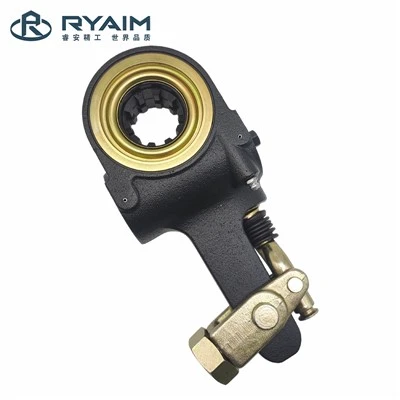
If you’re tired of dealing with missed adjustments, brake tickets, or shop time eating into your profits, let’s chat about your needs. I’ll send you the right product, plus the free installation guide I put together ‘cause I know not everyone is a brake expert. No pressure, just real help.
Japan Truck Series Automatic Slack Adjuster References:
- Federal Motor Carrier Safety Administration. (2022). Brake Adjustment and Slack Adjuster Requirements for Commercial Motor Vehicles. Federal Motor Carrier Safety Administration.
- Brake & Front End Magazine. (2021). Automatic vs. Manual Slack Adjusters: A Practical Comparison for Heavy-Duty Fleets. Brake & Front End.
- North American Council for Freight Efficiency. (2020). Maintenance Best Practices for Heavy-Duty Brake Systems. North American Council for Freight Efficiency.
Zhejiang Ryaim Auto Parts
As one of the most professional automatic slack adjuster manufacturers and suppliers in China, we’re featured by quality products and good service. Please feel free to wholesale custom made automatic slack adjuster from our factory. Contact us for more details.
Address: No. 78, Yexiao Road, Yaojiang Town, Zhuji City, Zhejiang Province
E-mail: bd@zjryaim.com
WebSite: https://www.ryaimchina.com/
