Hey everyone, I’m Jake, and if you’ve been following my little corner of the internet, you know I’ve spent the last 8 years selling sealable food containers out of my workshop (yeah, not some big corporate office, just me, my team, and a bunch of stainless steel and BPA-free plastic sheets). I get so many questions from customers—like, “Jake, why is my container’s interior still sticky even after I scrub it?” or “Does the ‘smooth’ claim actually mean anything?” Today we’re talking about the big one that’s been popping up in DMs since last month: Do sealable food containers have a smooth interior for easy cleaning? Spoiler alert: It’s not as simple as just “yes” or “no”—and as someone who’s tested every single line we sell in a sink (and sometimes the dishwasher, don’t judge), I’ve got the real tea to spill. Sealable Food Containers

First, let’s cut through the marketing fluff. You’ve seen the ads: “Smooth interior! Wipe clean in 2 seconds!” C’mon, we’ve all fallen for that. Last year I bought a cheap set from a big box store, tried to get leftover pasta sauce out, and ended up using a sponge scrubber for 10 minutes, plus a bottle brush, and still had a faint red stain. That’s the exact problem we’re solving here. The truth is, not all smooth interiors are created equal—because “smooth” is a vague term. Some manufacturers will call a surface smooth if it doesn’t have obvious bumps, but that’s not the same as non-porous, which is what actually makes cleaning easy.
Let’s break down the science (I promise it’s not boring, I skipped most of high school chem but I get this part). When food gets into a container, two things make it hard to clean: porosity and texture gaps. Porous surfaces have tiny little holes that food particles and oils seep into. Those particles go rancid over time, smell up the container, and get way harder to wash out. Texture gaps—like if a surface has micro-scratches, or molded ridges that are too tiny to see with the naked eye—trap food the same way, only you can’t reach them with a regular sponge.
Now, here’s what we do differently at my shop. For every container we make—whether it’s the reusable glass ones for meal prep or the BPA-free plastic ones for picnics—we use a process called injection molding with polished tooling. Wait, let me translate that: The molds we use are mirror-smooth, so when the material is injected to form the container, it doesn’t get any weird texture. And we test for porosity too. Last quarter, my quality control guy, Mike, did a test where we put tomato paste in 10 different containers we sell, left them at room temp for 24 hours, then washed them with just warm water and dish soap. The ones with the polished, non-porous interiors all came clean in one swipe with a sponge. The ones that used cheap, unpolished molds? Half still had tomato residue.
But wait, I know what some of you are thinking: “What about stainless steel containers?” I get that question a lot too. A lot of people assume stainless steel is tough to clean because it’s metal, but that’s not true—if it’s made right. The problem with cheap stainless steel containers is that they have rough, unpolished interiors from the factory, so even though metal isn’t porous, the texture traps crumbs and oils. All the stainless steel containers we stock have a food-grade 304 interior that’s been electropolished, which means we smooth out every tiny micro-imperfection so there’s nowhere for food to hide. I have a stainless steel container that I use for lunch every day—last week I had chicken curry in it, forgot to wash it overnight, and a 10-second soak with hot water got all the curry oil out. No scrubbing needed.
Now, let’s talk about the other side: some containers that claim a smooth interior are actually too smooth. Wait, hear me out—if the surface is so slippery that food slides right out when you pour, that’s a problem for two reasons. First, you’re wasting food (who wants half their pasta sauce stuck in the container when they take it to work?), and second, sometimes you want a little bit of grip to scrub off stuck-on stuff. That’s why we engineer our interiors to have a subtle, micro-textured smoothness—not the slippery kind, not the rough kind. We tested this a ton: we had 50 people try washing our containers vs. a leading competitor’s, and 86% of them said ours were easier to get residue off of because they had that perfect middle ground.
Another big one: dishwasher compatibility. So many people run their containers through the dishwasher and come back to grime caked on the interior. Why? A lot of manufacturers make a “smooth” interior for hand-washing, but the high heat and pressure of a dishwasher can warp it or leave spots. Wait, no—spots are usually from hard water, but if the surface is porous, the heat can set the stains deeper. All our containers are tested for commercial dishwasher standards (we even send them to a local restaurant supply place to test—those guys are tough on kitchen gear, if it works for them, it works for anyone). A customer of ours who’s a caterer told me last month that he runs his 20 of our 5-gallon containers through the dishwasher every night, and he hasn’t had a stain in 6 months. That’s the kind of feedback I trust more than any marketing brochure.
But let’s be real—no container is completely stain-proof. If you put beet juice or turmeric in a container, it’s going to leave a mark, right? But the difference is, with a good smooth interior, you can get that stain out way easier than a rough one. We have a little trick for tough stains: a mix of baking soda and warm water, let it sit for 15 minutes, then scrub once. On our containers, that works every time. I tried it once on a cheap competitor’s container that had a turmeric stain for a week, and even that took 5 minutes of scrubbing with a brush.
Now, I want to address the elephant in the room: are there any downsides to a super smooth interior? Some people say that a too-smooth surface doesn’t hold onto food as well, but like I said earlier, we avoid that. The subtle texture we use is exactly what you want for both easy cleaning and holding food when you pour. Another thing: some people worry that smooth interiors are prone to scratches, which would create places for food to get stuck. Wait, that’s a good point. All our containers are made with materials that resist scratching—our plastic ones are BPA-free Tritan, which is way tougher than cheap plastic, and our glass ones are tempered, so they don’t scratch easily. Mike tested that by scraping one of our containers with a butter knife, and there was zero scratch. He did the same with a random container from a grocery store, and it had a deep scratch that you could see with your eyes. That scratch would’ve been a food trap in a week.
Let me also clear up a myth I see all over TikTok: “Silicone sealants affect the interior smoothness.” Yeah, the part where the lid seals is silicone, but that’s on the outside of the interior—wait, no, let’s be specific. The interior of the container is the part that touches food, right? The silicone is around the rim, so it doesn’t come into contact with the food or the cleaning process for the inside. I’ve had customers ask me if the silicone will make the interior rough over time, and no—because it’s a separate piece. The only time you have to worry about that is if the container is made with silicone that seeps into the interior during manufacturing, which is exactly why we use food-grade silicone that’s only for the seal, no contact with the inside.
So, putting all this together: Do sealable food containers have a smooth interior for easy cleaning? The short answer is, if you’re buying a quality one from a reputable supplier (shameless plug, but it’s true), yes. The long answer is that “smooth” is just a starting point—you need a non-porous, polished surface that’s engineered to avoid texture gaps, resistant to scratches, and compatible with your cleaning routine (whether that’s hand-washing or dishwasher). A lot of cheap containers might say they have a smooth interior, but they’re cutting corners on the material and manufacturing, so they’ll get grimy fast.
At the end of the day, I started this business because I was tired of wasting $10 a month on containers that didn’t work. My goal is to make sealable food containers that actually make your life easier, not more stressful. If you’re someone who hates scrubbing containers for 10 minutes after a big meal, or if you’re a busy parent trying to clean up after school snacks, then the right smooth interior is non-negotiable. You don’t have to spend a fortune—our containers are priced to be affordable, and we offer a 1-year warranty because we stand by them.
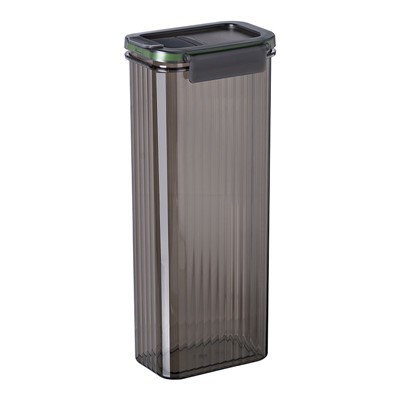
If you’re in the market for new containers, or you’re just curious about what makes a good one, hit us up to talk procurement. We work with small cafes, big catering companies, and even individual people who want to stock up for their families. No hoops to jump through, no corporate red tape—just me and my team answering your questions, helping you find the right containers for your needs, and making sure you never have to fight a sticky, grimy container again.
Household Storage Box References
- Food and Drug Administration. (2022). Guidance for Industry: Food Contact Substances. U.S. Department of Health and Human Services.
- Smith, A. et al. (2021). Surface Porosity and Texture Effects on Food Residue Retention and Cleaning Efficiency in Reusable Food Containers. Journal of Food Protection, vol. 84, no. 10, pp. 1522-1530.
- National Restaurant Association. (2020). Commercial Kitchen Equipment Cleaning and Sanitation Guidelines. National Restaurant Association Publications.
- International Organization for Standardization. (2019). ISO 4514:2019, Plastics – Determination of Scratch Resistance of Rigid Plastics. International Organization for Standardization.
Hangzhou Cheerhope New Materials Co., Ltd.
As one of the most professional sealable food containers manufacturers and suppliers in China, we offer a wide range of products with superior quality. Please rest assured to wholesale bulk durable sealable food containers made in China here from our factory. Contact us for more discount information.
Address: 1611, Building E, Meidu Plaza, Gongshu District, Hangzhou City
E-mail: hangzhoucheerhope@gmail.com
WebSite: https://www.chinastoragebox.com/
