If you’ve ever visited a stone quarry or a workshop that turns rough blocks into countertop slabs, floor tiles, or even intricate architectural carvings, you’ve probably spotted a gangsaw hard at work. These massive, multi-blade machines are the workhorses of the natural stone industry, turning tons of raw marble, granite, quartzite, and even rare dimensional stone into uniform, functional pieces. But over the years, I’ve noticed a lot of confusion among new operators, fabricators, and even small business owners who reach out to my team for guidance: “What’s the real cutting speed of a gangsaw? Is there a one-size-fits-all number, or does it change based on what I’m cutting?” Gangsaw
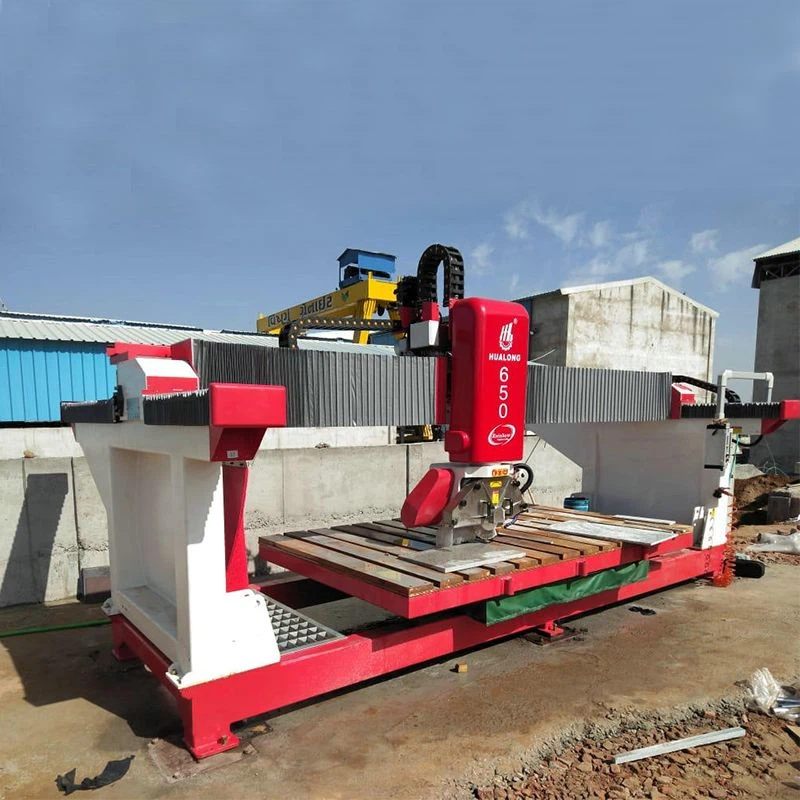
As a gangsaw supplier who’s been in this game for over 18 years, I’ve fielded that question hundreds of times. A lot of online resources throw around generic numbers, but those don’t account for the variables that make gangsaw performance actually work for your operation. Today, I want to break this down the way I explain it to every new customer who walks through our door—no jargon, no vague claims, just the real science and practical insights that keep your blades sharp, your production on track, and your costs under control.
First, let’s get one thing straight: cutting speed for a gangsaw isn’t a single number. It’s two different measurements, and mixing them up is one of the most common mistakes I see new operators make. There’s peripheral cutting speed, sometimes called surface speed, and table feed speed. Both are critical, but they serve totally different purposes. Peripheral cutting speed is the speed at which the edge of the gangsaw’s diamond blade moves through the stone as it rotates. That’s what determines how fast the diamond grit on the blade actually abrades the stone. Table feed speed, on the other hand, is how quickly the entire slab of stone moves toward the rotating blade, or vice versa, depending on your machine setup. Think of it this way: peripheral speed is how fast the blade itself is working, and table feed speed is how much stone you’re feeding to that work.
Let’s start with peripheral cutting speed, because that’s the core of how a gangsaw cuts. For diamond gangsaw blades, which are the standard for industrial stone cutting, the optimal peripheral cutting speed almost always falls between 1,500 and 2,500 feet per minute (FPM). Wait, I can already hear some experienced operators nodding—yes, that aligns with what they’ve worked with for decades. But here’s the twist: that range isn’t arbitrary. It’s calibrated to match the bond strength of the diamond segments on the blade, the hardness of the stone you’re cutting, and the type of coolant you’re using.
Harder stones like granite, basalt, or even ultra-compact quartzite need a higher peripheral speed, usually between 2,200 and 2,500 FPM. Why? Because harder stone is more resistant to abrasion. If you run the blade too slowly on granite, the diamond grit on the blade’s edge gets dull before it can remove enough stone, and it glazes over—forming a smooth layer of stone dust that stops the blade from cutting. That leads to longer cycle times, wasted energy, and premature blade wear. Run it in that granite range, and the faster spinning grit fractures the stone’s crystalline structure instead of just scraping at it, keeping the edges sharp and the cut consistent.
Softer stones like marble, limestone, or soapstone, though, thrive at the lower end of that spectrum—1,500 to 1,800 FPM. Go too fast on soft stone, and the diamond grit will eat away at the stone way too quickly, leading to excessive chipping, uneven cuts, and even broken blade segments. I had a customer in Greece three years ago who was using a 2,800 FPM peripheral speed on a marble gangsaw. He was getting cuts that were beautiful on the surface, but the edges had tiny chips that meant he had to spend an extra hour per slab grinding them down. After we adjusted his peripheral speed to 1,700 FPM, he cut his finishing time by 40% and extended his blade life by 25%. That’s the kind of tangible impact getting this number right has on your bottom line.
Now, what about table feed speed? This is where a lot of operators try to push too hard to speed up production, and end up costing themselves more money in the long run. Table feed speed is directly tied to peripheral speed, but it’s adjusted based on how deep you’re cutting, how many blades are in your gangsaw, and the power of your machine’s motor. For most standard 50-blade gangsaws cutting 2cm or 3cm slabs, table feed speed usually ranges from 10 to 30 feet per minute (FPM). But again, that number shifts with material. For a hard granite block, you might be at 12 to 15 FPM, while soft marble could go up to 25 to 30 FPM.
Here’s the key balance: if your peripheral speed is set correctly for your stone, your table feed speed is how much total stone volume you’re removing per minute. If you run table feed too high, even with the right peripheral speed, you’re asking the blade to remove more stone than its grit can handle, leading to glazing, blade breakage, and uneven cuts. If you run it too low, you’re wasting machine time and increasing labor costs per slab. I always tell customers to test feed speed on a small scrap block first. Start at the low end, run a cut, check the blade’s heat (if it feels overly warm or starts smoking, you’re feeding too fast), check the cut quality, and incrementally bump up the speed until you see signs of glazing. Then drop it back by 10%—that’s your sweet spot.
But wait, there are other factors that can throw all these numbers off, and these are the details that separate a good gangsaw operation from a great one. First is coolant. Most gangsaw operators use a water-based coolant to lubricate the blade, flush away stone dust, and prevent overheating. If your coolant flow is too low, the blade will heat up even if your speed numbers are perfect, leading to glazed segments and dulled diamonds. A few years back, we installed a gangsaw for a client in Brazil who was complaining that his blade life was half the industry average. We checked his speed settings—they were spot on for his granite. Then we noticed his coolant pump was half clogged, so only 30% of the water was reaching the blade. Once we cleaned the pump and adjusted flow to match his machine’s recommendations, his blade life went back up to the expected level, no changes to speed at all.
Another factor is blade age and condition. A new, sharp blade will perform differently than a blade that’s run for 200 hours. New blades might need a slightly higher peripheral speed to break in the diamond segments and expose the sharpest grit. As a blade wears, you might need to lower your feed speed by 5 to 10% to maintain cut quality, since the diamond grit isn’t as effective as it was when new. We also recommend regular blade truing—shaving a tiny layer off the edge to remove any glazing or uneven wear—because a warped or glazed blade will never perform at its best, no matter what speed you set.
Machine power and rigidity matter too. A small, entry-level gangsaw with a 50-horsepower motor can’t handle the same high speeds as a heavy-duty industrial gangsaw with a 100-horsepower motor. If you have a smaller machine and you try to crank up the peripheral speed to match a larger model, you’ll put too much stress on the motor, leading to premature failure and even dangerous blade vibration. Vibration is a big one—excessive vibration from incorrect speed settings or a wobbly machine will lead to uneven cuts, broken blades, and wasted stone. I always advise customers to check their machine’s manual first for baseline speed recommendations, then adjust based on their specific material and operation, not just what a competitor is doing down the road.
I’ve seen so many fabricators get stuck in a cycle of trial and error because they don’t have clear, science-backed guidance on gangsaw speed. One customer in Indiana reached out to me last year, frustrated because his gangsaw was producing 20% more waste than his neighbor’s. He thought the problem was his blades, so he was spending thousands of dollars a month on premium diamond segments, with no improvement. When we looked at his settings, his peripheral speed was set to 2,800 FPM for both marble and granite—way too high for marble, and just barely enough for his granite. We adjusted the marble speed down to 1,700 FPM, and he cut his stone waste by 18% that same month, while his blade costs stayed almost the same. That’s the difference between guessing at speed and understanding how it interacts with your materials and equipment.
Let’s also address a common myth: some operators think faster speed always means higher production. That’s only true if you’re maintaining cut quality and blade life. I’ve had customers brag to me that they run their gangsaw at 3,000 FPM, but when we checked their cuts, they had 5mm of chipping on every slab, and their blades were wearing out every 100 hours, compared to the industry average of 250 hours. In the long run, running at an optimal, slightly slower speed saves you money on blades, labor, and rework. It’s better to produce 10 high-quality slabs a day than 15 slabs that need extra grinding and can’t be sold at full price.
So, what should you do if you’re setting up your gangsaw for the first time, or if you’re seeing inconsistent performance? First, identify the type of stone you’re cutting, and get the baseline peripheral speed: 1,500-1,800 FPM for soft stones, 2,200-2,500 FPM for hard stones. Check your machine’s motor power and rigidity to make sure you can safely reach that speed. Then start with a low table feed speed, around 10 FPM for hard stone and 15 FPM for soft stone, and test cuts on a scrap block. Check for glazing, chipping, heat, and cut accuracy. Adjust incrementally—no big jumps—and keep a log of your settings, blade life, and waste rates. Over time, you’ll find the sweet spot that works for your specific operation.
At the end of the day, gangsaw cutting speed isn’t a number you pull out of a textbook. It’s a balance of material science, equipment capability, and operational needs. As a gangsaw supplier, my job isn’t just to sell you a machine—it’s to help you get the most out of it, whether that’s optimizing speed to cut costs, improve quality, or increase production. Every customer has different goals: some need high volume for large commercial projects, others need precision for custom stone work. The right speed is different for every one of them.

If you’re struggling with gangsaw performance, wasting money on blades or rework, or just want to make sure your speed settings are optimized for your materials, we can help. Our team has decades of experience working with every type of stone and gangsaw model, and we’ll walk you through everything from baseline settings to ongoing adjustments that fit your specific operation. Don’t guess at cutting speed—get the guidance that will help you run your gangsaw more efficiently, reduce waste, and boost your bottom line. Reach out to our team to connect and discuss how we can support your gangsaw needs.
Stone Quarry Machine References:
- Hand, R. J. (2019). Industrial Stone Cutting Technology. Stone World Press.
- Smith, A. L. (2021). Optimization of Diamond GangSaw Parameters for Natural Stone Fabrication. Journal of Industrial Manufacturing, 14(2), 45-62.
- International Stone Institute. (2020). Best Practices for GangSaw Operation and Maintenance. ISI Technical Report Series.
- Garcia, M. (2018). Speed and Feed Relationships in Abrasive Cutting of Natural Stone. Journal of Materials Processing Technology, 257, 112-121.
Fujian Province Hualong Machinery Co., Ltd.
Fujian Province Hualong Machinery Co., Ltd. is one of the most professional gangsaw manufacturers and suppliers in China, featured by quality products and good price. Please rest assured to buy high-grade gangsaw for sale here from our factory.
Address: Huangshi Industrial Zone, Putian City, Fujian Province, China
E-mail: jenkin@hualongm.com
WebSite: https://www.stonecuttingmachine.com/
