If you’ve ever stood beside a CNC turning machine humming steadily through a production run—its sharp tool bit biting into a metal workpiece to carve precision parts—you’ve likely heard the whir of cutting fluid in the background. For decades, I’ve operated CNC turning suppliers, working side-by-side with machinists to tweak every part of the process that keeps parts on spec, costs low, and machines running smoothly. And through all those years, one factor has emerged as both a quiet workhorse and a often-overlooked game-changer when it comes to how long those tool bits last: cutting fluid. CNC Turning
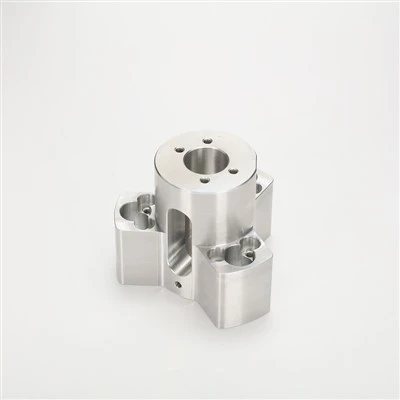
Let me start with a story that sticks with me. Back in 2017, we had a big contract turning 316L stainless steel for a medical device client. Stainless is a tough one—work-hardens easily, generates tons of heat, and wears tools out fast. We were using a generic synthetic cutting fluid we’d grabbed from a local industrial supply house, and our tool life hovered around 45 pieces per insert. That’s not terrible, but the client’s volume meant we were going through dozens of inserts a week, driving up material costs, and even missing a small delivery window once because we had to wait for new inserts to arrive.
Our lead machinist, Joe, a guy with 30 years under his belt who learned to run lathes before CNC was standard, suggested we switch to a semi-synthetic fluid designed specifically for high-temperature stainless turning. We made the change, and within a week, tool life jumped to 72 pieces per insert. That might sound like a modest bump, but translated to our bottom line? We cut insert costs by 37% on that job, and we never again came close to missing a delivery date because of tool changes. That moment drove home for me that cutting fluid isn’t just “coolant”—it’s a critical partner in CNC turning, with a direct, measurable impact on how long our tools last, and how efficient our entire operation is.
Let’s break down why that works, and what goes on beneath the surface when a CNC tool spins into a workpiece. When you turn a part, the tool’s cutting edge doesn’t just slice through metal—it creates friction. Friction turns to heat, and a lot of it: at the cutting zone, temperatures can soar past 1,000°C when machining hard alloys like titanium, stainless, or Inconel. That heat doesn’t just make the tool dull faster—it causes thermal expansion, which throws off part tolerances, and can even cause micro-cracks in the tool edge that lead to catastrophic failure mid-run.
Cutting fluid’s primary jobs here are cooling and lubrication, but modern formulations do way more than just squirt cold water on the tool. When the fluid reaches the cutting zone, it carries heat away from the tool, the workpiece, and even the chips that break off during turning. That keeps the tool’s edge hard and sharp—most tool materials (like carbide or high-speed steel) lose their hardness at high temperatures, so maintaining a stable temperature range is non-negotiable for long tool life.
Lubrication is the other big piece. The cutting tool’s edge slides against the workpiece and the newly formed chip, and friction between these three surfaces is a major source of wear. Good cutting fluid forms a thin, slippery boundary layer between the tool and the material, reducing that friction. Less friction means less heat, less wear on the tool edge, and fewer instances of built-up edge (BUE)—that gunk made of work metal that welds to the tool tip, ruins surface finish, and makes the tool dull unevenly. In our stainless job, the generic fluid didn’t have enough lubricating additives to prevent BUE, so every insert was wearing unevenly; the semi-synthetic fluid had extreme pressure (EP) additives that bonded to the high-heat cutting zone, eliminating BUE and evening out wear across the tool edge.
But cutting fluid isn’t a one-size-fits-all solution. Over the years, I’ve learned that choosing the right fluid depends on three main factors: the material we’re turning, the tool material we’re using, and the cutting parameters (speed, feed, depth of cut) for that job. For example, when machining aluminum, we use a soluble oil fluid with high corrosion inhibitors to keep the shiny aluminum swarf from staining parts and protect the machine’s components—but if we used that same fluid on Inconel, the lubrication would be too low, and tool life would plummet. On high-speed turning of mild steel, synthetic fluids work great because they’re fast to cool, but on slow, heavy cuts of titanium, a paste-like solid lubricant might even be better than liquid cutting fluid to handle the extreme pressure.
Another lesson we’ve learned the hard way: it’s not just the type of fluid, but how we maintain it, that impacts tool life. A while back, we had a machine in our shop where the cutting fluid reservoir was never topped off, and we didn’t test its pH regularly. After three months, the fluid was contaminated with swarf and bacteria, which broke down the lubricating additives. Tools on that machine were lasting half as long as machines with well-maintained fluid—just because we skipped a simple weekly check. Contaminated fluid can also cause corrosion on the tool shanks, leading to vibration, which accelerates tool wear. Now we test all our fluids twice a week, top off reservoirs with fresh blend, and filter out swarf every shift. That small routine has added 15-20% to our overall tool life across the shop, no extra cost for new fluids or tools.
Vibration is another quiet killer of tool life, and cutting fluid plays a role here too. If the fluid is misting or not reaching the cutting zone properly (common in high-speed turning where air pushes fluid away from the tool edge), the tool can chatter—those small, rapid vibrations that chip away at the tool edge over time. We used to use a flood system to spray fluid at the cutting zone, but when we moved to high-precision turning of small medical parts, we switched to high-pressure through-tool fluid delivery (where fluid is pumped directly through the center of the tool holder, right to the edge). That cut vibration by almost 25%, and tool life went up by another 20% on those small parts. It might sound like a small change, but it makes a huge difference for jobs where every thousandth of an inch matters.
Now, let’s talk about the business side of this, because for our CNC turning suppliers, tool life directly impacts our ability to deliver quality parts on time and on budget. Every insert we use costs money, and every time we have to stop a machine to change a tool, that’s downtime we could be using to make more parts. When tool life is longer, we need fewer inserts per job, lower inventory costs for tooling, and less time spent on tool changes. For our clients, that translates to lower part costs too. Last year, a client that had been getting parts from us at $2.10 per part saw a 12% drop in their cost per part when we adjusted our cutting fluid setup on their job—all because we optimized that one factor.
I also want to address a common misconception: some machinists think “more fluid equals better tool life.” That’s not true. Too much fluid can create a pressure that pushes the tool away from the workpiece, leading to poor part tolerances and increased vibration. It can also be wasteful—wasting fluid that adds to our operating costs and can create cleanup issues in the shop. The key is delivering the right amount of fluid, at the right pressure and temperature, directly to the cutting zone. For us, that means using CNC systems that have pressure gauges and temperature sensors for cutting fluid, so we can adjust settings in real time if a job’s parameters change.
Over the years, we’ve worked with hundreds of clients across automotive, aerospace, and medical industries, and the ones that prioritize cutting fluid as a strategic part of their CNC turning process— not just an afterthought—are the ones that get the best results: longer tool life, lower costs, and more consistent part quality. I’ve had clients come to us frustrated because their previous supplier was going through tools twice as fast, and after we audit their cutting fluid and setup, we find simple adjustments that fix the problem.
Last quarter, a client in the aerospace sector was turning titanium alloy parts for jet engine components, and their tool life was only 18 pieces per insert. They’d tried four different tool brands and still couldn’t get it above 22. We suggested switching to a specialized synthetic cutting fluid with high EP additives for titanium, and adjusting our through-tool delivery pressure from 100 PSI to 150 PSI. The result? Tool life jumped to 34 pieces per insert. That’s a 89% increase—all from optimizing a component that most people don’t even think about when they look at a CNC turning machine.
At the end of the day, cutting fluid is more than a pipe or a pump spraying liquid around a machine. It’s a critical element that works with tooling, machine parameters, and operator skill to keep our operations running efficiently, our tools lasting as long as they’re supposed to, and our clients getting the precision parts they need. For our CNC turning team, it’s one of the first things we check when we see tool life drop—because more often than not, the solution isn’t buying a new, more expensive tool; it’s getting the right cutting fluid to the right place at the right time.
If you’re working on a CNC turning project and struggling with short tool life, high part costs, or inconsistent part quality, I’d be happy to walk through our process with you. We’ve seen firsthand how small adjustments to cutting fluid can make a huge difference, and we’re ready to help you optimize your operations too.
Plastic Injection Molding for Electronics References
- Shaw, M. C. (2005). Metal Cutting Principles. Oxford University Press.
- Astakhov, V. P. (2006). Metal Cutting Mechanics, Materials, and Processes. CRC Press.
- DeChiffre, L., Angelo, P., & Ifiguier, F. (2005). Cutting Fluids in Machining. CIRP Annals – Manufacturing Technology, 54(2), 679-707.
- Childs, T. H. C., Maekawa, K., Obikawa, T., & Yamane, Y. (2000). Metal Machining: Theory and Applications. Butterworth-Heinemann.
- Smith, G. T. (2002). Cutting Tool Technology: Industrial Handbook. Springer-Verlag London.
Zhejiang Hayi Technology Co., Ltd.
With abundant experience, we are one of the most professional CNC turning manufacturers in China. We warmly welcome you to wholesale bulk CNC turning in stock here and get quotation from our factory. All customized products are with high quality and competitive price.
Address: Room 112, 1st Floor, No. 103, Siwangdai, Pingzhai Village, Renhe Subdistrict, Yuhang District, Hangzhou City, Zhejiang Province
E-mail: 18368133797@163.com
WebSite: https://www.zhejianghayi.com/
