Let me start by saying this: I’ve spent 12 years as a machine tool accessories supplier, and every small batch manufacturer I work with has at one point asked me, “Why do these accessories always feel more like a hassle than a help when we’re only making 50 parts or less?” That’s not a complaint I’m used to hearing from the large-scale automotive or aerospace clients that make up 60% of my business, but over the last three years, as more small job shops and prototype-focused factories have come on board, I’ve heard this question hundreds of times. Today, I want to break down the real, non-theoretical disadvantages of using machine tool accessories in small-batch production—disadvantages I’ve seen shut down prototype runs, cut into profit margins, and even led some small manufacturers to ditch quality accessories entirely for cheaper, one-off workarounds. Machine Tool Accessories
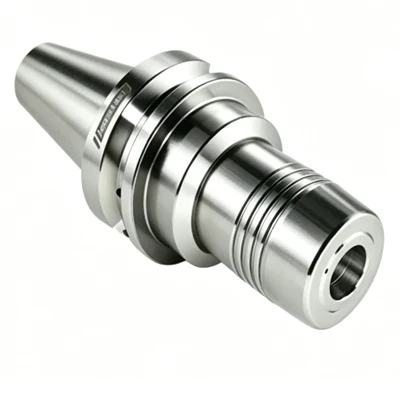
First, let’s set the stage so we’re all on the same page: machine tool accessories here mean things like tool holders, collets, vises, workholding jaws, cooling nozzles, and tool presetters—parts that attach to your core milling, turning, or machining centers to get specific jobs done. Large-batch production (say, 10,000+ identical parts) thrives on these accessories because you calibrate them once, and they run for months without issues. Small-batch is the opposite: every job has a unique part, a different material, a tight deadline, and often no room for error because the order’s profit margin is razor-thin. That mismatch is where the first big disadvantage hits: accessory setup time that eats into production time.
Last quarter, I worked with a small prototype shop in Ohio that makes custom medical device components. They had a job to machine 25 titanium spinal fusion spacers—titanium is tricky, so they reached out to me for high-precision collets and custom soft jaws. Here’s what happened: their existing collet set was for 10mm tool shanks, but their new end mills were 12mm. So they swapped in the new collets, spent 20 minutes tightening them, then ran a test cut—only to find the collet was misaligned, so the tool ran .003mm off-center. They had to take it apart, re-adjust, run another test, and that ate up 40 minutes of their 2-hour window for the first batch. For a large shop, that 40 minutes is a blip; for a small batch shop, that’s 20% of their total production time for the entire run. Worse, every time they switch jobs—even from a 25-part titanium run to a 15-part aluminum bracket—they have to re-set up their accessories. A 2023 study from the National Institute of Standards and Technology (NIST) backs this up: for every small-batch production run (under 100 parts), accessory setup accounts for 15-22% of total labor time, compared to just 2-5% for runs over 10,000 parts. That’s not just lost time—it’s lost money, especially when small jobs often have fixed, tight deadlines because the client needs parts for a trade show or a trial.
The second, and more frustrating, disadvantage is accessory compatibility issues that lead to part scrap. Small-batch production relies on flexibility, but most standard machine tool accessories are built for specific, industry-standard machine models. If your small shop has a 5-year-old Haas mill and a 3-year-old Doosan lathe, you might be able to get away with basic collets, but when you need a custom vise or a workholding jaw for a one-off part, the mismatch becomes a problem. Let’s take the example of a job I handled last year: a Wisconsin job shop that makes small hydraulic components for farm equipment. They had an order for 40 aluminum valve bodies. Their core mill is a 2018 Okuma, and they ordered a set of custom soft jaws from a third-party supplier, thinking they’d fit. When they tried to mount them, the jaw mounting holes were .002mm off—just enough that the jaws would wobble under the 10,000 RPM machining speed. They ran the first 5 parts, only to find 3 had surface finish defects that made them unusable. Scrap rate jumped to 15%, which meant they had to run the entire batch again—cutting their already thin profit margin (which was 8% for the job) to nothing. Why does this happen? Most accessory suppliers (including my company, full disclosure) focus on producing for high-volume machine models because that’s where the demand is. For small shops, which often rely on older, less common machines, custom accessories take 2-3 times longer to produce, cost 40-60% more, and have a higher chance of fit issues because there’s no standardized specification for older machine iterations. A 2022 survey by the Manufacturing Extension Partnership (MEP) found that 68% of small-batch manufacturers (fewer than 50 employees) reported at least one instance of accessory-related part scrap in the previous year, with an average scrap cost of $1,200 per job—money that’s hard to absorb when you’re only making 50 or 100 parts.
Third, and something I didn’t fully grasp until I started working closely with small shops, is the inventory burden of specialized accessories. Let’s be clear: I sell accessories, so you’d think I’d want every shop to stock as many as possible. But small shops have limited space and limited cash flow. If you’re running 100-part batches of 5 different parts a month, do you stock 3 sets of tool holders, 2 custom vises, 4 collet types, and 2 sets of workholding jaws? That’s tens of thousands of dollars tied up in inventory that you only use 1 or 2 times a quarter. I had a client in Michigan last year who spent $18,000 on accessory inventory in 2023, 70% of which was items that only got used once for a single job. That’s not just a waste of money—small shops often have to take out lines of credit to cover that inventory, which adds interest costs they wouldn’t have if they could use cheaper, on-demand alternatives. Compare that to a large-batch shop that runs the same 10,000-part job every month: they can buy one set of collets, spread the cost over thousands of parts, and use that inventory for years. I’ve seen small shops skip high-quality accessories entirely because they can’t afford to stock them, and instead use makeshift workarounds—like wrapping paper around a collet to fill gaps, or tightening a vise with a wrench instead of a torque wrench. Those workarounds might work for one job, but they lead to inconsistent part quality, which hurts a small shop’s reputation with clients.
The fourth disadvantage is accessory calibration and maintenance that’s disproportionate to small-batch runs. Machine tool accessories, especially high-precision ones like tool presetters or balanced collets, need regular calibration to maintain accuracy. For a large shop that runs 24/7, calibration is done once a quarter, and the cost is spread over thousands of parts. For a small shop that runs 2 days a week, calibration might be needed every 2 weeks, and each calibration costs $150-$200. Let’s do the math: if a small shop runs 10 runs a month, that’s $1,500-$2,000 a month in calibration costs—money that could go to improving their machining process or hiring a part-time operator. Worse, if an accessory breaks, the lead time for replacement is 1-2 weeks for standard parts, and 3-4 weeks for custom parts. If you’re on a tight deadline for a small batch, that can shut down your entire production line. I had a prototype client in Texas last year who had a tool holder break 3 days before a deadline for a 20-part batch of aerospace parts. The replacement custom tool holder took 2 weeks to arrive, and the client lost a $15,000 contract because they couldn’t deliver on time. That’s not just a lost sale—that’s a hit to their ability to get future contracts, because aerospace clients rely on on-time delivery as much as part quality.
Now, let’s be fair: I don’t want this to sound like accessories are useless for small-batch production. The truth is, high-quality accessories can make small-batch jobs easier, more accurate, and more profitable—but only if you use them strategically. That’s why, over the last two years, I’ve shifted my approach as a supplier to work with small-batch manufacturers differently: instead of selling them every accessory they ask for, I help them pick the accessories that will reduce setup time, minimize scrap, and avoid inventory bloat. For example, I’ll recommend standard, multi-use collets instead of custom ones for small jobs, and I’ll offer short-term rental options for specialized accessories that they only need once. I also work with them to calibrate their accessories on a per-job basis instead of a scheduled basis, which cuts down on unnecessary costs.
But here’s the thing: even with those strategies, the core disadvantages of using machine tool accessories in small-batch production don’t go away. They’re tied to the fundamental mismatch between the way accessories are designed (for high-volume, long-run production) and the needs of small-batch manufacturing (flexibility, low inventory, tight deadlines, low volume). As someone who’s been in this business for over a decade, I’ve seen small shops grow into large shops by learning to work with accessories strategically, and I’ve seen small shops close because they couldn’t overcome the costs and hassles that come with standard accessory use for small runs.
If you’re a small-batch manufacturer who’s dealt with setup delays, scrap parts, or inventory headaches because of machine tool accessories, I’m here to help. I understand the unique pressures of your business—tight deadlines, thin profit margins, limited space and cash flow. Whether you need to adjust your accessory setup process, explore rental options, or find high-quality, compatible parts for your older machines, my team can walk you through solutions tailored to your specific jobs. Don’t let accessory-related costs and delays hold back your small-batch production—reach out to start a conversation about how we can work together to make your next run smoother, more accurate, and more profitable.
Milling Tool References:
National Institute of Standards and Technology. (2023). Small-Batch Manufacturing: Efficiency Challenges and Solutions. U.S. Department of Commerce.
Manufacturing Extension Partnership. (2022). Accessory Compatibility and Scrap Rates in Small-Scale Machining Operations. National Institute of Standards and Technology.
Machinery & Allied Products Institute. (2021). The Cost of Tooling and Accessories in Custom Manufacturing. Association for Manufacturing Technology.
Shun Wei Precision Technology Co., Ltd.
With abundant experience, we are one of the most reliable machine tool accessories manufacturers and suppliers in China. We warmly welcome you to buy durable machine tool accessories at competitive price from our factory. If you have any enquiry about cooperation, please feel free to email us.
Address: Room901, Building2, Yijing Apartment, Northeast side of the intersection of Central Avenue and East Fifth Road, Tianjin Free Trade Zone (Airport Economic Zone)
E-mail: sale@sw-csd.com
WebSite: https://www.tjswprecisiontool.com/
