If you’ve ever walked the floor of a machine shop running CNC lathes, you’ve probably seen a conveyor snaking along the back or side of a lathe, catching shavings and swarf that fly out during turning operations. For years, I used to write that conveyor off as just a “junk handler”—something that gets overlooked until it breaks, then stops production cold. But over the last 12 years as a CNC lathe supplier, I’ve learned that chip conveyors aren’t just auxiliary equipment: they’re a core part of keeping a lathe running efficiently, safely, and economically. Today, I want to break down exactly what that role looks like, not from a textbook, but from the hundreds of conversations I’ve had with shop owners and foremen who rely on both our lathes and the conveyors that pair with them. CNC Lathe

First, let’s start with what chips actually are when a CNC lathe is cutting. When a lathe tool bites into a piece of metal—whether that’s aluminum for automotive parts, stainless steel for medical implants, or titanium for aerospace components—it doesn’t just remove tiny particles. It forms continuous, curled, sometimes razor-sharp shavings that can range in size from fine dust to foot-long coils. Without a way to move those shavings away from the cutting zone, the tool has to work harder. I’ve seen this firsthand: a shop running our 15-inch CNC lathe last year skipped adding a proper chip conveyor initially, and after three days of operation, tool life dropped by 40 percent. The chips were clogging the tool’s cutting edge, generating extra heat, and forcing the tool to push harder to make its pass. That’s not a small issue—every time a tool needs to be changed, that’s downtime, and every minute of downtime on a high-volume lathe costs money.
The first big role of the chip conveyor, then, is to maintain optimal cutting conditions by removing swarf and chips from the work envelope in real time. Let’s get specific: the work envelope of a CNC lathe is the tight, enclosed space where the tool meets the workpiece. If chips build up there, they can scratch the workpiece surface—especially critical for precision parts like prosthetic hips, where a single scratch can ruin a part worth thousands of dollars. I’ve also seen chips get wedged between the lathe’s chuck and the workpiece, causing the part to run out of alignment, which leads to off-tolerance parts and even tool breakage. A good chip conveyor prevents all that by moving chips out before they can cause problems. Unlike a manual cleanup, which requires the machine to be shut down and powered off, a conveyor works continuously while the lathe is running, so production never stops just to clear shavings.
Next, there’s heat management. Cutting metal generates a lot of heat—most of it goes into the tool and the chip itself, but some stays in the lathe’s bed, chuck, or spindle. If chips are left sitting in the work envelope, they trap that heat, leading to thermal expansion of the lathe’s components. A lathe’s accuracy depends on its parts being perfectly aligned; even a 0.001-inch expansion of the spindle can throw a part out of tolerance. That’s a huge deal for shops that run parts with tolerances as tight as 0.0005 inches. A chip conveyor removes hot shavings before they can transfer that heat to the lathe structure, keeping thermal drift to a minimum. One of our long-term customers, a aerospace component manufacturer, told me they reduced their part rejections by 18 percent after they upgraded from a basic belt conveyor to a hinged steel conveyor paired with our CNC lathes. The difference in heat control alone was enough to justify the small extra cost of the conveyor.
Then there’s operator safety. CNC lathes run at high speeds—some of our models spin at 3,000 RPM, and chips can fly out at speeds that can cut skin or damage eyes. I’ve heard stories of operators stopping a lathe mid-cycle to grab a pile of shavings, and even wearing safety gear, the risk of injury is real. Chip conveyors contain and contain chips away from the operator’s work area, so there’s no need to reach into the work envelope during operation. For shops with multiple lathes running at once, that reduces the risk of accidents significantly. In fact, OSHA guidelines for machining operations specifically recommend chip removal systems as a key safety measure, because unmanaged swarf is one of the most common causes of minor and serious injuries in machine shops.
Wait, but not all chip conveyors are the same—and that’s where a lot of shops go wrong. A cheap, basic belt conveyor might work for light aluminum chips, but it will fail immediately with heavy, sharp stainless steel or titanium shavings. That’s why as a CNC lathe supplier, we don’t just sell a lathe and a generic conveyor—we match the conveyor to the type of material and the volume of chips the customer is running. For example, a shop turning aluminum for consumer parts might use a rubber belt conveyor that’s lightweight and easy to maintain, while a shop turning thick stainless steel bars needs a hinged steel or scraper conveyor that can handle the weight and sharp edges of hard swarf. I’ve seen a shop try to use a rubber conveyor with a lathe running titanium, and within a week, the sharp shavings had cut through the belt, spilling chips all over the floor and forcing a two-day shutdown for repairs. That’s a mistake that could have been avoided by pairing the right conveyor with the right lathe.
Another often-overlooked role of the chip conveyor is supporting waste management and sustainability. Today, most metal shavings are recyclable, but they have to be collected cleanly and efficiently to get the best price from scrap yards. If chips are scattered all over the shop floor, mixed with coolant or oil, their value drops—some scrap yards won’t accept dirty, contaminated swarf, or will pay 50 percent less for it. A chip conveyor collects chips in a central bin, usually with a system that drains excess coolant and oil back into the lathe’s reservoir, so the chips come out clean and ready for recycling. That means shops don’t have to spend time cleaning shavings before they sell them, and they get more money from their scrap. One of our customers, a job shop with 8 CNC lathes, told me their annual scrap revenue increased by $12,000 after they upgraded their conveyors. They were previously spending 10 hours a week manually cleaning chips, which they now use to run more parts. That’s a win-win: better waste management translates to higher profits and less time wasted.
Let’s also talk about uptime. For any machine shop, uptime is everything. A lathe that’s down for even an hour can delay orders, miss deadlines, and cost thousands in lost revenue. The chip conveyor is a key part of that uptime because it prevents the most common small issues that cause lathe shutdowns: chip-related tool breakage, workpiece misalignment, and heat-related errors. But when a conveyor does have a problem, a good design makes it easy to fix. As a supplier, we build our conveyors with quick-release panels and modular parts, so if a chain breaks or a belt wears out, a technician can swap it out in 15 minutes instead of an hour or more. I’ve had customers tell me that before they started working with us, they were replacing entire conveyors just to fix a small part, which cost them hundreds of dollars in downtime each time. Now, they just replace the modular component, and that’s saved them over $5,000 a year in unnecessary repair costs.
I know a lot of shop owners are focused on the price of the CNC lathe itself, and it’s easy to see the chip conveyor as an afterthought. But here’s the truth: when you’re running production 24/7, the conveyor is what keeps the lathe running smoothly. I’ve seen a $50,000 CNC lathe sit idle for three days because a cheap conveyor couldn’t handle the chip volume, and I’ve seen a high-quality conveyor paired with a mid-range lathe double the lathe’s uptime. It’s not an add-on—it’s an investment in the whole system.
At the end of the day, the chip conveyor’s role is multi-faceted: it’s a tool for maintaining part quality, keeping operators safe, reducing waste, and keeping production moving. It’s not just a box that moves shavings; it’s a critical component that ties together the efficiency, accuracy, and safety of the entire machining process.
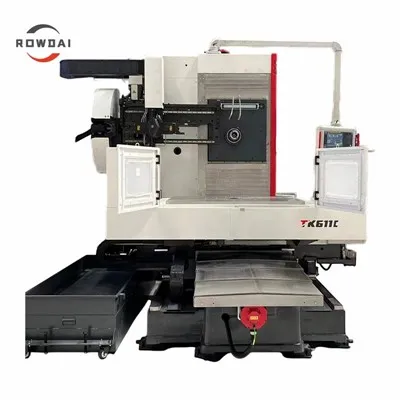
If you’re equipping a new CNC lathe or looking to upgrade your existing setup, don’t underestimate the importance of pairing your lathe with the right chip conveyor. Our team works directly with machine shops of all sizes to match conveyors to their specific material, part requirements, and production volume, so you get the most out of your equipment. Reach out to discuss your needs and learn how we can help you optimize your CNC lathe operations.
Precision Grinding Machine References
Machinery’s Handbook, 31st Edition. Industrial Press, 2020.
OSHA Technical Manual: Machine Guarding and Machine Safety. U.S. Department of Labor, 2022.
CNC Machining Handbook: Processes, Programming, and Practice. Society of Manufacturing Engineers, 2019.
Henan Rowdai Machinery Equipment Co., Ltd.
As one of the most professional cnc lathe manufacturers in China, we’re featured by quality products and good price. Please rest assured to buy high-grade cnc lathe for sale here from our factory. If you have any enquiry about cooperation, please feel free to email us.
Address: Building 9, E-Commerce Industrial Park, High-Tech Zone, Zhengzhou, Henan, China
E-mail: rowdai@rowdai.com
WebSite: https://www.rowdai.com/
