When you hear the term “auxiliary fastening parts,” your first thought might be of small, simple components—little pieces that hold big structures together. But as a supplier who’s spent the last dozen years sourcing, testing, and delivering these parts to industries ranging from automotive assembly to heavy machinery, I can tell you they’re far more than just afterthoughts. One of the most critical, and most misunderstood, roles these parts play is shock absorption. Let me break down what that means, why it matters, and how the right auxiliary fastening parts can save you from costly failures. Auxiliary Fastening Parts

First, let’s ground this in what shock absorption actually is for our work. When two connected surfaces move relative to each other—whether from vibration during a truck’s cross-country drive, sudden stops in a factory conveyor system, or temperature shifts that make metal expand and contract—the force generated can wear down fasteners, crack structural parts, or create loose connections over time. Auxiliary fastening parts are designed to dissipate that force before it reaches the main fasteners or the components they secure. Take lock washers, for example. A lot of people think lock washers just keep bolts from turning loose, but the best ones—spring lock washers, in particular—act as tiny shock absorbers. When vibration hits, the washer’s coiled design flexes instead of transmitting that up-and-down motion to the bolt thread. I’ve seen this play out firsthand with a client in the agricultural equipment industry: before they switched to our stainless steel spring lock washers, their tractor mainframe bolts would work loose every 1,200 hours of use, requiring costly on-site repairs. After we supplied parts engineered for both flexibility and corrosion resistance, that interval jumped to over 5,000 hours. That’s not a small win—that’s a 300% increase in reliability, all from a part most people overlook.
Another key auxiliary fastening component with shock-absorption properties is rubber grommets. You might know these as the circular pieces that protect wires running through metal panels, but their shock-absorption role is just as important. When a panel vibrates, the rubber grommet compresses slightly between the wire and the metal, acting as a buffer that reduces impact. We recently had a customer in the aerospace wiring segment who was experiencing frayed wire insulation and occasional shorts in their control panels. The issue wasn’t the wire or the fasteners holding the panels in place—it was the grommets they were using. Standard neoprene grommets were too rigid to absorb the high-frequency vibration of the aircraft’s engine bay, so the wires took the brunt of the force. We recommended our custom EPDM grommets, which have a 40A shore hardness (soft enough to flex, but durable enough for 1,000-hour operational cycles). Within three months, they reported zero new insulation failures and a 90% reduction in downtime related to wiring issues. That’s the kind of tangible impact shock-absorbing auxiliary parts can have, even in industries where precision is non-negotiable.
It’s not just soft, flexible parts that do this work, either. Wave springs, another auxiliary fastening component, are designed specifically for shock and vibration dampening. Unlike standard coil springs, which have a linear load profile, wave springs have a sinusoidal shape that distributes force evenly across a wider area. This makes them ideal for applications where space is tight—like in small engine assemblies or medical device components—where a larger spring wouldn’t fit. A client in the power tool industry came to us a few years ago with a problem: their cordless drill’s chuck would slip after heavy use, because the fastener securing the chuck was absorbing too much shock from the drill’s motor during high-torque drilling. We suggested wave springs made from high-grade chrome vanadium steel, which can handle sudden impact without deforming. Within weeks, their return rate for chuck-related issues dropped from 8% to less than 1%. The wave springs didn’t just absorb shock; they also maintained consistent tension on the chuck fastener, preventing slippage over time.
Now, I need to be clear: not all auxiliary fastening parts have shock-absorption properties. A standard flat washer, for example, is designed to distribute load, not absorb force. So when you’re selecting parts for an application, it’s critical to match the component’s design to the specific shock and vibration demands. That’s where a supplier with real-world experience matters. We don’t just sell parts—we work with our customers to map their operational conditions, identify where shock is occurring, and recommend the right components to mitigate it. For example, in automotive assembly, a car’s engine bay generates both low-frequency vibration from the engine itself and high-frequency vibration from road noise. For the fasteners securing the engine mount, we’d recommend a combination of a neoprene shock absorber washer (to handle high-frequency vibration) and a nylon lock nut (to prevent loosening from low-frequency pulse). Mixing these components creates a layered shock-absorption system that’s far more effective than using a single part.
I’ve also learned that material choice is just as important as design when it comes to shock absorption. A spring lock washer made from soft aluminum won’t hold up under heavy industrial vibration— it’ll deform within months, losing its shock-absorbing ability. But the same design made from heat-treated carbon steel can last for decades in that same environment. Similarly, rubber grommets made from natural rubber break down quickly in high-temperature environments, so nitrile rubber is a better pick for factory applications where temperatures can reach 150°F. Our team conducts rigorous testing on every part we supply: we use vibration testers that simulate thousands of hours of real-world operation, measure load distribution across fasteners, and track how components hold up to temperature and corrosion. This isn’t just lab work—it’s the same testing we do to make sure a part will perform when a customer’s truck is driving over a pothole, or a tractor is plowing a field in 100°F heat.
One of the most common mistakes we see customers make is under-sizing their shock-absorbing auxiliary parts. They’ll pick a part that’s just barely the right dimensions, thinking it will work, but small size often means reduced flexibility and load capacity. For example, a wave spring that’s too narrow can’t distribute force evenly, so it doesn’t absorb shock as effectively as a wider one. We always advise customers to leave a small margin for oversized parts, but not so much that they cause interference with adjacent components. This balance is something we’ve honed over years of working with different industries, and it’s why many of our clients have been with us for a decade or more—we don’t just sell a part that fits, we sell a part that works for their specific use case.
Let me also address a concern some buyers have: cost. It’s true that shock-absorbing auxiliary parts can be more expensive than standard fasteners, but the long-term savings far outweigh the upfront cost. A single loose fastener in a mining conveyor can cause thousands of dollars in downtime, not to mention safety risks. I’ve seen clients save over $100,000 a year in repair and replacement costs just by switching to the right shock-absorbing auxiliary parts. Our goal isn’t to sell the cheapest part—it’s to sell the part that delivers the best return on investment for the customer. We offer custom sizing, bulk pricing, and material testing to make sure our solutions fit every budget, no matter the industry.
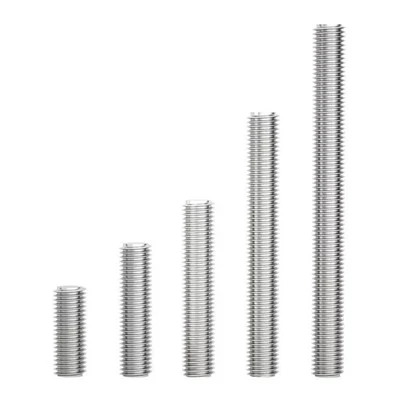
At the end of the day, auxiliary fastening parts are the unsung heroes of any connected system. They don’t get the same attention as main fasteners or structural components, but their shock-absorption properties are what keep machines running, prevent accidents, and reduce costly downtime. As a supplier who’s been in this business for years, I’ve seen firsthand how the right parts can transform a customer’s operations. If you’re dealing with loose fasteners, component failures from vibration, or just want to improve the reliability of your assemblies, we’re here to help. We can walk through your application, test components under your specific operational conditions, and supply parts that are engineered to handle whatever shock and vibration your project faces. Don’t let overlooked components cause avoidable problems—reach out to our team to discuss your auxiliary fastening needs and find the right shock-absorbing solution for you.
Threaded Fasteners References
- Harris, C. M., & Piersol, A. G. (2002). Harris’ Shock and Vibration Handbook (5th ed.). McGraw-Hill.
- Machine Design. (2019). “Choosing the Right Washers for Shock and Vibration Applications.” Penton Media.
- Rubber Manufacturers Association. (2021). “EPDM Grommets: Properties and Industrial Applications.” RMA Technical Bulletin.
- Society of Automotive Engineers. (2020). “Auxiliary Fastener Standards for Off-Highway Equipment.” SAE International.
- Shigley, J. E., Mischke, C. R., & Budynas, R. G. (2004). Standard Handbook of Machine Design (3rd ed.). McGraw-Hill.
Handan Hengmai Fasteners Manufacturing Co., Ltd.
Handan Hengmai Fasteners Manufacturing Co., Ltd. is one of the most professional auxiliary fastening parts manufacturers and suppliers in China. With abundant experience, we are committed to providing customized fasteners made in China with competitive price. We warmly welcome you to buy bulk high quality auxiliary fastening parts for sale here from our factory.
Address: Industrial Zone, West of Beiduanzhuang Village, Linmingguan Town, Yongnian District, Handan City, Hebei Province
E-mail: hmfasteners.cn@gmail.com
WebSite: https://www.hmfasteners.com/
