Alright, let’s cut to the chase—if you’ve ever spent 10 minutes watching a robot arm line up parts on a factory floor, or seen a sleek humanoid open a door without slamming into the frame, you’ve probably been watching gear motors do their thing. I’m not here to geek out on jargon for the sake of it, but let’s be real: a robot’s a fancy hunk of wiring, microchips, and metal… until it needs to move. That’s where gear motors come in. And as someone who’s been supplying these bad boys for over a decade, I can tell you this isn’t just “another electrical part”—it’s the reason robots don’t act like spazzy little toddlers when they’re supposed to do their job. Gear Motor
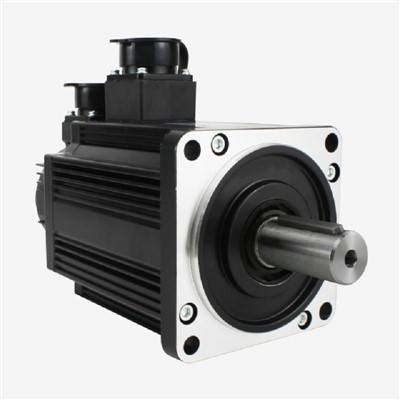
First off, let’s ground this in what a gear motor actually is, no textbook fluff. A regular electric motor spins super fast, like, way too fast for most robotic tasks—think 3,000 RPM (revolutions per minute) or higher. That’s like revving your car’s engine at red light and expecting to parallel park smoothly. Gears are the fix here: they reduce that high RPM to a slower, more controllable speed, and crank up the torque (the “twisting power” that lets a robot lift a 5lb camera or push a drawer open without breaking it). It’s like swapping your car’s high gear for low gear when you’re hauling a trailer—same motor, different gear ratio, totally different job. And for robotics, that ratio is everything—you don’t want a robot joint spinning so fast it throws a wrench (literally, sometimes).
Now, let’s talk where these things actually get used, because that’s the fun part. I’ve supplied gear motors to all sorts of clients, from indie robot builders working out of their garages to big aerospace firms, so I’ve seen every edge case.
Take industrial robotic arms, the workhorses of factories. If you’ve ever ordered a custom phone case online and wondered how it got cut so perfectly, that’s usually a 6-axis robot doing it. Each of those axes (the shoulder, elbow, wrist) has a tiny gear motor inside. Let’s break it down: a robotic arm needs to move with pinpoint accuracy—within a fraction of a millimeter, some jobs. A regular motor can’t do that because it’s too fast, and would overshoot the mark. A gear motor slows that spin down, gives it the torque to hold position when it’s lifting a heavy workpiece, and keeps it from jittering. I had a client last year making car door panels—they switched from a cheap off-the-shelf motor to our custom gear motors and cut their error rate by 40%. Why? Because the old motors would vibrate so bad when the arm held still, the panel gaps were off. Our gear motors have precision-cut helical gears that reduce that vibration like nothing else. That’s the real win here—it’s not just about speed and torque, it’s about consistency.
Then there’s mobile robots, the ones you see in warehouses zipping around moving pallets, or the delivery bots dropping packages on your porch. Wait, you might not have noticed the gear motor in a warehouse AGV (automated guided vehicle), but it’s the core. These bots need to move at a steady, slow speed (3-5 mph max) and carry 2,000lb loads without tipping. A regular motor would spin so fast, the bot would wheelspin and tip over instantly. The gear motor reduces RPM to get that slow, controlled movement, and provides enough torque to push through tight spots even when the battery’s dying. I’ve had a client with 500 of these bots across the country—they replace their gear motors every 2 years, not because they break, but because they run so smooth they just wear out gracefully. And for the small delivery bots? Same logic, just scaled down—gear motors let them navigate sidewalk cracks without jostling the package.
Oh, and humanoid robots—those guys are the new kids on the block, and they’re putting gear motors through the wringer. A humanoid has to walk, balance, lift, even make small facial expressions (looking at you, Google’s Gemini or Boston Dynamics’ Spot, though Spot’s more a quadruped). Each joint in a humanoid has a tiny, lightweight gear motor that’s tailored for that exact movement. The hip joint needs a lot of torque to support the whole body, the finger joint needs super precise control to pick up a grape without squishing it. We worked with a startup last year making a small humanoid for healthcare—they needed gear motors that were tiny, quiet, and could hold position all day. Our right-angle gear motors fit perfectly in their palm joints, and they told us it was the only part that didn’t have to be redesigned mid-prototype. For humanoids, it’s not just about power—it’s about size and weight, too. No one wants a humanoid that looks like it’s got cannonballs in its arms because the gear motors are too big.
Wait, let’s not sleep on collaborative robots—you know, the “cobots” that work right next to humans on factory floors, no safety cage. These are different from industrial arms because they need to sense when they bump into a human and stop immediately. A gear motor here has to be responsive—if it’s too slow, it’ll knock someone’s hand. The gear ratio is set so that when the motor gets a signal to stop, it’s already geared to slow down fast. I had a cobot client who tested a competitor’s gear motors and had a 12% “unplanned stops” because the gears had slack (play between teeth) that made the movement jitter. Our zero-backlash gear motors fixed that—they tightened the gear mesh so there’s almost no play, so the cobot moves smooth, stops fast, and doesn’t surprise anyone. That’s a big deal for cobots, because safety’s non-negotiable.
Now, let’s get real about the challenges here. Robotics is moving so fast, the requirements change every six months. Five years ago, everyone wanted gear motors that were cheap. Now? They want cheap, but also quieter, lighter, more energy-efficient, and able to work for 10 years straight without maintenance. Wait, maintenance—most of the clients I work with hate servicing parts, so gear motors that are sealed (no grease leaks, no dust getting in) are a huge win. A lot of old gear motors needed annual greasing, which meant shutting down production lines—total nightmare. Our sealed gear motors eliminate that, and I’ve had clients say that’s the single biggest time-saver for their teams.
Another thing: custom vs. off-the-shelf gear motors. A lot of indie robot builders start with off-the-shelf parts, and that works for simple projects—like a small robot that follows a line. But when you scale up, or need precision, custom is the way to go. Off-the-shelf gear motors have fixed gear ratios, fixed sizes, fixed torque. A robot arm might need a 100:1 ratio for the shoulder, a 50:1 ratio for the elbow—you can’t get that with one off-the-shelf motor. We work with clients to tweak gear sizes, materials, even the motor’s core to fit their exact needs. Last year, a student team working on a Mars rover prototype needed gear motors that could handle extreme temperatures (like -60°F) and be super lightweight. We used a high-grade aluminum housing and synthetic lubricant that doesn’t freeze, and they told us it was the only part that passed their cold-weather tests. That’s the stuff off-the-shelf parts can’t do.
Let’s circle back to why this matters, because at the end of the day, gear motors are the unsung heroes of robotics. Everyone talks about the fancy sensors, the AI, the camera systems—but none of that means a thing if the robot can’t move right. A self-driving delivery bot that can’t stop at a crosswalk? Useless. A factory arm that can’t line up a screw? Useless. A humanoid that can’t open a door? Useless. Gear motors turn all that cool tech into action.
If you’re a robot builder, a factory manager, a startup prototyping a new bot, or even a hobbyist working on a side project and hitting a wall with movement, I get it—gear motors can feel like a rabbit hole. What ratio do I need? What size? Do I need backlash-free? Are they going to hold up? I’ve been through this with hundreds of clients, and the first step is talking through what your robot actually needs to do. No sales pitch, no confusing jargon—just figuring out what’s going to make your bot work without headaches.
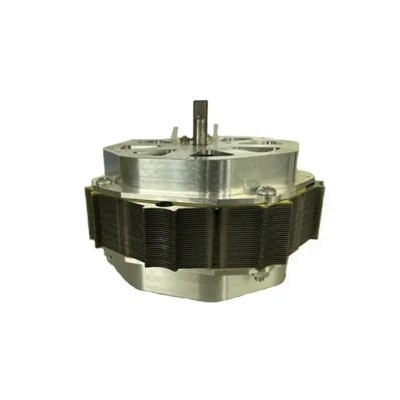
If you’re looking for gear motors that are built for real robotic use, not just generic parts, reach out. We don’t do one-size-fits-all, and we don’t charge exorbitant fees for custom work. Whether you need a tiny motor for a robotic finger, a heavy-duty one for a warehouse AGV, or something built to survive extreme conditions, we can help you sort it out.
Switched Reluctance Motor References:
- "Gear Motors for Robotics: Key Applications and Design Considerations" – Robotics Industry Association, 2023
- "Torque and Speed Control in Robotic Actuation Systems" – IEEE Transactions on Robotics, 2022
- "Collaborative Robot Safety: Actuation System Requirements" – International Organization for Standardization (ISO), 2021
- "Lightweight Gear Motors for Humanoid Robotics" – Journal of Mechanical Design, 2020
- "Sealed Gear Motors for Industrial Automation Maintenance Reduction" – Manufacturing Engineering Magazine, 2022
Zibo Auric Mechanical and Electrical Technology Co., Ltd.
As one of the leading gear motor manufacturers and suppliers in China, we warmly welcome you to buy advanced gear motor for sale here from our factory. All customized motors are with high quality and competitive price.
Address: B419, High-tech Entrepreneurship Park, High-tech Zone, Zibo City
E-mail: cui@auricmotor.com
WebSite: https://www.auricmotor.com/
