If you’ve ever picked up a prescription pill and noticed that it’s smooth, easy to swallow, maybe even colored light blue or scored to break into two equal parts, you’re holding the work of a pharmaceutical coating machine. As a coating machine supplier with over a decade of working directly with generic drug manufacturers, contract development and manufacturing organizations (CDMOs), and even small-batch specialty pharma teams, I’ve lost count of how many times I’ve gotten questions from people who think coating is just a cosmetic step—like painting a toy. Let me set the record straight right now: pharmaceutical coating is one of the most critical, high-stakes steps in drug production, and the machine that does it can make or break a drug’s safety, effectiveness, and shelf life. Coating Machine
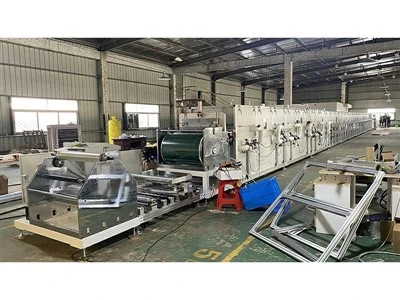
First, let’s break down exactly what a pharmaceutical coating machine is, beyond the basic definition. Unlike the industrial spray guns you might see on a car factory line, these machines are precision-engineered for a specific, strictly regulated industry. They’re designed to apply thin, uniform layers of coating material to solid oral dosage forms—think tablets, capsules, pellets, or even small implantable devices—without damaging the drug core, which is often fragile, moisture-sensitive, or chemically unstable. Every part of these machines, from the stainless steel pans that hold the dosage forms to the spray nozzles that apply the coating, has to meet FDA, ICH, and GMP (Good Manufacturing Practices) standards, because even a tiny flaw can lead to a drug that doesn’t work, causes side effects, or is unsafe for patients.
If you’ve ever toured a pharma production facility, you’ve probably seen two main types of coating machines in use, and I get asked all the time to explain the difference between them: pan coaters and fluidized bed coaters. Let’s start with the pan coater, which is the oldest and still most widely used for large-scale production of standard tablets. A pan coater looks like a large, horizontal, heated stainless steel bowl—sometimes called a “coating pan”—that rotates slowly. Inside the pan, a jet of air blows gently upward to keep the tablets tumbling, so every single one gets an equal shot at the coating. A series of precision spray nozzles, mounted just above the tumbling tablets, sprays a thin mist of coating solution (usually a mix of polymers, pigments, plasticizers, and sometimes flavoring) onto the moving pills. At the same time, exhaust fans pull air through the pan to evaporate the water or solvent in the coating mist, so the layer dries almost as soon as it hits the tablet. The magic here is the rotation speed, air flow rate, and spray pressure—too fast, and the pills chip or clump together; too slow, and the coating is uneven, leaving some pills uncoated.
The other main type, fluidized bed coaters, are less common for standard tablets but indispensable for specialty drugs. Instead of a tumbling pan, these machines suspend dosage forms in a stream of warm, filtered air, turning them into a “fluidized bed” that acts like a liquid. This makes the entire surface of every pill, pellet, or microtablet fully accessible to the spray, which means coating layers are extremely uniform—critical for drugs that need consistent dosing, like those for pediatric use or rare diseases that come in tiny, precise doses. Fluidized bed coaters are also used for sugar-coating (the old-fashioned, hard candy-like layer you might see on some over-the-counter cough drops) and for enteric coating, which is a special layer designed to resist stomach acid so the drug only dissolves in the neutral environment of the small intestine. For example, if you’ve ever taken an ibuprofen that upset your stomach, that’s because it didn’t have an enteric coating, but a coated ibuprofen made with a fluidized bed coater will pass through your stomach intact, avoiding irritation.
Now, why does this matter so much, beyond making pills look pretty? Let’s talk about the core functions of pharmaceutical coating, because that’s what explains why a bad coating job is a problem for patients and drug manufacturers alike. First, coating protects the drug core from moisture, light, and oxygen—all of which can break down active pharmaceutical ingredients (APIs) and shorten a drug’s shelf life. A generic allergy pill that might stay potent for 2 years without coating could only last 6 months with exposure to storage conditions, which is a huge cost for manufacturers and a safety risk for patients who get expired drugs. Second, coating makes pills easier to swallow, which is especially important for elderly patients or kids who struggle with large, rough tablets. We worked with a pediatric pharma client last year who had a huge problem with kids refusing to take their chewable allergy tablets because they tasted bitter—we paired them with a pan coater that applies a thin, sweet, flavored coating, and their patient adherence jumped 40% in 6 months.
Another key function is enteric coating, which I touched on earlier, and controlled-release coating. Controlled-release coating lets a drug dissolve slowly over 12 or 24 hours, so patients only need to take one dose a day instead of four or five, which drastically improves adherence for chronic conditions like high blood pressure or diabetes. The coating here is usually made of polymers that don’t dissolve immediately—they dissolve at a specific pH level, or slowly erode over time, releasing the API in a steady, consistent way. That consistency is non-negotiable; if one pill has a thicker coating than another, it might release too much drug too fast (causing side effects like nausea or dizziness) or too little (not working at all). That’s why pharmaceutical coating machines have to be so precise—they can’t vary in spray rate by more than a few percent across a batch, or the entire batch is useless.
Here’s where I see a lot of manufacturers cut corners, and it’s why partnering with a reliable coating machine supplier is so important. I’ve had clients come to me with batches of tablets that failed quality control because their old, outdated coating machine couldn’t adjust for small variables: changes in humidity in the production room, slight variations in tablet size or hardness from the compression step, or even the viscosity of the coating solution itself. Older machines only have a few settings, so they can’t adapt in real time, leading to clumping, uneven coating, or cracked tablets. Modern coating machines, by contrast, are equipped with real-time monitoring systems—some use near-infrared spectroscopy to measure coating thickness as it’s applied, so they can adjust spray pressure, air flow, or pan speed mid-process if a tablet batch starts to go off. We recently installed one of these smart machines for a large CDMO, and they told us it cut their batch rejection rate by 18% in the first quarter of use, saving them over $200,000 in wasted materials and time.
Another common misconception is that coating machines are just for large-scale production. I work with a lot of small biotech startups that are developing new specialty drugs, and they tell me they think they need to buy a full-size pan coater that can handle 500kg batches when they only need 5kg for clinical trials. That’s a mistake. We manufacture bench-top and small-scale pharmaceutical coating machines that are built to the same GMP standards as the large ones, just smaller, so startups don’t have to compromise on quality for low-volume production. One of our first clients was a team at a university biotech lab working on a rare disease drug for kids, and they needed to make tiny batches to test safety before scaling up—our small fluidized bed coater let them do that without having to invest in equipment they’d outgrow in a year, and now they’re scaling up with our full-size machines as they move to commercial production.
Of course, no two drugs are the same, so a pharmaceutical coating machine isn’t a one-size-fits-all purchase. That’s why a good supplier doesn’t just sell you a machine and walk away—they work with you to figure out what you need based on your drug’s properties, production volume, and regulatory requirements. For example, if you’re making a batch of enteric-coated aspirin, you’ll need a machine with precise temperature control and a way to test for pH resistance after coating. If you’re making small pellets for a long-acting drug, a fluidized bed coater will work better than a pan coater because it can coat tiny particles without clumping. We even worked with a client that makes implantable hormonal pellets for birth control, and their coating process had to be done in a sterile environment, so we customized their pan coater to fit inside a class 100 cleanroom, with sealed spray systems that prevented contamination.
I also want to address the regulatory side, because that’s the part that keeps many manufacturers up at night. Every pharmaceutical coating machine has to be validated, which means documenting every part of its operation to prove that it consistently produces coating layers that meet all safety and effectiveness standards. The FDA and other regulatory bodies don’t care about how fast your machine works or how cheap it is—they care that every pill in a batch has the same coating thickness, no cross-contamination between batches, and no residual solvents left in the coating. That’s why our machines come with full validation packages, including standard operating procedures (SOPs), calibration records, and training for your team, so you don’t have to spend months working with regulators to prove your equipment is compliant. We’ve had clients come to us after trying to use a machine from a non-specialized supplier, and they told me their validation process took 6 months because the machine’s records were incomplete—with our machines, that process usually takes 6 weeks or less.
Now, let’s talk about common challenges we help clients solve, because that’s what sets a good coating machine supplier apart. One of the biggest issues in coating is moisture control. If the coating solution is too wet, tablets can absorb moisture and become soft, which leads to chipping during tumbling. If it’s too dry, the coating doesn’t stick, leading to flaking. Modern machines have integrated humidity sensors that adjust the spray rate and air flow in real time, so you don’t have to adjust settings manually based on the room’s conditions. Another challenge is cross-contamination—if you’re coating multiple different drugs in the same facility, you have to make sure leftover coating material from a previous batch doesn’t get on the next one. Our machines have disassembly designs that let you take apart every part that touches the tablets (no hidden crevices) for deep cleaning, and we provide detailed cleaning protocols that are approved by regulators.
I’ve been in this industry for 12 years, and I’ve seen a lot of changes in pharmaceutical coating technology. Ten years ago, most coating was done with organic solvents, which are flammable and require special ventilation. Now, most manufacturers use water-based coatings, which are safer, cheaper, and better for the environment. That shift has put more pressure on coating machines, because water-based coatings are more prone to clumping and require more precise drying rates. Our machines are designed specifically for water-based coatings, with adjustable drying temperatures and low-shear spray nozzles that prevent clumping even when using thicker coating solutions. We’re also working on new machines that use controlled-atmosphere processing for even more sensitive APIs, like biologic drugs that can’t tolerate room temperature.
If you’re a manufacturer reading this, whether you’re a small biotech startup just getting off the ground or a large pharma company scaling a blockbuster drug, I know you have a lot on your plate. You’re focused on developing a safe, effective drug, getting it approved by regulators, and getting it to patients quickly. The last thing you need is to worry about whether your coating process is going to fail a batch, delay production, or cause safety issues for patients. That’s where we come in. We don’t just sell coating machines—we provide end-to-end support, from custom machine design based on your specific drug needs to training for your team, validation assistance, and ongoing maintenance to make sure your machine runs smoothly for years.
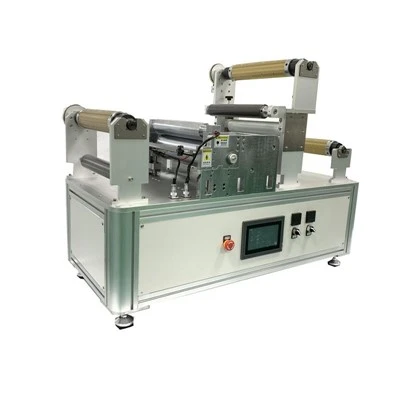
If you’re tired of dealing with clumpy coated tablets, high batch rejection rates, or outdated machines that can’t keep up with regulatory standards, reach out to our team to talk through your needs. We’ll walk you through the different machine types, answer all your questions about GMP compliance, validation, and coating processes, and even help you test a small sample of your drug on one of our demo machines to make sure the coating works exactly as you need it. We’ve worked with over 200 pharma companies across 12 countries, and our goal is to make your coating process as simple, reliable, and effective as possible, so you can focus on what matters most: providing safe, effective drugs to patients who need them.
Laboratory Equipment References:
- International Council for Harmonisation of Technical Requirements for Pharmaceuticals for Human Use (ICH). Q7 Good Manufacturing Practice Guide for Active Pharmaceutical Ingredients.
- U.S. Food and Drug Administration (FDA). Guidance for Industry: Coating of Dosage Forms.
- Pharmaceutical Technology. "Advances in Pharmaceutical Coating Technology, 2022."
- European Medicines Agency (EMA). Guideline on the Requirements for Pharmaceutical Coating of Orally Administered Solid Dosage Forms.
- Journal of Pharmaceutical Sciences. "Pharmaceutical Coatings: A Review of Materials, Processes, and Regulatory Considerations, 2021."
Dongguan Innate Intelligent Technology Co., Ltd.
With abundant experience, we are one of the most professional coating machine manufacturers in China. With a professional production team, we are able to meet the needs of the majority of our customers. Please feel free to buy advanced coating machine made in China here from our factory. Customized orders are welcome.
Address: Room 201, Building 4, No.92, Fenghuang Road, Dalingshan Town, Dongguan City, Guangdong Province
E-mail: 13316631159@163.com
WebSite: https://www.getinnater.com/
