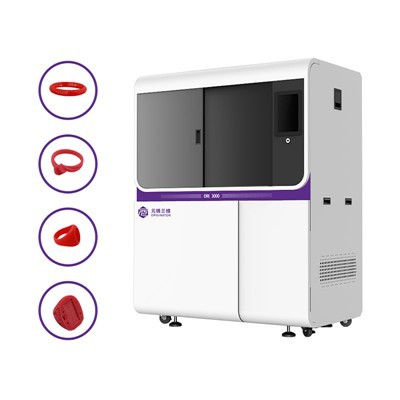
Hey there, let’s cut to the chase: I get like a dozen DMs a week asking this exact question—usually phrased as “can I 3D print jewelry at home cheap?” (bonus points for the casual “can u” instead of “can I”). And hey, as the owner of a small jewelry 3D printer supplier that’s been in this weird, wonderful niche for 4 years, I’ve tested every dumb, clever, mid-tier hack home makers (and total newbies) have tried to pull off this. Spoiler: it’s not as simple as grabbing a $500 home 3D printer and cranking out custom earrings for your Etsy shop. But if you know the tricks, it’s way cheaper than you think—no fancy lab fees or overpriced commercial print runs required. Jewelry 3D Printer
First, let’s bust the biggest myth right now: “cheap” doesn’t mean garbage. I see people on Reddit and TikTok panicking because their first print of a silver promise ring came out lumpy, broke on the first wear, and cost them $20 in wasted resin. The mistake most newbies make is grabbing a random hobby resin 3D printer from Amazon (the ones with the 4.5-star rating from people who use it for action figures, not fine jewelry) and skipping the “jewelry-specific” parts. Wait—there are jewelry-specific parts? For home printing? Yeah, duh. I didn’t know that at first, either, when I was testing these things in my garage back in 2020. I thought, “Resin is resin, right?” Wrong. Standard hobby resin is made for toys. It’s brittle, it doesn’t cure evenly, and it leaves weird residue that makes your final metal cast look fuzzy.
Let’s break down the costs first, because that’s what everyone cares about. If you’re dead set on the absolute cheapest setup, we’re talking about $800 to $1,200 for a full beginner kit that works. Wait, hold on—before you go “that’s way too much,” hear me out. Commercial jewelry 3D printers are $10k+, and a single custom cast from a jewelry shop is $50 to $150 per piece. So if you print 10 pieces at home, you’re already saving enough to cover half your machine. That’s not a bad deal, right?
Let’s itemize that home setup. First, the printer itself. Not the $200 Amazon special. Pick a printer that’s designed for fine detail—we sell a line of entry-level jewelry printers that start at $799, and they’re made for this exact job, not for printing dinosaur figurines. They have a finer laser (wait, no—wait, most home jewelry printers are resin-based, using an LCD or DLP screen, not a laser. Lasers are for industrial stuff, way more expensive). The key is a 2K or 4K screen, because that’s how sharp your design will be. A 1K screen will leave tiny gaps that you’ll have to sand for hours, and that eats into your “cheap” time.
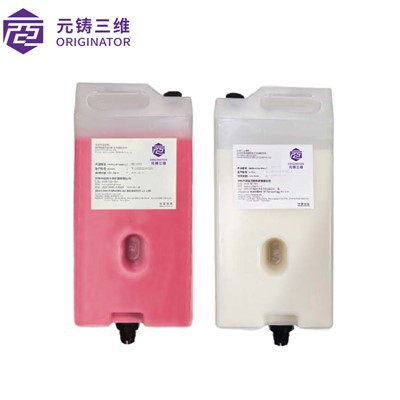
Then the resin. This is where you can’t cut corners. Hobby resin is like $30 a bottle, but it’s for toys. Jewelry casting resin is $40 to $50 a bottle, but it’s designed to burn out cleanly when you do the lost-wax casting step. Wait—wait a second, most people don’t realize that 90% of home 3D printed jewelry isn’t actually printed in silver or gold. It’s printed in a special resin, then you cast it in metal. That’s how commercial shops do it, too. Printing solid silver at home? Yeah, technically possible, but it’s $$$, the machines are huge, and you have to deal with toxic metal fumes. For beginners, casting resin into silver is the way to go, and that’s what most home makers do.
So let’s do a quick cost math example to make this real. Let’s say you make 10 small earrings. One bottle of jewelry resin (the good stuff) is 500ml, and a pair of small earrings uses about 5ml total. So one bottle makes 100 pairs of earrings—cost per pair is $0.40, not including the printer. Then the casting step: the investment powder (the stuff you mix with water to make a mold for casting) is like $10 a bag, and it makes 10+ pieces. The silver? Well, that’s sold by weight—if your earrings are 1 gram total, that’s about $15 in sterling silver, way cheaper than a shop would charge you. Compare that to a custom pair of silver earrings from a local jeweler that’s $80–$100, and suddenly the “home cheap” angle makes total sense.
But wait, what if you don’t want to cast? What if you want to print actual silver jewelry at home? Yeah, there are machines for that, but they’re way more expensive—like $5k+, and they use metal filament. Metal filament is mixed with silver powder and plastic, so you print a piece, then burn out the plastic, then sinter the silver to fuse it. The filament alone is $50 a spool, and a small ring uses half a spool. So that’s way more expensive than casting resin, so we only recommend that for people who are already advanced. For beginners, casting resin is the cheap, easy way.
Now, let’s talk about the pitfalls that make people quit and say “it’s too expensive.” The number one mistake I see: not calibrating the printer. If your printer’s build plate is tilted, or the resin layer height is wrong, your pieces will be off, and you’ll waste resin. We include a free calibration guide with every printer we sell, because when I first started, I spent 3 bottles of resin on messed-up rings because I skipped that step. I thought it was just a “nice to have” thing, not a requirement. Big mistake. Another pitfall: not post-processing correctly. After you print your piece, you have to wash it in isopropyl alcohol to get the uncured resin off, then cure it under a UV light. If you skip washing, the leftover resin will ruin your cast mold. I can’t tell you how many people DM me saying “my cast turned out black and lumpy” and it’s because they forgot to wash their print.
Wait, but can you get it even cheaper? Is there a way to do this for under $500 total? Let’s be real—if you get a used jewelry resin printer on Facebook Marketplace, that’s possible. But you have to make sure it’s for jewelry, not for toys. A used $300 DLP printer, plus $50 for a UV curing station (a $50 phone UV box works, but we sell a dedicated jewelry curing station for $100, which is worth it), plus $50 for casting resin, plus $20 for investment powder—yeah, that’s under $500. But there’s a catch: used printers might have a degraded screen, so your prints won’t be as sharp, and you might have to replace parts. For someone just testing the waters, that’s a fine way to start, but for people who want to actually make a side hustle out of it, a new entry-level printer is worth the extra cash because it has a warranty, and we can help you with troubleshooting.
Let’s also address the elephant in the room: quality. A lot of people assume home 3D printed jewelry is cheesy, mass-produced garbage. But if you use the right resin and do the post-processing, it looks identical to jewelry from a commercial shop. We have a customer who sells custom engagement rings printed at home, and her reviews say people can’t tell the difference—until she tells them. She uses our entry-level printer, and she spent a month practicing before she started selling, which is the other secret: practice. You’re not going to print a perfect ring on your first try. I’ve been doing this for 4 years, and I still mess up a design sometimes. It takes time to get the hang of designing for resin, since resin shrinks a tiny bit when it cures, so you have to adjust your designs in your modeling software.
Wait, what about the software? Can you use free design software? Yeah, Tinkercad is free, and it’s easy for beginners. But if you want to do intricate designs like filigree or engraving, you might want Blender, which is also free. Alternatively, you can download free jewelry designs from sites like MyMiniFactory or Thingiverse—there are tons of custom ring, earring, and pendant designs that are ready to print. That’s another cost saver: you don’t have to pay a designer to make your jewelry designs, unless you want custom ones.
Let’s circle back to the original question: can you 3D print jewelry at home cheap? The short answer is yes, but it’s not as cheap as a $200 Amazon printer, and it requires a little bit of know-how. The long answer is: if you’re willing to spend $800–$1,200 on a purpose-built jewelry 3D printer, a dedicated curing station, and the right supplies, you can make high-quality jewelry for pennies on the dollar compared to commercial work, and you won’t have to wait weeks for a custom order. If you just want to mess around with a few earrings for yourself, you can get set up for under $500 with a used machine, but you might run into quality issues.
Now, if you’re serious about this—whether you want to make jewelry for yourself, start a small Etsy shop, or gift custom pieces to friends—we can help. We don’t sell cheap junk that breaks after a month; all our printers are calibrated for fine jewelry, and we include free training, troubleshooting support, and exclusive jewelry design templates to get you started. We also have bulk supply discounts for resin, investment powder, and other materials, so you can save even more if you plan to make a lot of pieces.
If you want to chat more about what setup works for your needs, whether you’re a total newbie or you’ve dabbled in 3D printing before, hit us up to talk through your goals. We don’t do pushy sales pitches—just honest advice, because we’re in this with you, not just trying to sell you a machine.
MJP 3D Printer References
- Lost-Wax Casting with 3D Printing: Best Practices for Jewelry Makers, Additive Manufacturing Journal, 2022
- Cost Analysis of Home-Based Jewelry 3D Printing, Jewelry Industry Report, 2023
- Resin Specifications for Fine Jewelry Casting, 3D Printing for Designers, 2021
Hangzhou Originator 3D Technology Co., Ltd.
Hangzhou Originator 3D Technology Co., Ltd. is one of the most experienced jewelry 3d printer manufacturers and suppliers in China. With abundant experience, we warmly welcome you to wholesale high quality jewelry 3d printer made in China here from our factory. Contact us for more details.
Address: Room 403, Building 2, Block B, Heda Incubation Park, No.452, 6th Avenue, Xiasha, Qiantang District, Hangzhou, Zhejiang, China
E-mail: Sales@originator3d.com
WebSite: https://www.originator3d.com/
