Alright, let’s cut to the chase: if you’re in the market for mining equipment, whether you’re setting up a new site or upgrading an old one, installing that gear isn’t just hauling a big machine off a flatbed and plugging it in. I’ve been working with mining equipment for over a decade now, and let me tell you, half the problems I see on job sites start because someone skipped a few key requirements that make or break a install. This post’s gonna break down what you actually need to get right before, during, and after you set up your gear—no fancy jargon, just real stuff that keeps your site running smooth. Mining Equipment

First, let’s talk about the site prep stuff that no one warns you about. A lot of guys show up thinking “the ground’s dirt, it’ll work,” but nope—mining equipment (think loaders, haul trucks, crushers, even drills) is heavy. Like, really heavy. A big 100-ton haul truck? It weighs close to 200,000 lbs when it’s fully fueled, and that’s before you load it with ore. So the ground under it can’t just be grass or loose gravel. You need to do a soil bearing test, plain and simple. We’ve had clients who tried to save a few bucks and skipped this, and a crusher sank 3 inches into soft dirt within a week—cost them a week of downtime, not to mention repairing the machine’s frame. If it’s a hard rock site, you need to excavate any loose topsoil, compact the base with heavy equipment, and maybe even add a layer of crushed rock or concrete for the heaviest gear. Also, space? Don’t forget clearance. Haul trucks need room to turn around, crushers need access for maintenance—if you jam a crusher between two stockpiles, you’ll be doing repair work on the side of the road, not on the machine.
Next up, power and utilities—depending on what kind of mining you’re doing. If it’s surface mining with diesel-powered gear, you don’t need fancy electricity, but wait: fuel supply is a big one. You can’t just have a 500-gallon tank and call it a day. You need a steady fuel line or a bulk storage tank that’s secured, and enough pumps to get fuel to machines without waiting 20 minutes every time a truck needs a top-up. For underground mining, though, it’s all about ventilation and electrical safety. We had a gold mine client a few years back who tried to run a new drill off an old 480V line instead of upgrading to 600V—gears burned out in 3 months because of inconsistent power. Also, underground, dust and gas are real, so all electrical connections need to be explosion-proof. No cutting corners here—your electrician should be certified in mining utility work, not just your local guy who does house wiring.
Then there’s the equipment itself—wait, no, not just the machine, the specs that match your site. A lot of people buy a cheap loader because it’s on sale, but if your stockpiles are 20 feet high, that loader’s bucket can’t reach, so you’re wasting time moving ore back and forth. When we sell equipment, we always ask for site details: what’s the ore hardness, how much material do you move per hour, what’s your site elevation? Elevation’s a big one too—at high altitudes, engines lose power because there’s less oxygen. A machine that works fine at sea level will struggle at 8,000 feet, so you need to get a turbo upgrade or adjust the engine’s fuel injection before installing. Also, for crushers, you can’t just match the size to your ore—you have to make sure the discharge conveyor is sized right too. I’ve seen a client install a 1,000-ton-per-hour crusher, then the conveyor under it could only move 600 tons—total waste, and they had to rip out the conveyor 6 months later.
Now, the install day stuff—you can’t just drop a machine and leave. First, rigging and lifting. If you’re getting a big crusher, you can’t slide it off a flatbed with a forklift—you need a professional rigging crew that knows how to handle 50,000+ lb pieces. A friend of mine ran a rigging job where a 30-ton piece of a crusher shifted because the slings were rated for too low a weight—total disaster, damaged the machine and the site. Also, alignment. For connected equipment, like a conveyor system linked to a crusher, you have to get the pulleys and belts perfectly aligned. If they’re off even a degree, the belt will wear out in weeks instead of months. We always bring our own techs for installs now, because we know how to calibrate that stuff—saves you from calling us back for repairs a month later.
Safety’s another requirement that’s non-negotiable. OSHA (and whatever mining regulatory body you’re in) has rules, but most guys know the basics: guard rails around moving parts, emergency stop buttons, fire extinguishers every 50 feet. But there’s stuff people miss too—like proper grounding for electrical gear, or dust suppression systems for crushers. We had a coal mine client where a spark from a poorly grounded crusher lit a pile of coal dust, burned half the site to the ground. That’s not a “oops” moment, that’s a life-changing one. Also, training—your operators can’t just climb into a new machine and go. We do 2-hour training sessions with every install, because even a “simple” loader has 10 different settings for different terrains. Last year, a client’s operator didn’t know how to adjust the suspension on a haul truck, so it rolled on a steep hill—no one got hurt, but the truck was totaled.
Wait, what about post-install checks? That’s a step a lot of people skip. After you get the machine running, you need to do a 72-hour test run. No real ore, just run it empty, check for leaks, test every function. We always stay on site for at least the first 24 hours after install, because that’s when 90% of the small issues pop up. A client tried to rush a test run once, and a hydraulic line burst 2 days later, spilled fluid all over the site, cost them another day of downtime. That 72 hours is way cheaper than fixing a problem after it’s started affecting production.
Also, let’s talk about compliance with local rules. Some regions have strict laws about waste disposal from mining sites, or noise limits for equipment. If you’re installing a crusher that’s way louder than the local limit, you’ll get fined $10k a day until you fix it. We work with clients to check local regulations before even shipping the equipment, so we can suggest noise-reducing covers or adjusted engine settings. No one wants to get shut down before they even start making money.
Let me wrap this up with a quick story—last quarter, we sold a set of loaders to a gravel mine in Arizona. They skipped the soil bearing test because the site was “rock solid.” A month later, one loader’s front axle broke because the ground shifted when it rained (even desert ground can soften). We went out there, re-compacted the base, and told them “next time, don’t cut corners on the basics.” That’s the thing with mining equipment installs—every step, even the small ones, adds up to whether your site runs for 5 years or falls apart in 6 months.
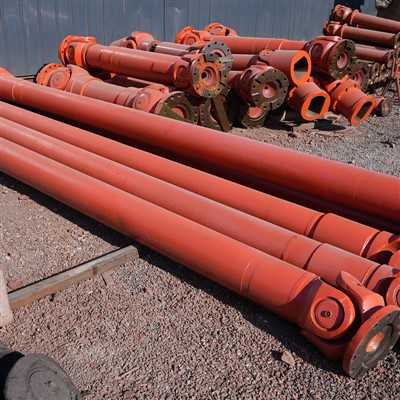
If you’re planning an install, don’t try to do it alone. We’ve got techs and rigging crews that know all these requirements, and we can walk you through every step—from site prep to post-install checks. Hit us up to chat through your specific site needs, no sales pitch, just real advice that keeps your operation running.
Skew Rolling Mill Rolls References
Mining Safety and Health Administration (MSHA) – Equipment Installation Guidelines
International Society of Mine Managers (ISMM) – Site Prep Standards for Heavy Mining Equipment
Association of Equipment Manufacturers (AEM) – Heavy Machinery Installation Best Practices
Shenyang Muren Machinery Co., Ltd.
Address: No.16 Nansan Road, Shenyang Jinhai Economic Zone, Liaoning Province, China
E-mail: mulunjixie@163.com
WebSite: https://www.symuren.com/
