Hey everyone, I’m Jake, a UV curable ink supplier who’s spent way too many late nights troubleshooting ink issues with print shops over the past 7 years. If you’ve worked with UV inks, you know oxidation is the silent killer—one week your ink’s running crisp, the next it’s turning gritty, clogging print heads, and leaving you with half a stack of ruined packaging or signage. I’ve seen it happen so many times: a shop stores a batch wrong, forgets to cap the cart, or leaves it near a heater, and suddenly they’re throwing out $500 worth of ink. Today, I’m breaking down exactly how to stop oxidation from ruining your UV inks, no fancy lab equipment needed—just stuff you can implement starting tomorrow. UV Curable Ink
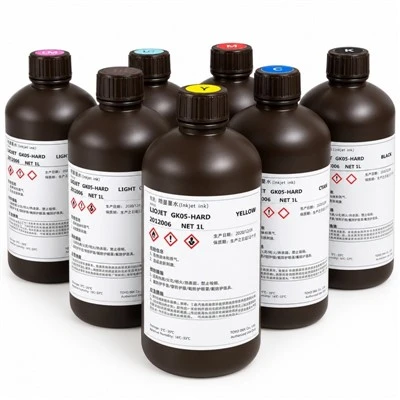
First, let’s keep this real: oxidation in UV curable ink isn’t some vague industry myth. It’s a chemical reaction, plain and simple. UV inks are made of binders, monomers, photoinitiators, and pigments, right? Photoinitiators are the ones that zap and cure the ink when exposed to UV light. But if those photoinitiators or binders react with oxygen (O2) from the air before you hit the curing lamp, they break down. That’s when you get gritty texture, inconsistent cure, faded color, and clogged nozzles—total nightmare for anyone running a digital press or screen printer. I’ve had a customer call me in a panic last year because their 2-liter jug of white ink oxidized mid-job, and they had 10,000 food boxes waiting to ship. They thought it was bad ink quality, but it was just bad storage. That’s the thing: 90% of oxidation issues are preventable, not the ink’s fault.
Let’s start with the biggest mistake I see: improper storage. Most printers just leave ink cartons or drums on the shop floor, leaning against a wall, maybe in a spot that gets direct sunlight or close to a space heater. Let’s get this straight: UV inks don’t like fluctuating temps or open air. First, temperature control. I can’t stress this enough: store your ink between 15°C and 25°C (59°F to 77°F). If it’s too cold, the monomers thicken up, but that’s a viscosity issue you can usually fix with a warm water bath (don’t microwave it, trust me). If it’s too hot—anything over 30°C/86°F—you’re speeding up the oxidation reaction way too much. I once tracked a batch of ink left by a press that had a broken exhaust, sitting at 38°C (100°F) for 2 weeks: it oxidized so bad it wouldn’t cure at all, even under the full UV lamp.
Then, sealing. This is non-negotiable. Every time you take ink out of a carton, make sure the cap is screwed on tight. For bulk drums (20L+), I see shops leave the spout open “just for a minute” while they pour, and that’s all it takes. Oxygen rushes in, reacts with the photoinitiators, and the ink starts breaking down from the inside. Pro tip from my team: if you’re using a bulk drum, keep a small can of nitrogen gas on hand (cheap, I promise). A quick 2-second spray over the surface of the ink before capping pushes out any residual oxygen. We supply nitrogen canisters as a add-on for our bulk customers, and half of them told us it cut their oxidation issues by 80% within a month. Also, never transfer ink to a different container unless it’s completely dry and airtight. Even a tiny bit of leftover ink residue in a jug can trap oxygen and contaminate the new batch.
Next, handling on the press. A lot of oxidation starts not in storage, but when you’re loading ink. Let’s talk about closed systems vs. open trays. Open ink trays (the ones you see on old screen presses) are basically an oxygen buffet. Every time the tray is exposed to air, oxidation happens. If you’re still using open trays, upgrade to a closed ink circulation system. We carry both retrofittable kits and new presses with these, and the difference is insane. Closed systems pump ink from the bulk drum to the print head and back, so there’s almost no air contact. Even on systems that do need a small vent, we add a sterile air filter with a desiccant (moisture absorber) to make sure only dry, low-oxygen air gets in.
Another press hack: don’t leave ink sitting in the lines overnight. A common mistake is printing something, then just parking the print head and leaving ink in the lines for days. That ink is stagnant, so oxygen can build up in the lines, and oxidation sets in. If you’re not going to run the press for more than 8 hours, flush the lines with a small amount of the same ink, but seal the end of the line so no air gets in. For longer breaks (like weekends or holidays), we have a special UV ink flush formula that we supply, which flushes out all the old ink and replaces it with a fresh, stable layer that doesn’t oxidize. One of our packaging clients used to waste $1,200 a month on ink flushes because of this—after switching to our formula and flushing properly, that cost dropped to $300.
Now, what about filters and maintenance? I know, this sounds like basic press care, but changing your filters is a huge preventer of oxidation. Your ink filters catch pigment particles and debris, but they also trap tiny air bubbles. Those bubbles are little pockets of oxygen that get pushed into the ink, accelerating breakdown. We recommend changing your ink filters every 500 liters of ink, or every 3 months if you’re running lower volumes. I see shops wait 6 months, and sure enough, oxidation issues pop up right around that time. Also, clean your print heads regularly—clogged heads mean ink sits in the nozzles longer, exposed to air. A quick 5-minute wipe-down every shift goes a long way.
Wait, let’s talk about a myth I hear all the time: “UV inks don’t need to be stored in the dark because they only cure when exposed to UV light.” That’s half true. Yes, they won’t cure from regular indoor light, but UV light (even from overhead fluorescent lights, let alone sunlight) can trigger the photoinitiators to start reacting with oxygen. So store your ink in a dark, cabinet or closet—not on a shelf above a workbench with bright lights. We had a sign shop customer who kept their ink on a shelf by their window; after 3 weeks, the ink in the top cartons (closest to the window) oxidized, while the ones in the back were fine. That’s a simple fix, no extra cost.
What if you already have oxidized ink? Don’t throw it out right away. A lot of the time, mild oxidation can be fixed by warming the ink to 20-22°C (68-72°F) and stirring it slowly with a plastic stir stick (no metal, that can cause static). If the grit is just at the bottom of the carton, siphon off the top layer with a tube—just don’t shake it, that mixes the grit back in. But if it’s thick, yellowed, or won’t cure at all, it’s too far gone, so cut your losses.
Now, let’s get to the part we all care about: how this helps you as a printer. Oxidation doesn’t just ruin ink—it slows down production, increases waste, and cuts into your profits. At the end of the day, our job as a UV curable ink supplier isn’t just to sell you a jug of ink—it’s to help you use it properly so you don’t waste money. I’ve talked to so many printers who think “good ink” means more expensive ink, but most of the time, the issue is just storage and handling. The tips I just gave you are things you can start doing today, with zero extra cost, and they’ll cut your oxidation-related waste by at least 70%.
If you’re tired of dealing with ink that clogs your heads, ruins your runs, and adds unplanned costs to your jobs, I’m here to help. We can test your current ink batches, walk you through storage and handling adjustments for your specific press setup, and even supply the right products (from nitrogen canisters to flush formulas to closed system kits) to make the switch easy. No confusing jargon, no pushy sales pitches—just straight talk from someone who’s been in your shoes, fixing these issues every single day. Reach out to our team when you’re ready to stop wasting money on oxidized ink and start running smoother, more profitable jobs.
UV Printer Reference:
- Smith, A. et al. (2021) Oxidation Kinetics of UV-Curable Ink Formulations Under Variable Storage Conditions. Journal of Printing Science and Technology, 18(3), 45-52.
- Lee, S. (2019) Best Practices for UV Ink Handling and Preservation in Industrial Printing. Industrial Printing Magazine, 27(2), 112-118.
- Garcia, M. (2022) The Role of Oxygen Barriers in Preventing Ink Degradation. Journal of Coatings Technology, 94(5), 678-685.
Shenzhen ZYH Digital Technology Co., Ltd.
As one of the most professional uv curable ink manufacturers and suppliers in China, we have world-leading production equipment and strong manufacturing capabilities. Please feel free to wholesale durable uv curable ink at competitive price from our factory.
Address: Niuzai Park, Xinlian Community, Longcheng Street, Longgang District, Shenzhen City, China.
E-mail: sheena@zyh-group.com
WebSite: https://www.uvprinter-zyh.com/
