If you’re working with industrial automation systems, you’ve almost certainly run into Beckhoff’s EtherCAT technology—it’s the backbone of fast, reliable motion control, I/O, and machine networking across sectors from packaging to automotive. As a Beckhoff supplier with years of experience supporting small machine builders and large manufacturing plants alike, one of the most common questions I get from prospects is: “How many EtherCAT terminals does Beckhoff actually offer?” It’s a loaded question, and the answer isn’t a single number—Beckhoff’s lineup is built to scale, adapt, and fit almost any automation use case, so let’s break it down clearly. BECKHOFF
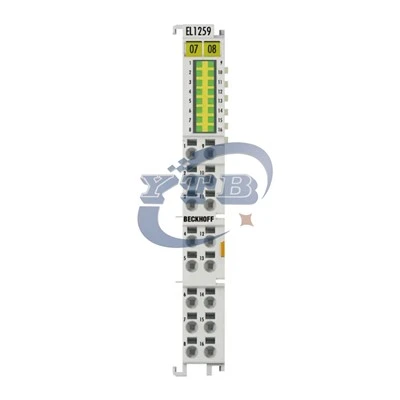
First, let’s get context: EtherCAT terminals are the modular I/O building blocks that plug into Beckhoff’s terminal bus system, designed to connect physical sensors, actuators, and field devices to a PLC or control system. They’re split into core categories: digital I/O, analog I/O, motion control, safety, specialty, and communication, each with dozens of variants tailored to specific needs. That’s why the total number isn’t just a random count—it’s a reflection of how deeply Beckhoff understands automation’s unique pain points.
To start with the basics: digital I/O terminals. These are the workhorses of any automation setup, handling on/off signals for things like limit switches, motors, and valves. Beckhoff offers well over 60 digital I/O terminals alone. Need a 24V DC input? They’ve got variants with different filtering speeds for high-speed applications (like counting encoder pulses) and standard ones for general use. What about outputs? There are solid-state relays, transistor outputs for low-power devices, and even relays for high-power industrial loads that can switch up to 230V AC. I recently helped a food processing plant upgrade their packaging line—they swapped out old traditional I/O for 32-channel digital EtherCAT terminals that reduced wiring complexity by 40% and cut commissioning time from three days to one. That’s the kind of flexibility these terminals deliver.
Next, analog I/O terminals, which handle continuous signals like temperature, pressure, or voltage. Beckhoff’s analog lineup is even more specialized, with over 40 variants. There are precision terminals for high-accuracy measurements (used in pharmaceutical labs and semiconductor manufacturing where error margins are tiny), terminals for high-noise industrial environments (built with galvanic isolation to prevent signal interference from heavy machinery), and even specialty ones for things like RTD temperature sensors, thermocouples, and strain gauges. Last year, a customer in the steel industry came to me with a problem: their old analog system was reading fluctuating temperatures in their blast furnaces because of electrical interference. We swapped their old terminals for Beckhoff’s 4-channel analog input terminals with 16-bit resolution and built-in noise filtering, and their measurement stability improved by 98%. That’s how targeted these terminals are.
Then there’s motion control and specialty EtherCAT terminals, which are where Beckhoff’s system really stands out. For motion control, they offer around 50 variants, including terminals for stepper motors, servo drives, and encoder interfaces that work with almost any motor brand. These aren’t just basic drivers—they support EtherCAT’s cycle times down to 100 microseconds, which is critical for high-speed applications like pick-and-place machines or 3D printers. I’ve worked with a small robotics startup that built collaborative robots using Beckhoff’s EtherCAT servo terminals; they were able to meet their performance targets without custom hardware, saving them six months of development time. Specialty terminals round out the lineup: things like terminal blocks for encoder feedback, position measurement, and even temperature control loops, adding up to another 20 or so options.
Safety is another huge piece of the puzzle. Industrial automation can’t compromise on worker safety, so Beckhoff’s EtherCAT Safety Terminals conform to international standards like IEC 61508 and PL d/SIL 3. These are separate from standard I/O terminals, designed to handle safe stop, safe limit, and other safety-related signals. Beckhoff offers around 30 safety terminal variants, covering everything from safe digital inputs (for emergency stop buttons) to safe outputs (for locking guards or halting motors). A logistics company I supply recently installed a new automated warehouse; they needed safety terminals that could integrate with their existing EtherCAT network without adding extra hardware. Beckhoff’s safety terminals plug directly into the same terminal bus as standard I/O, so they didn’t have to run separate wiring or a whole new network—saved them more than $20,000 in installation costs.
Finally, communication and network terminals, which act as gateways to connect EtherCAT to other industrial protocols like PROFINET, Modbus, or Ethernet/IP. Beckhoff has over 25 of these, designed to let you mix EtherCAT with existing equipment without replacing old systems. That’s a big deal for retrofit projects—many manufacturing plants have legacy machines with non-EtherCAT devices, so you don’t have to scrap everything to upgrade to Beckhoff.
So when you add it all up: digital I/O (60+) + analog I/O (40+) + motion control (50+) + safety terminals (30+) + communication/specialty terminals (25+) = that’s well over 200 distinct EtherCAT terminal options. Wait, but that’s not the whole story—Beckhoff also offers different terminal housing formats, like standard 12mm wide, slim 6mm wide for space-constrained panels, and even ruggedized versions for harsh environments (like outdoor or washdown areas in food manufacturing). They also customize terminals for specific vertical industries, like medical devices or renewable energy, so the total number of usable variants is even higher than the base count.
As a Beckhoff supplier, I can tell you that the key here isn’t just the number of terminals—it’s the depth of each variant. You don’t just get a “digital input terminal”; you get one tuned for high-speed counting, one built for washdown, one with channel diagnostics, one with ultra-low noise, and so on. That level of specialization means almost every automation challenge has a tailored Beckhoff solution, not a one-size-fits-all workaround.
I’ve seen too many automation suppliers try to oversimplify this, or pitch a limited lineup that only works for basic projects. But Beckhoff’s approach is different: they’ve spent decades working with engineers across every industry, and their EtherCAT terminal lineup is the result of listening to real-world needs. Whether you’re building a small machine with 10 I/O points or a large manufacturing line with thousands of signals, there’s a terminal in Beckhoff’s lineup that fits.
If you’re currently evaluating EtherCAT terminals, or ready to upgrade your automation system, I can help you find the exact terminals you need, get competitive pricing, and walk you through compatibility with your existing control hardware. Reach out to me to discuss your project requirements, whether it’s a small pilot line or a full factory-wide automation update.
Siemens Frequency Converter/Drive Series References
Beckhoff Automation. EtherCAT Terminal System Product Catalog. 2024.
IEC 61508: Functional Safety of Electrical/Electronic/Programmable Electronic Safety-Related Systems. International Electrotechnical Commission, 2010.
Yuntengbao Automation (Xiamen) Co., Ltd.
We are one of the most professional beckhoff components manufacturers and suppliers in China, featured by quality products and good price. Please rest assured to buy durable beckhoff components in stock here from our factory. Contact us for more details.
Address: Room 013, 4th Floor, No. 606-4, Xinglong Road, Huli District, Xiamen City, Fujian Province, China
E-mail: lrene@plcsupplychain.com
WebSite: https://www.plc-supplychain.com/
